




Rising Disaster Awareness in Japan Reveals Over 65 Million Are Unprepared
Rising Disaster Awareness in Japan Reveals Over 65 Million Are Unprepared
In a recent survey conducted by JA Kyosai (National Mutual Insurance Cooperative Federation of Japan), striking insights have emerged regarding disaster preparedness among Japanese citizens. As of this year, approximately 65 million people in Japan have not participated in any form of disaster training for over three years, a statistic that reflects a concerning trend of inactivity amidst rising awareness of natural disasters.
Background to the Survey
On the cusp of Disaster Prevention Day, September 1, the organization surveyed 5,000 individuals aged 20 to 60 from across Japan. The results reveal a paradox where awareness of the importance of disaster drills exists, yet actual participation is severely lacking.
Key Findings of the Survey
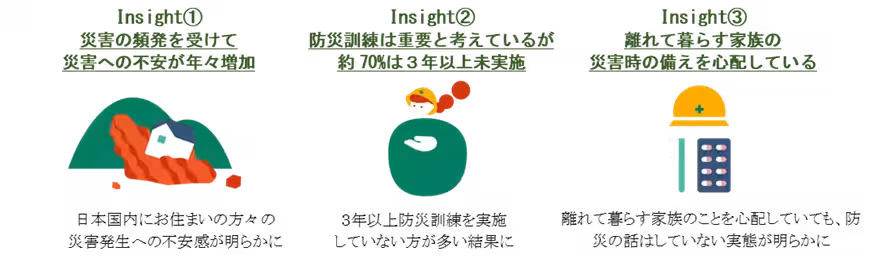
Insight 1: Growing Concern Over Disasters
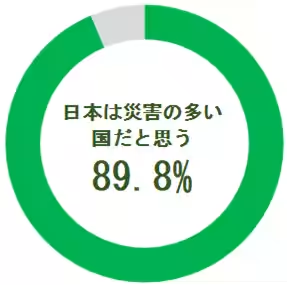
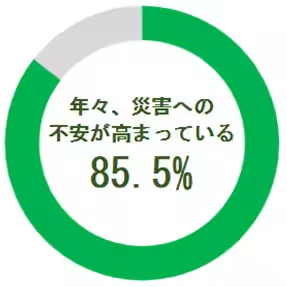
Almost 90% of respondents acknowledged that Japan is a country prone to disasters, underscoring the high level of disaster awareness among the populace. The most concerning natural disaster for many is earthquakes, with more than 83% reporting anxiety about them. Following this, heavy rainfall and typhoons also rank high on the list of fears. Notably, about 85% of the participants indicated that their anxiety related to disasters is growing year by year.
Insight 2: Importance of Disaster Drills Recognized but Underparticipation Is Alarmingly High
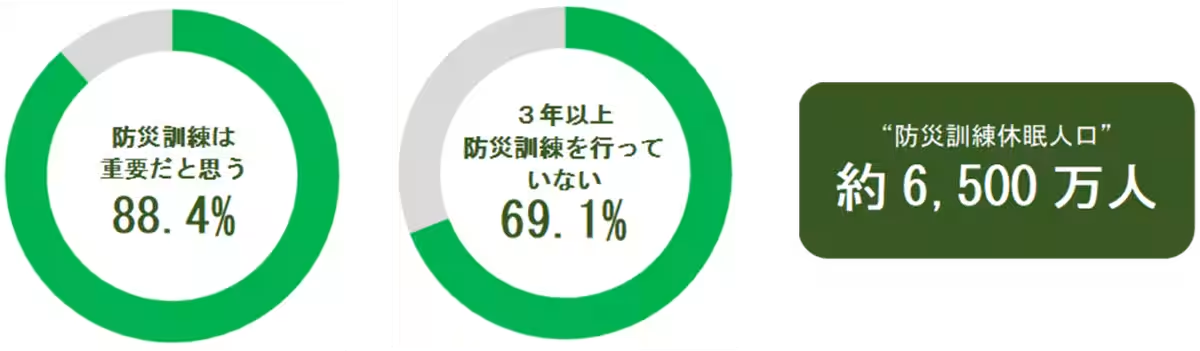
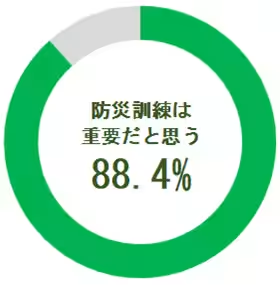
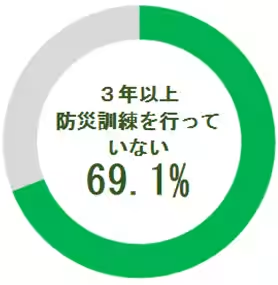
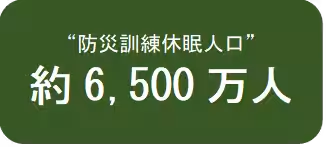
Despite nearly 90% of respondents recognizing the importance of disaster drills, around 70% have not partaken in any training for over three years. This data implies a staggering number of 65 million people fall into the category defined as 'Inactive Disaster Training Population.' The primary reasons behind not participating in drills revolve around a lack of information regarding scheduling or locations, suggesting an urgent need for better communication.
Insight 3: Worries About Family Not Living Together
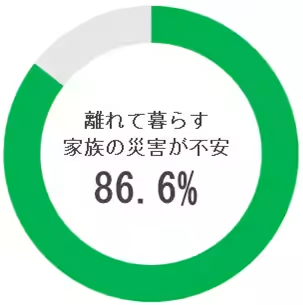
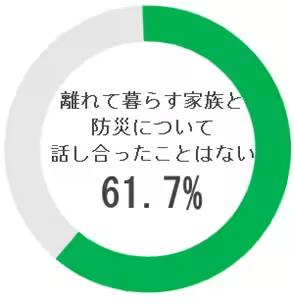
When asked about worrying for family members living apart, approximately 70% confirmed they had relatives living separately, with about 85% of those expressing concern for their safety in case of disasters. However, a significant number have not discussed disaster readiness or checked if their family members have adequate supplies, indicating a gap between concern and action.
Expert Commentary
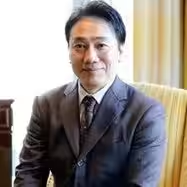
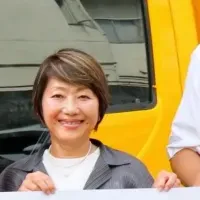
The survey findings drew insights from Mr. Yasuo Matsushima, head of the Disaster Risk Assessment Research Institute, who noted the critical disconnect between awareness and action. While the statistics reveal a societal consensus that Japan faces unique challenges due to its geographic location, the awareness is not translating into action on individual or family levels. Traditional disaster drills facilitated by companies or local governments have become less effective in modern contexts where remote work has shifted dynamics. Mr. Matsushima advocates for adopting digital platforms such as mobile apps to facilitate participation in training, making it more accessible for individuals across various locations and settings.
The idea of 'gifted training' for families living apart could also foster discussions about disaster preparedness and enhance collective safety measures.
Call to Action
As community members, it is imperative to close the gap between awareness and preparedness. This survey serves as a wake-up call that emphasizes the necessity for individuals and families to engage in disaster training and safety discussions proactively. Adopting flexible training solutions tailored to modern lifestyles could help embed disaster preparedness into the cultural fabric, enhancing the resilience and safety of communities throughout Japan.
In light of these findings, it is more crucial than ever for society to redesign how disaster readiness is approached, ensuring that all individuals are not only aware but also actively participating in protective measures against inevitable disasters.
Topics Policy & Public Interest)
【About Using Articles】
You can freely use the title and article content by linking to the page where the article is posted.
※ Images cannot be used.
【About Links】
Links are free to use.