



Toray Research Center Launches Comprehensive Outgas Analysis Service for Manufacturing Solutions
Toray Research Center Introduces Outgas Analysis Service
The Toray Research Center (TRC), based in Nihonbashi, Tokyo, has unveiled a new comprehensive outgas analysis service utilizing a sophisticated gas chromatography-mass spectrometry (GC/MS) system equipped with a multifunctional auto-sampler. This innovative approach aims to resolve various manufacturing challenges effectively and efficiently.
Understanding Outgas Analysis
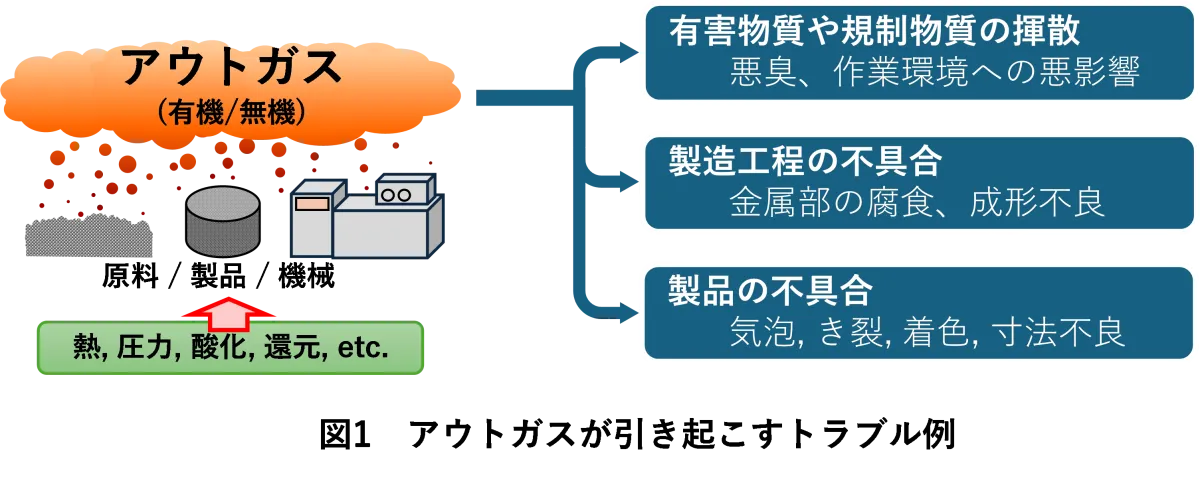
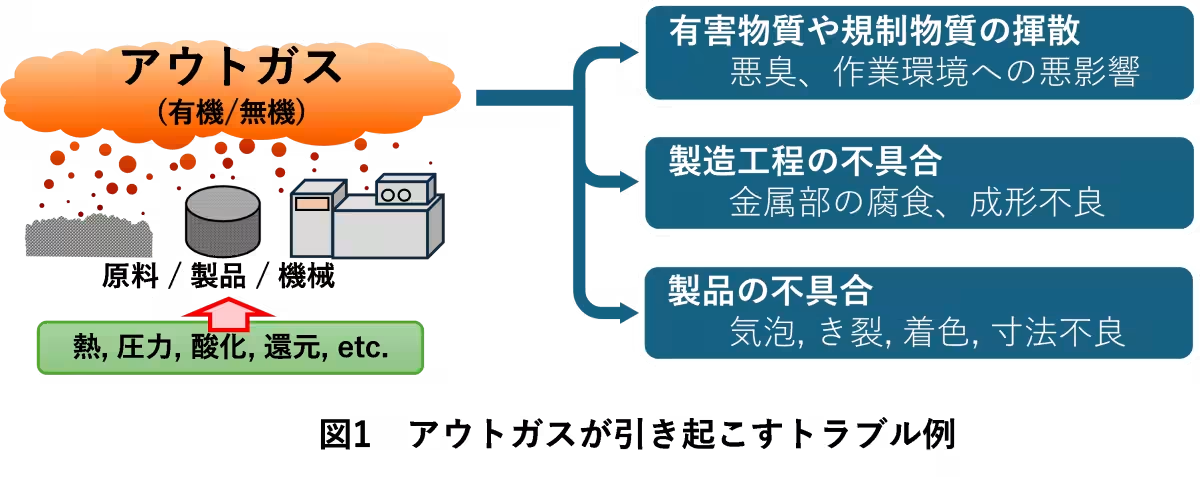
Outgassing refers to the release of volatiles such as moisture, inorganic gases, and volatile organic compounds (VOCs) from materials during processes like development, manufacturing, storage, and disposal. These emissions can lead to unpleasant odors and adversely affect workplace environments, potentially causing issues like mold corrosion and producing defective products due to contaminants. For instance, odors from recycled polypropylene (PP) may arise from a range of factors, including outgassing in production, material degradation during storage, and contamination from packaging materials.
To tackle these challenges, outgas analysis serves as an effective means to identify problematic substances and develop appropriate countermeasures, thereby preventing issues before they arise.
Benefits of the New Service
Combining TRC's extensive expertise in outgas analysis with the automation capabilities of the new auto-sampler improves accuracy and speed in producing reproducible results. The service addresses various analytical needs, such as analyzing outgasses during material heating, assessing odor emissions, and analyzing gases in the workplace.
The integration of multiple pre-treatment methods within a single device streamlines the process and enhances analytical precision, allowing for rapid delivery of reliable data to clients. This capability supports the improvement of product safety, workplace conditions, and environmental sustainability, ultimately contributing to a safer, more sustainable manufacturing industry.
Technical Overview
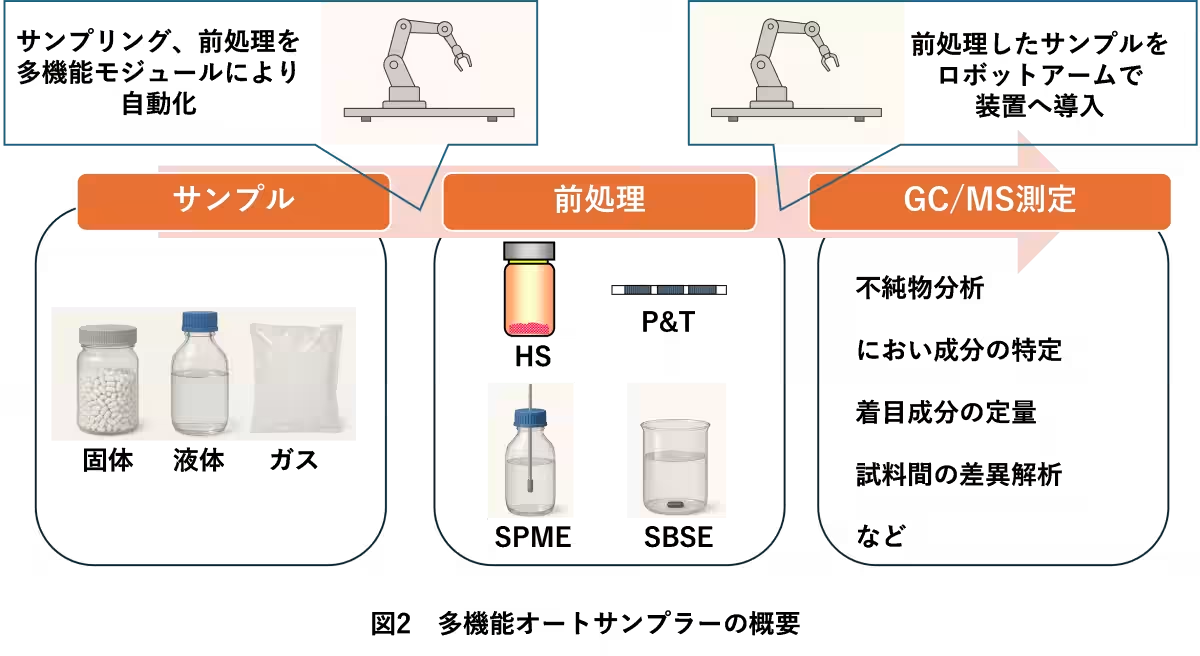
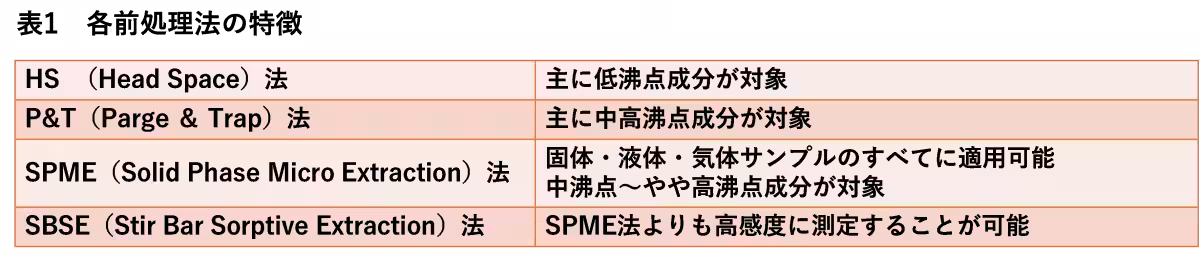
The multifunctional auto-sampler enhances the service by accommodating diverse sample types, including liquids, solids, and gases. It supports various sample introduction methods, such as direct analysis and concentration techniques. A robotic arm automatically swaps out different modules for testing, enabling high-speed and high-precision outgas assessments and odor evaluations.
This method not only increases the efficiency of testing but also ensures high reproducibility in analytical outcomes, which is crucial for meeting regulatory standards and addressing industry-specific needs.
Future Developments
As the demand for outgas analysis evolves, TRC is prepared to meet various requirements, whether it involves systematic analysis for identifying the causes of problems or high-sensitivity measurements at the parts per billion (ppb) level for regulatory compliance. Leveraging its wealth of experience, TRC continues to offer optimal solutions for analysis methodologies, proper interpretation of results, and a robust support system to facilitate material development and problem-solving for its clients.
Conclusion
With the launch of the outgas analysis service, Toray Research Center reaffirms its commitment to enhancing manufacturing processes and safety through scientific innovation. By providing comprehensive solutions to outgassing problems, TRC helps pave the way for sustainable manufacturing practices in a safer and more efficient manner.
- ---
Glossary
- - Gas Chromatography-Mass Spectrometry (GC/MS): A device that combines gas chromatography for separating volatile components with mass spectrometry for identifying and quantifying those components.
- - Outgassing: The collective term for moisture, inorganic gases, and volatile organic compounds released from materials.
- - PPB (parts per billion): A measure used to quantify substances where one part per billion represents one part in a billion parts total.
Topics Consumer Products & Retail)
【About Using Articles】
You can freely use the title and article content by linking to the page where the article is posted.
※ Images cannot be used.
【About Links】
Links are free to use.