



Exploring the Musical Horizons of Senior Women: Insights from 2025 Survey
Exploring the Musical Horizons of Senior Women
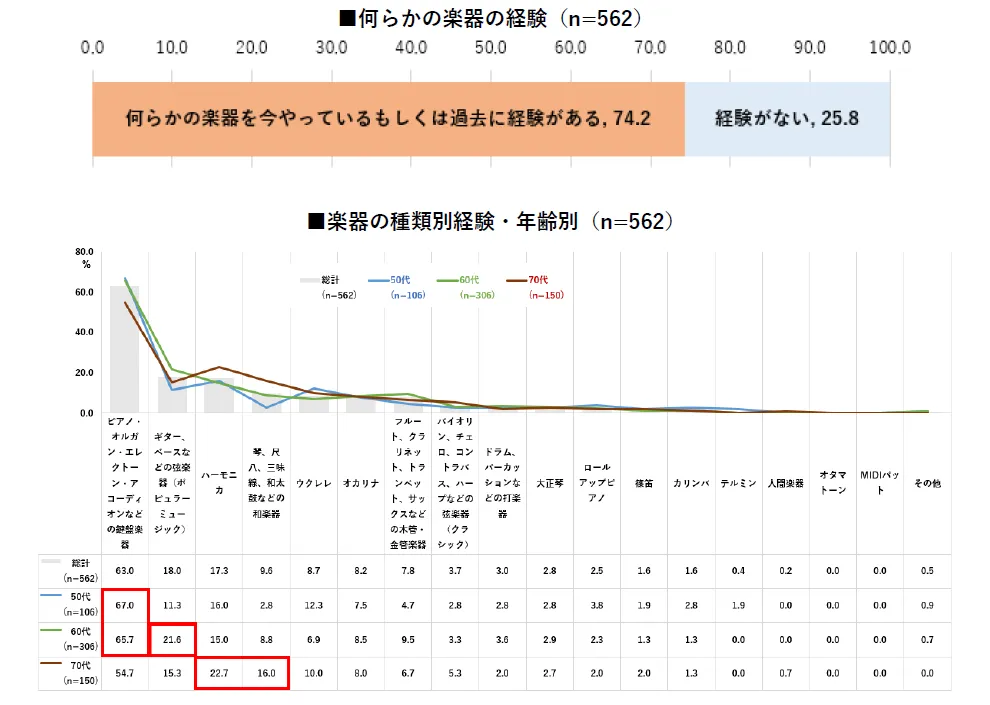
In a recent study conducted by Halmeq Ikikata Jouzu Research Institute, it was discovered that a remarkable 74.2% of senior women aged 50 to 79 have some form of experience with musical instruments. This finding not only highlights the rich musical background of this demographic but also opens avenues for understanding their aspirations and challenges in the realm of music.
Survey Overview
The research was undertaken through a web survey which queried a total of 562 respondents from the Halmeq monitor group, a dedicated panel representing women aged 50 and above. It was conducted from July 24 to July 28 in 2025 and aimed to uncover insights about their experiences and desires related to musical instruments.
Instrument Experience Rates
The survey revealed a predominant preference for keyboard instruments such as the piano, organ, electronic organ, and accordion, with 63.0% of respondents reporting experience with these instruments. Following closely behind were string instruments like guitars and basses, with a notable increase in experience among women in their 60s. Additionally, traditional Japanese instruments like the harmonica, koto, shakuhachi, shamisen, and taiko showed significant popularity, especially among women in their 70s.
While these findings reflect a strong inclination toward musical engagement, responses indicated mixed sentiments surrounding past experiences. Many women recalled challenging memories related to their childhood music education, often citing pressure from parents and the burdensome nature of practice.
Personal Reflections on Keyboard Instruments
Some respondents shared poignant reflections on their experiences with keyboard instruments:
- - One 66-year-old mentioned, "Practicing piano as a child was agonizing."
- - Another 71-year-old expressed that her rigorous training felt more like an obligation than a passion, recounting her mother's stringent expectations for her music studies.
These reflections reveal a nuanced relationship between the joy of music and the pressures of expectation.
Aspirations for New Musical Endeavors
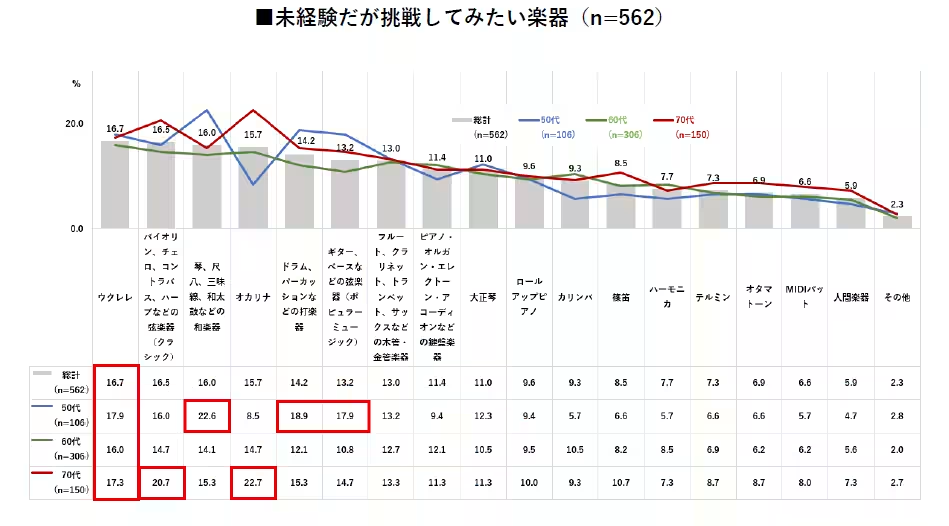
When asked about instruments they were eager to try, the top three choices included the ukulele, classical string instruments (like violin, cello, double bass, harp), and traditional Japanese instruments (koto, shakuhachi, shamisen, taiko). Each of these instruments garnered interest from approximately 16% of respondents, showing a desire for exploration and new experiences.
Particularly striking was the widespread enthusiasm for the ukulele, which resonated across generations. Many participants highlighted that it was accessible, portable, and a fitting complement to their interests in activities like hula dancing.
For those aged 50, there was notable enthusiasm for traditional Japanese instruments alongside percussion options like drums, while respondents in their 70s exhibited a keen interest in classical string instruments, with some even purchasing instructional materials to support their learning journeys.
Unique Aspirational Instruments
Some unique instrument preferences expressed by respondents included:
- - The pailijo (a type of guitar) from a 59-year-old woman.
- - Erhu, a two-stringed instrument, sought after by a 62-year-old.
- - Whistling and playing music using everyday objects, pursued by a 69-year-old.
These choices highlight the diversity and creativity that senior women are embracing within their musical journeys.
Personal Insights on the Ukulele
Many women spoke passionately about why they were drawn to the ukulele:
- - One respondent enthused, "It was light and easy to carry, allowing me to enjoy it without feeling pressured."
- - Another shared that their past experience with guitar had been rocky, but the smaller size and simplicity of the ukulele felt inviting and less daunting.
Interest in Ocarina
The ocarina emerged as a favorite among the 70s demographic, with resonant comments describing its soothing sound as a source of peace. One participant detailed her joy in finally mastering a favorite song, reflecting a strong sense of accomplishment.
Broader Musical Desires
Beyond instruments, many seniors expressed a desire to engage in varied musical activities, such as street pianos, voice training, and participating in choirs. The inclination toward diverse musical experiences signifies a robust passion for creativity and connection among senior women.
Expert Insights
According to Junko Umezu, director of Halmeq Ikikata Jouzu Research Institute, this trend points to a significant market opportunity. As seniors explore music beyond traditional instruments, the incorporation of cultural and communal elements into their musical journeys suggests new business avenues.
Conclusion
The survey results underscore a vibrant engagement with music among women aged 50 and above. While many carry complex narratives about their past with musical education, the future looks bright as they express eagerness to explore new horizons. With a notable trend of pairing instruments with cultural practices, the potential for transformational experiences in music among senior women appears boundless, inviting businesses to innovate in ways that resonate with this dynamic demographic.
Halmeq Magazine: Supporting Women Aged 50 and Above
Halmeq provides invaluable information for women over 50 looking to live positively and brightly. This includes enriching details about health, cooking, fashion, money management, and interviews with inspiring personalities. Subscribers not only receive the magazine but also access a catalog and online shopping platform featuring a variety of products tailored to their needs.
Additional Resource
For more insights into the senior demographic’s preferences and behaviors, the Halmeq Senior Marketing LAB offers a wealth of information drawn from extensive research.
This survey represents more than numbers; it captures a movement towards embracing music as a joyful and liberating form of expression for senior women, setting the stage for a renaissance in musical engagement.

Topics Entertainment & Media)

【About Using Articles】
You can freely use the title and article content by linking to the page where the article is posted.
※ Images cannot be used.
【About Links】
Links are free to use.