



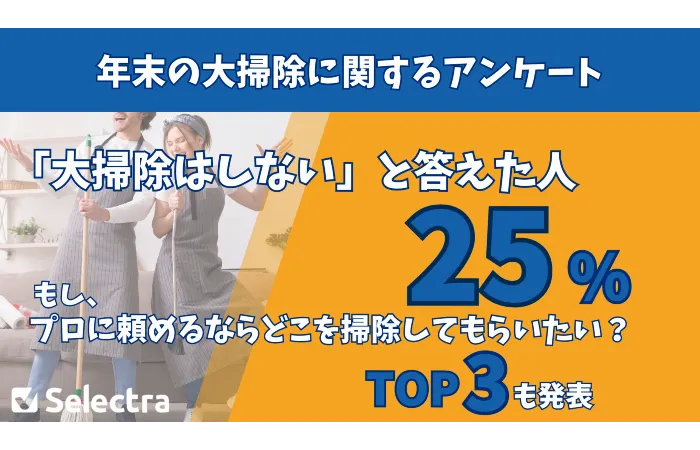
Is Big Cleaning Becoming a Thing of the Past? Survey Shows 25% of Japanese Won't Clean This Year-End
Is Big Cleaning Becoming a Thing of the Past?
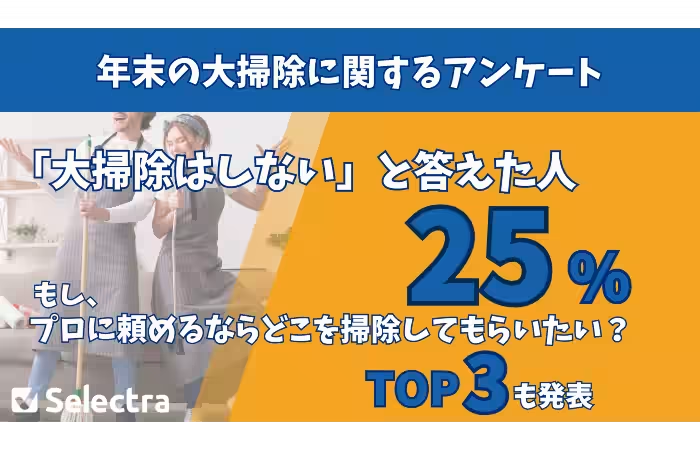
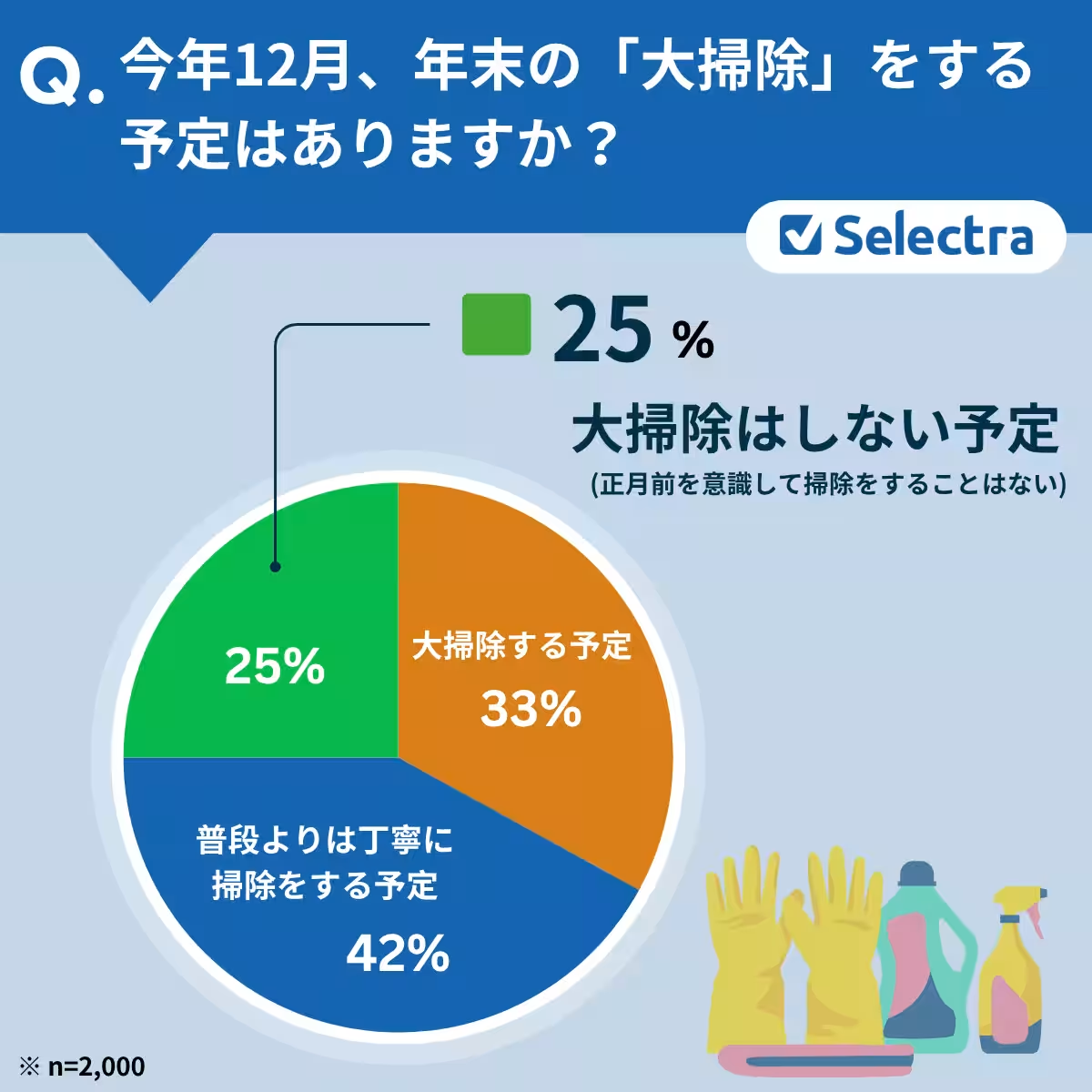
As the year-end approaches, many Japanese families typically prepare for the daunting task known as "big cleaning," or "O-soji". However, a recent survey conducted by Selectra Japan reveals a significant shift in public sentiment towards this traditional practice. According to the survey of 2,000 married adults across the country, 25% of respondents stated they will not engage in big cleaning this year. This figure indicates a potential decline in an activity that has long been considered a staple in Japanese culture.
The Changing Attitude Towards Big Cleaning
The survey's results show that out of the participants, a mere 33% declared that they would undertake the big cleaning task, only slightly surpassing the percentage of those opting out. Notably, a substantial number of respondents expressed indifference towards cleaning in general, suggesting that the meticulous rituals of previous generations are fading.
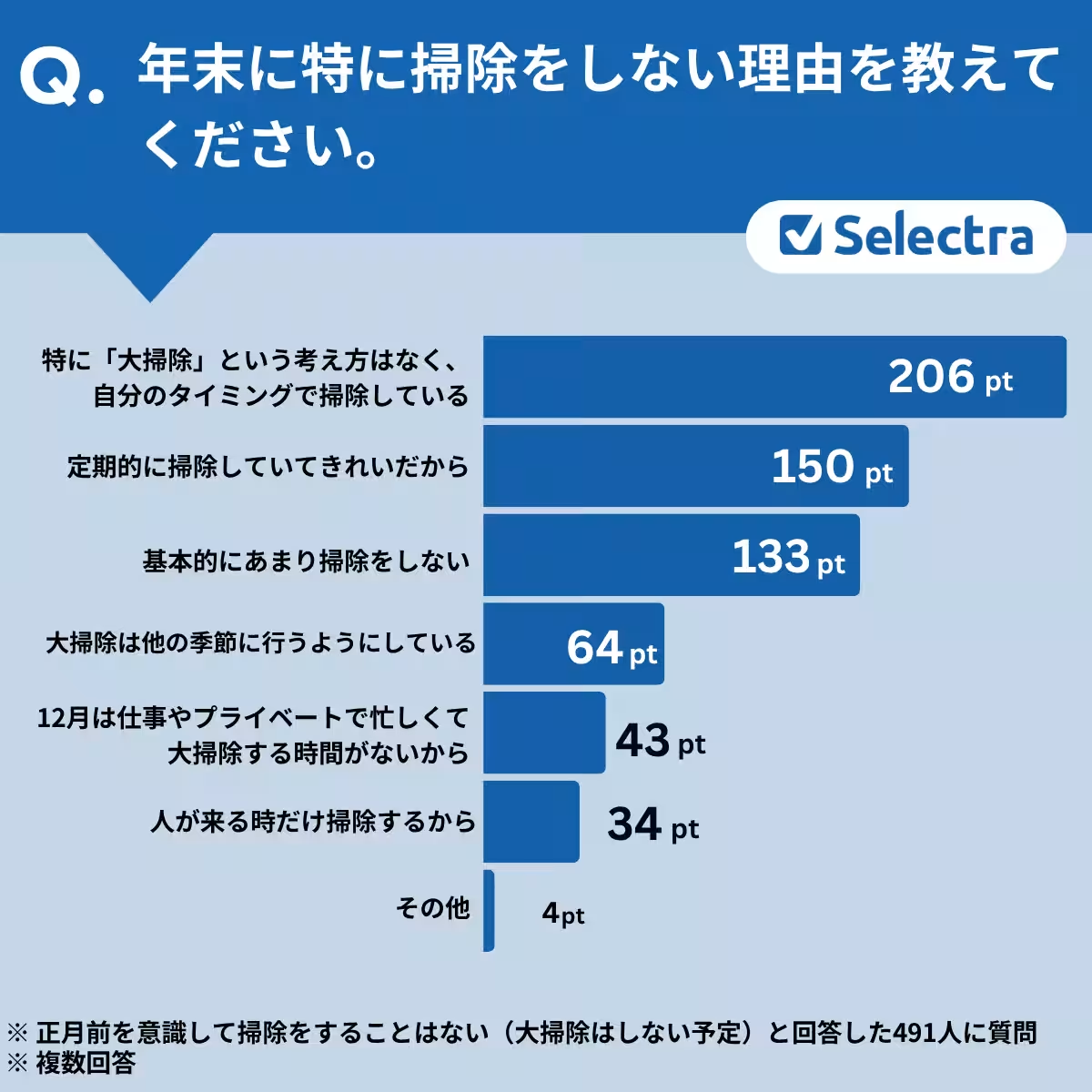
Among the participants who chose not to clean, various reasons emerged, reflecting a changing lifestyle. Many indicated that they prefer to clean at their convenience, rather than adhering to a specific date like the year-end. Among those citing they wouldn't be participating in big cleaning, the most common reasons included:
1. A lack of a defined concept of big cleaning, opting instead to clean when it suits them.
2. Regular cleaning habits keeping their homes tidy, negating the need for extensive cleaning.
3. Generally low priorities placed on cleaning tasks.
Interestingly, some responses also indicated life changes, such as having small children, physical limitations, or having recently relocated, which affect their ability to engage in thorough cleaning.
Generational Differences in Cleaning Habits
Further analysis of the survey revealed discernible trends among different age groups. Among younger adults aged 25 to 34, the rate of those declining to participate in big cleaning soared to 38%. In contrast, only 9% of individuals aged 65 to 74 expressed disinterest in the cleaning tradition, highlighting a stark generational divide in attitudes towards this custom.
Who Will Do the Big Cleaning?
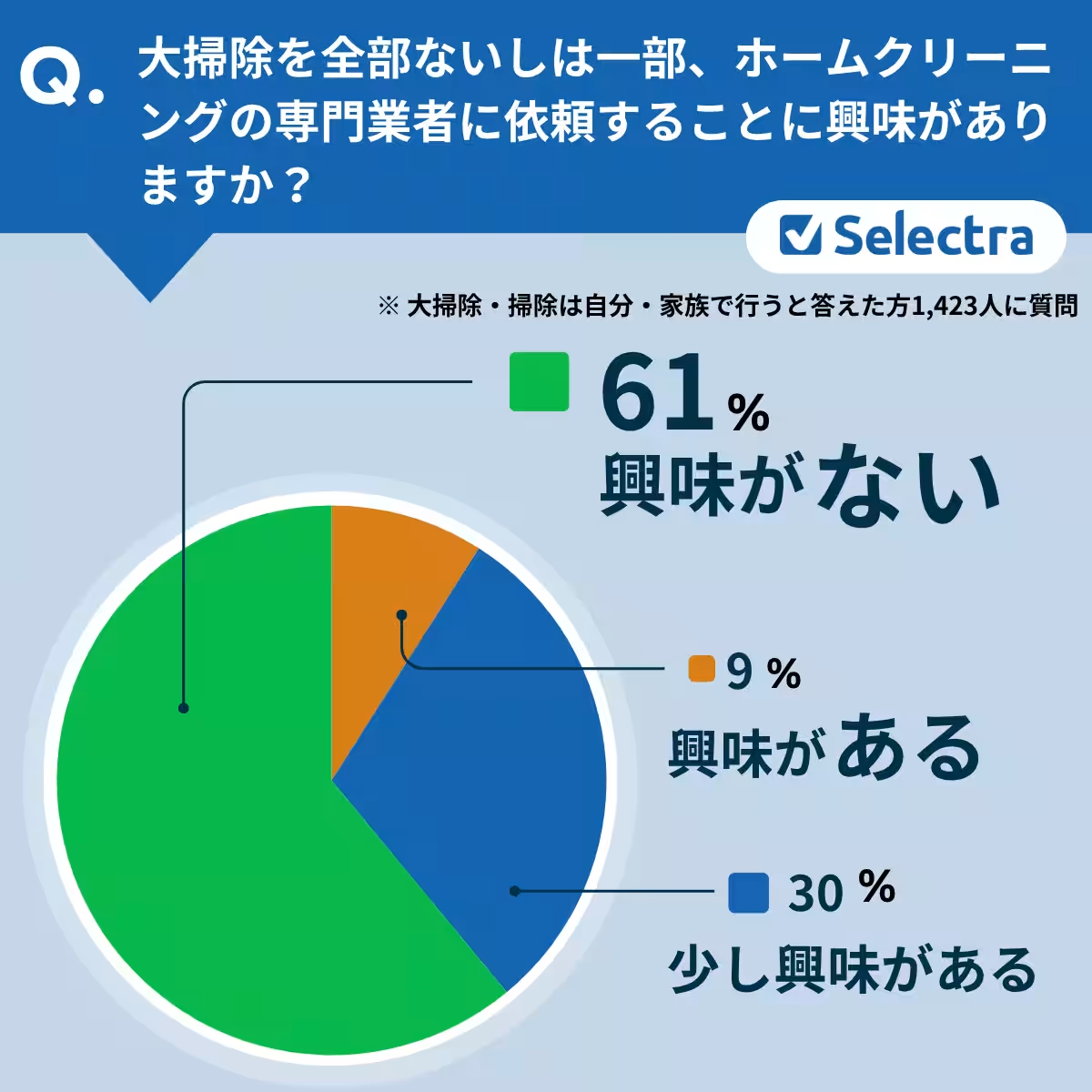
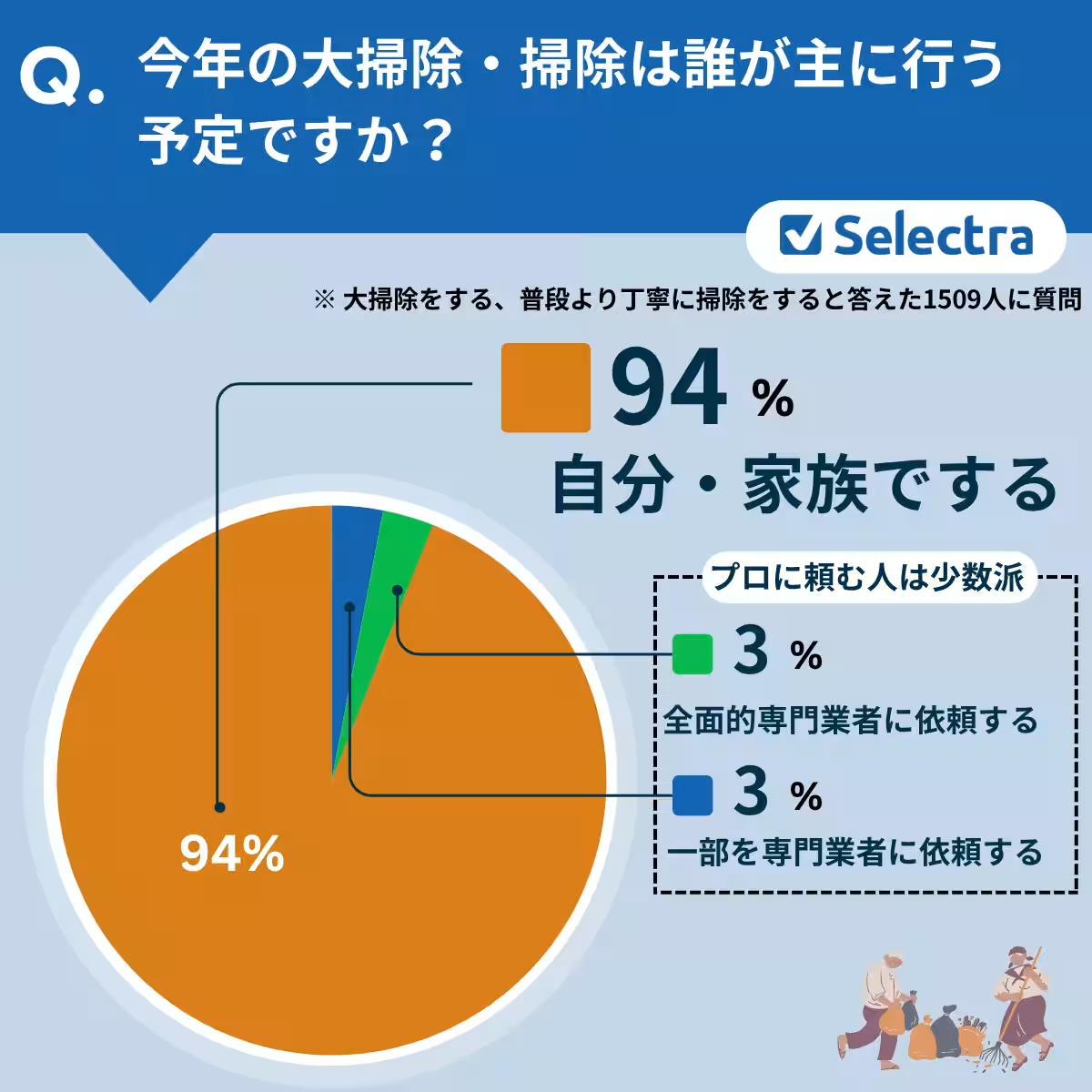
For those who do plan to engage in big cleaning, the question arises: who will handle it? The survey found that an overwhelming 94% of participants indicated they would either clean themselves or involve family members. However, there was a small fraction (6%) who expressed willingness to hire professional cleaning services. Among these individuals, some were curious about potentially outsourcing parts of their cleaning, yet many expressed a strong preference for conducting the cleaning themselves.
A key factor contributing to the reluctance to hire cleaning professionals was tied to financial concerns. Many participants indicated that they did not find it necessary to allocate funds towards professional cleaning services, viewing their homes as adequately maintained without such assistance. Only a minority voiced willingness to explore the possibilities—suggesting that while there is some openness to the service, it remains limited.
Insights into Professional Cleaning Preferences
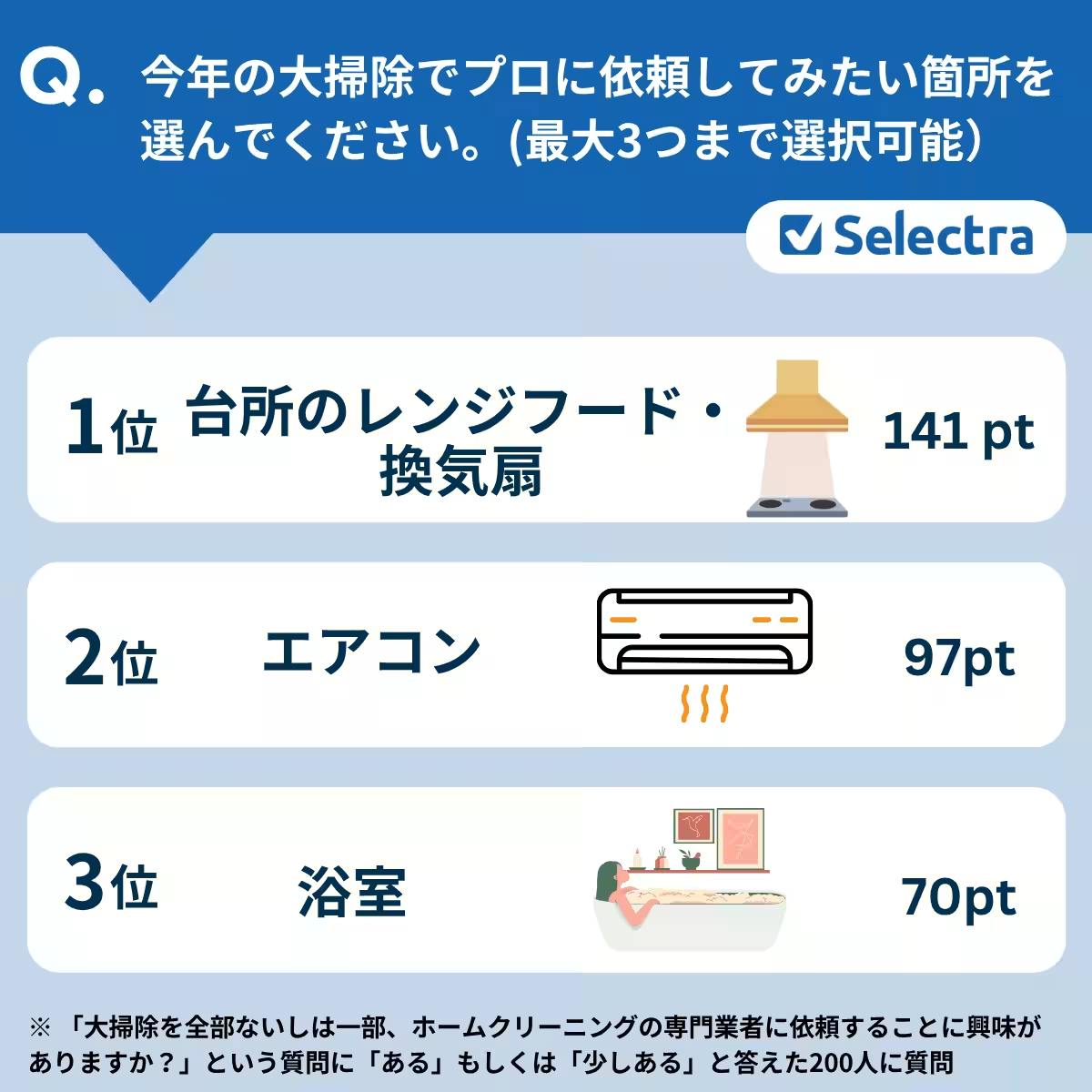
The survey also delved into specific areas where people expressed interest in professional cleaning services. Among those interested in outsourcing, the top three cleaning tasks desired were:
1. Kitchen range hoods and exhaust fans
2. Air conditioning units
3. Bathrooms
These areas represent common elements where thorough cleaning is often needed but can be difficult for homeowners to tackle alone.
Conclusion
The findings from this survey illuminate a current cultural shift in Japan regarding household cleaning practices. As traditional customs evolve, many individuals now prefer to control their cleaning schedules, breaking away from historical norms. The results reflect wider trends of modernization in Japanese lifestyles and highlight a divide in attitudes towards personal cleaning responsibilities versus the delegation of those tasks.
The reluctance to invite others into personal spaces, alongside financial considerations and personal philosophies about cleanliness, contribute to these changing preferences. As society continues to evolve, so too do the traditions surrounding the year-end rituals of cleaning, suggesting that what once was a significant communal effort may soon merely be a matter of personal choice.
Survey Methodology
- - Duration: October 14-15, 2025
- - Participants: 2,000 married individuals aged 25 and above
- - Method: Online research conducted by iBridge Co., Ltd.

Topics People & Culture)


【About Using Articles】
You can freely use the title and article content by linking to the page where the article is posted.
※ Images cannot be used.
【About Links】
Links are free to use.