


Returning to Office: Over 70% of Working Parents Consider Job Change Amid Flexibility Demand
The Flexibility Equation: Office Return and Job Changes Among Working Parents
Introduction
In the wake of the pandemic, many companies shifted towards remote work, marking a significant transformation in traditional workplace dynamics. However, the return to office scenarios seems to be bringing new challenges for working parents, especially those with children under the age of elementary school.
A recent survey conducted by Japan Design Inc., the operator of the ZeroIchi Web Design School, titled ‘Desasku’, sheds light on how these families are coping with the changes. Targeting 108 office workers aged between 30-45 with children in this age group and recent remote work experience, the survey aims to elucidate the growing phenomenon of office returns and its impact on their family life and career decisions.
Survey Overview
Background
As the world progressively recognizes the importance of work-life balance, especially since the COVID-19 pandemic, various businesses are now reassessing their working styles. This reassessment directly impacts working parents, who find themselves navigating a delicate equilibrium between their job responsibilities and parenting duties.
Key Findings
Increase in Office Days
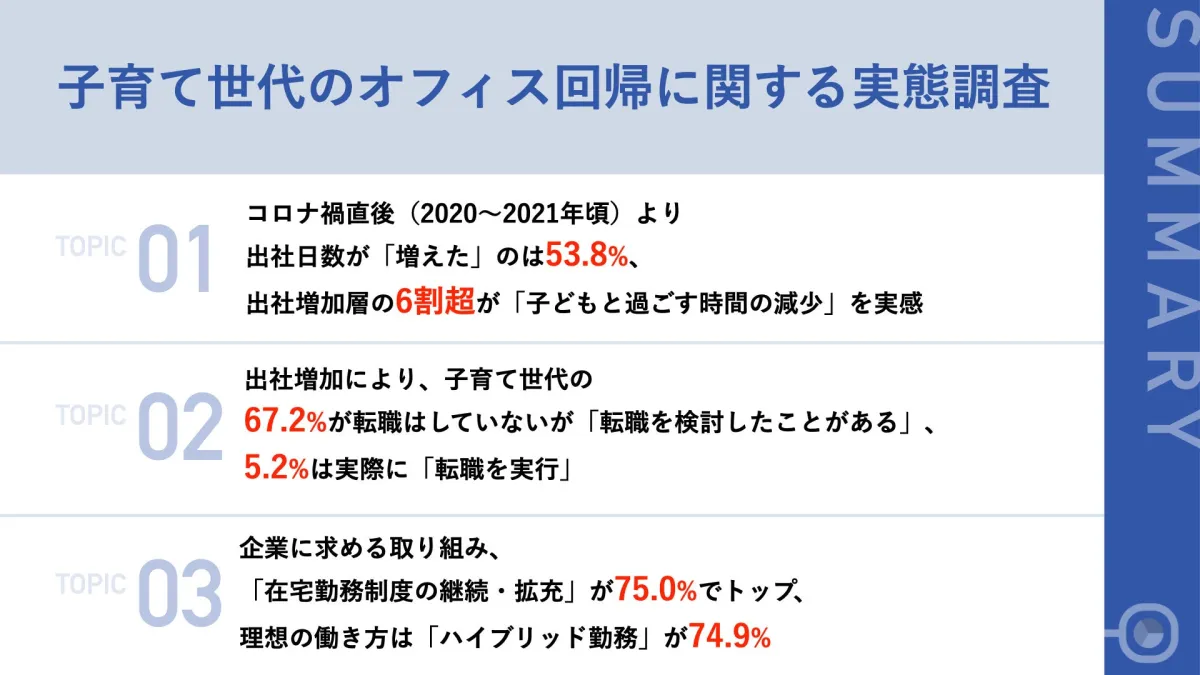
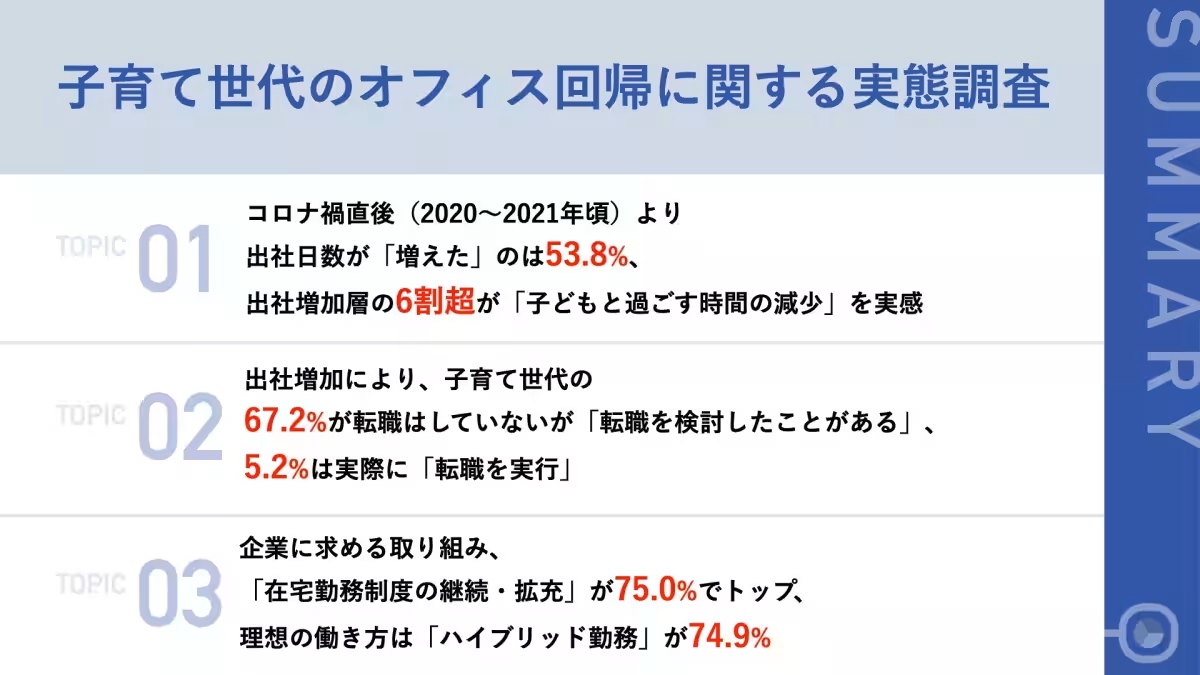
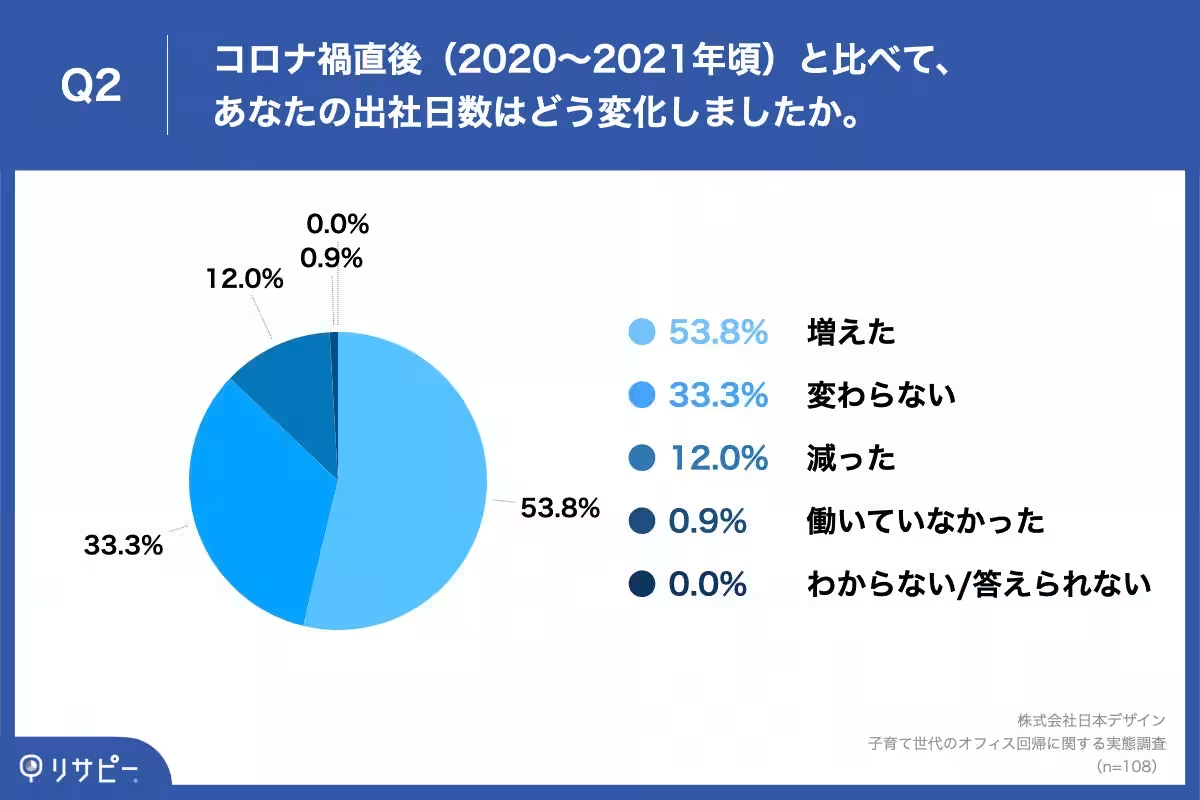
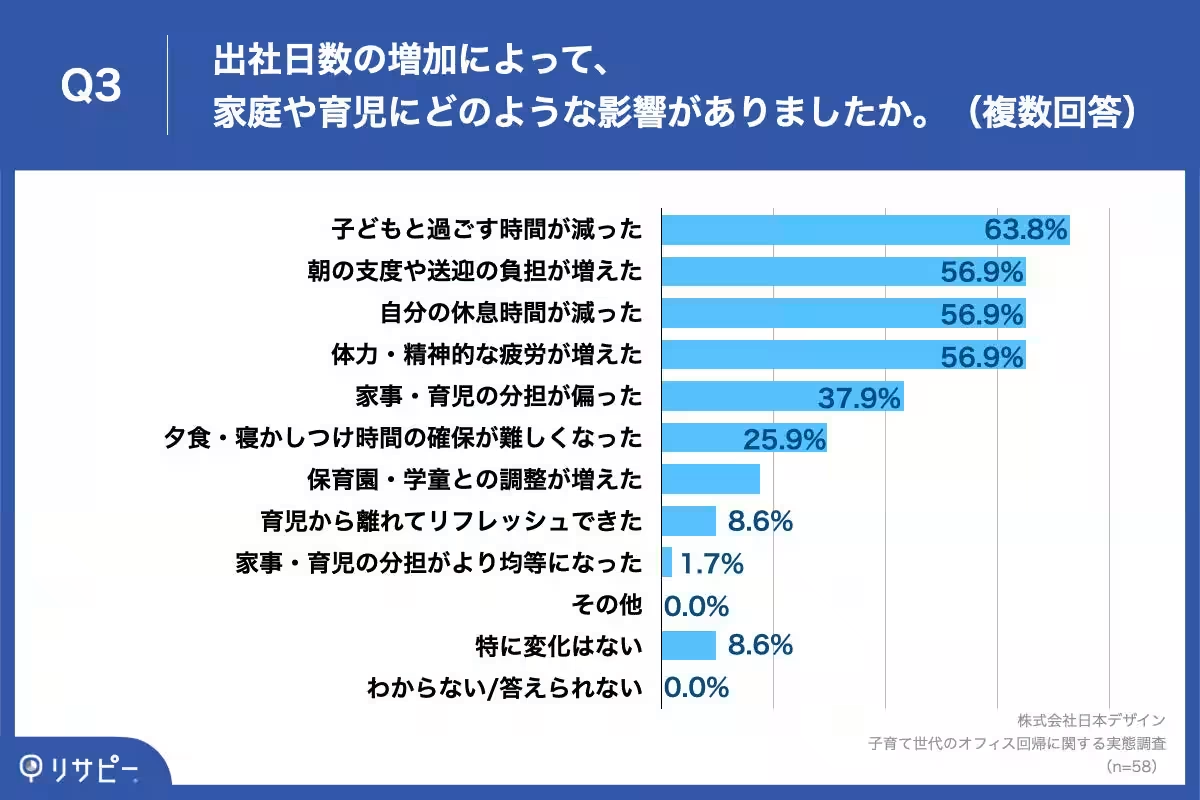
The survey reveals that 53.8% of participants experienced an increase in their office days compared to the period immediately after the pandemic (2020-2021). Notably, over 60% of those reporting increased office attendance felt this change significantly reduced their time spent with their children, underlining the conflict many parents are now facing between professional and family obligations.
Job Change Implications
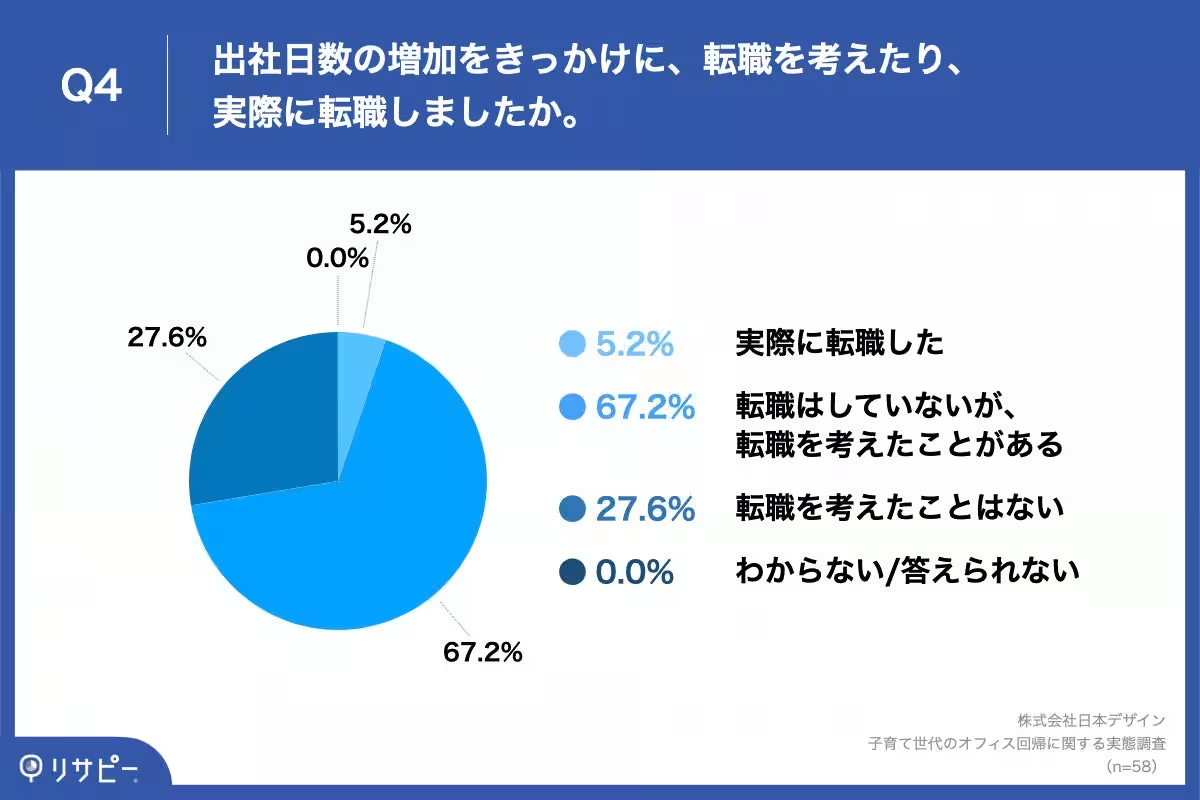
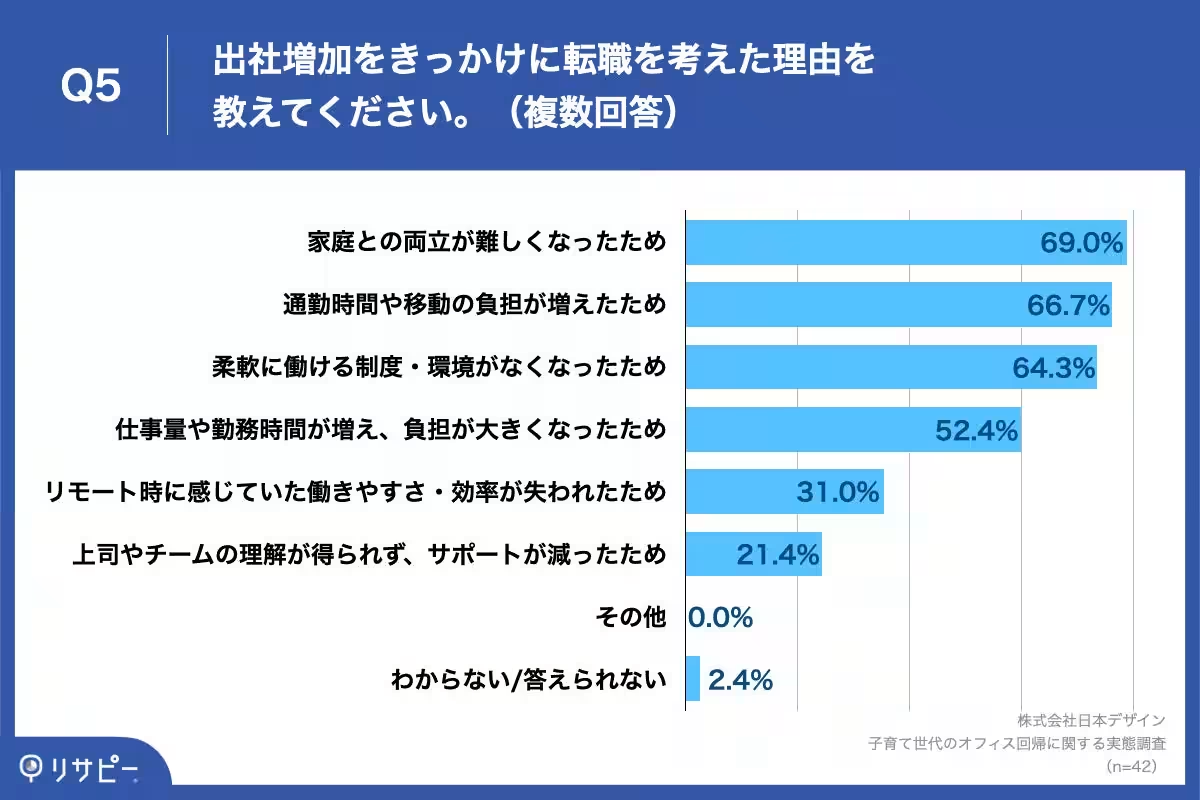
Despite the demands of returning to the office, 67.2% of respondents considered changing jobs, with 5.2% actually making the leap. The main motivator for these thoughts of transition was the clash between work demands and family life. Factors such as increased commuting time and heightened work-related stress also contributed to their reconsideration of current employment.
Desired Work Adjustments
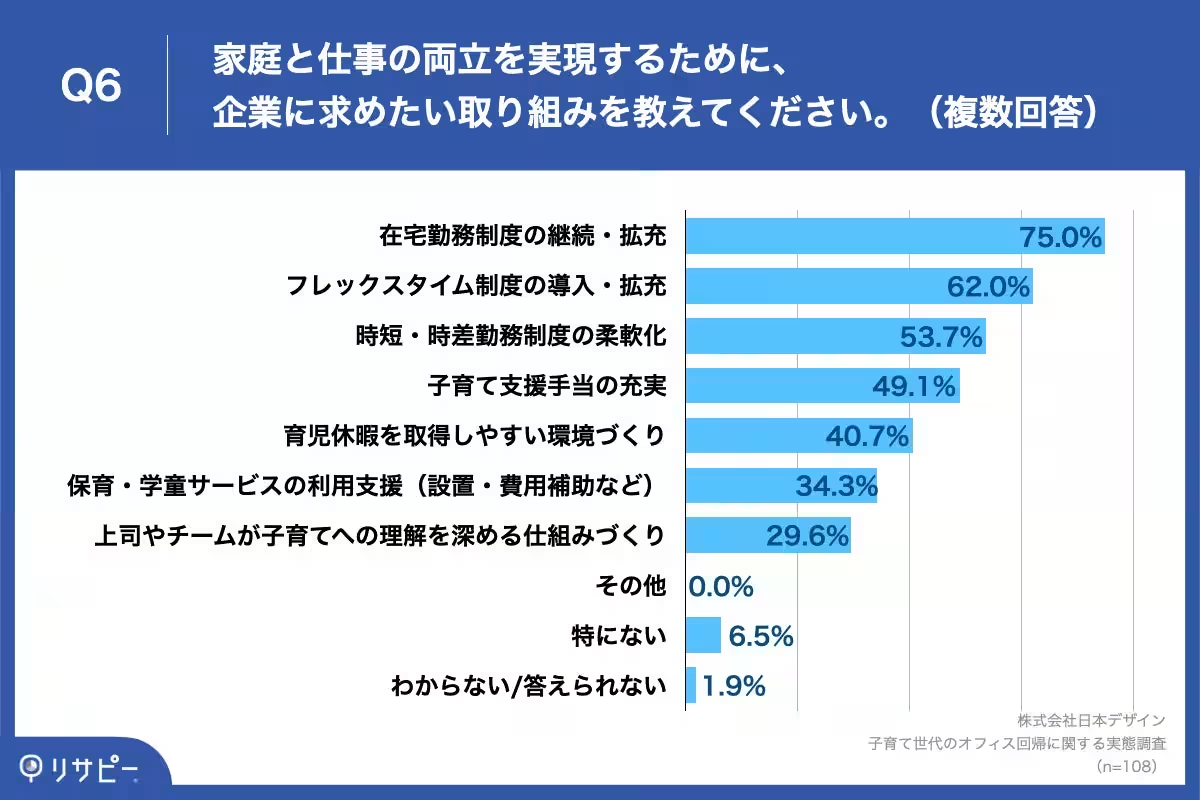
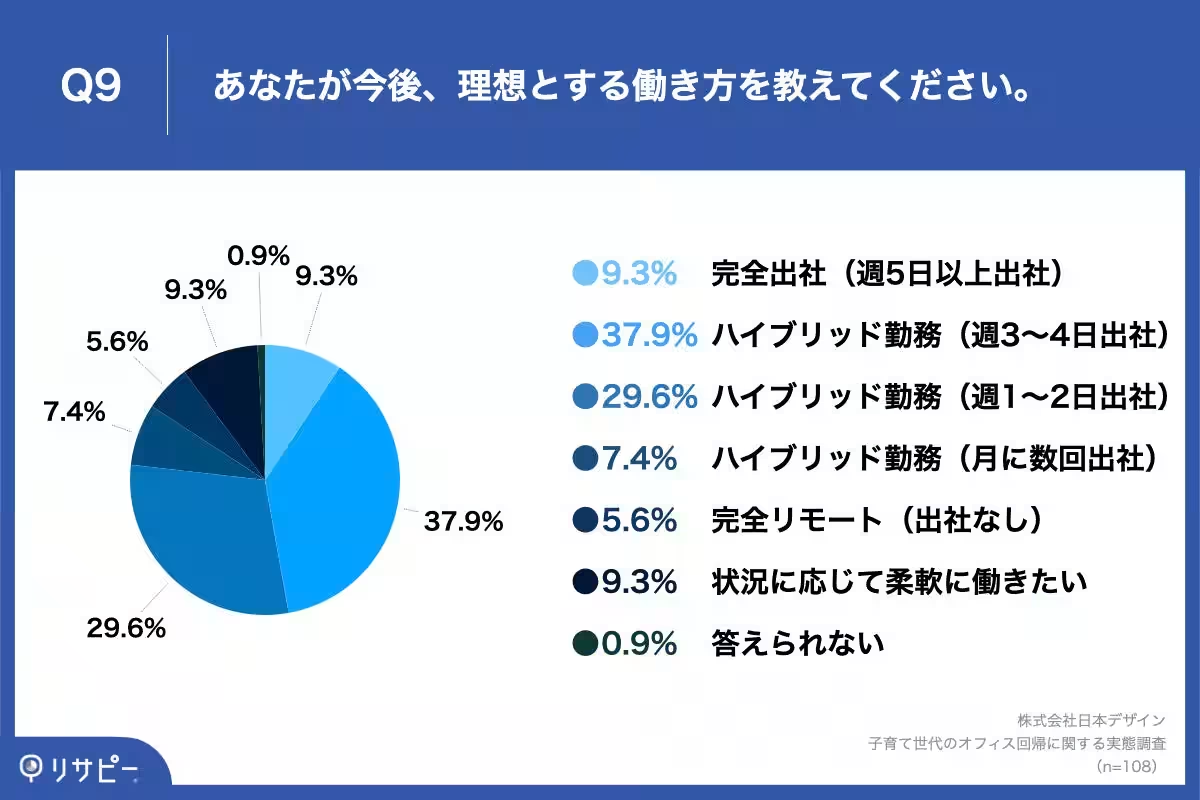
In terms of what working parents desire from their employers, 75% advocated for the continuation and expansion of remote working options. Respondents expressed that flexible working conditions should remain a priority, with 74.9% stating a hybrid working model (a mix of office and remote work) as their preferred future working scenario.
Evolution of Work Preferences
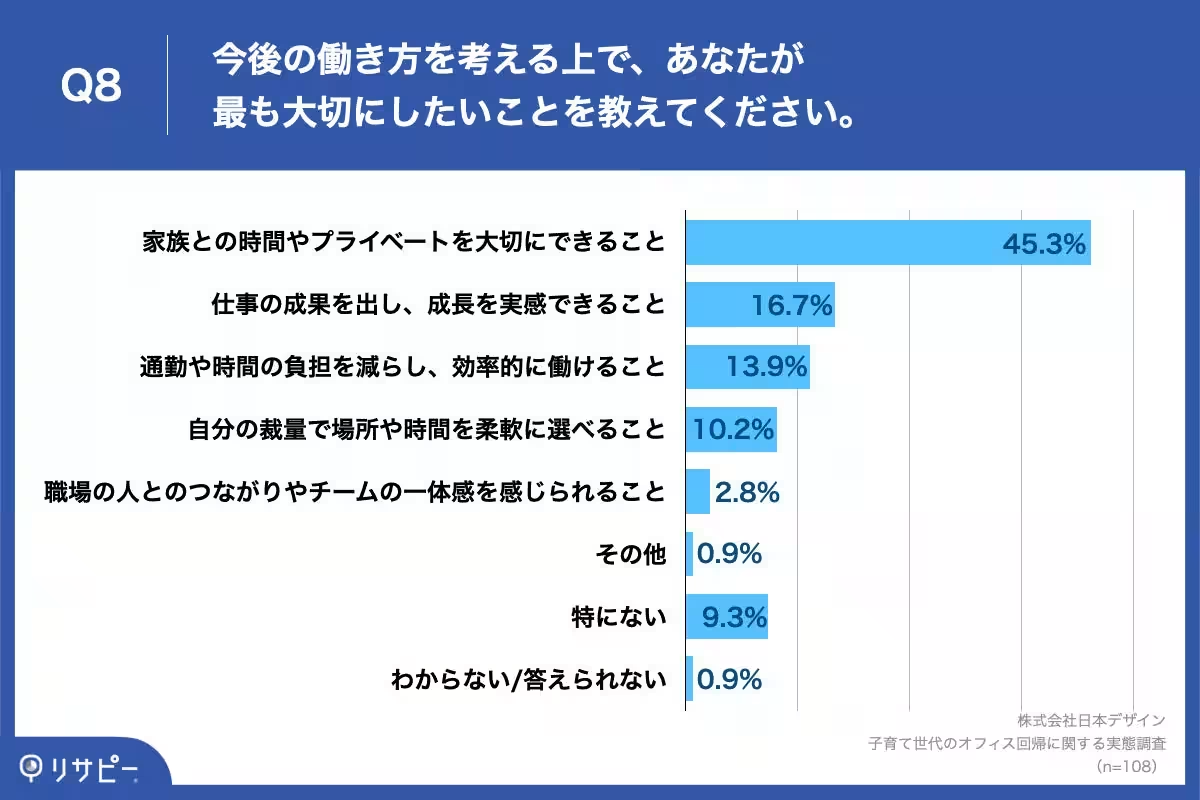
Throughout the survey, it was revealed that the most important aspect for these working parents is the ability to spend time with their families while maintaining a sense of professional fulfillment. An impressive 45.3% emphasized the need to prioritize family time in their work lives.
Conclusion
This survey articulates an urgent call for companies to rethink their return-to-office strategies from the perspective of working parents. The modern workforce, particularly parents, is gravitating towards more adaptable arrangements where they can blend their personal and professional lives effectively. Flexibility, rather than rigid structures or full remote setups, appears to be the cornerstone of what these individuals are seeking today in their working environments.
Japan Design Inc.’s foresight into these changing dynamics emphasizes their commitment to bettering work-life balance for families. As organizations weigh their options for future working practices, it is crucial they incorporate feedback from employees to foster an environment where both professional excellence and personal happiness can thrive together.
A Note on Japan Design Inc.
Japan Design Inc. stands dedicated to enhancing the lives of individuals through better working conditions and continued education in web design and technology. As they pave the way for the new era of work, their programs aim to equip a generation of professionals with the skills and mindset necessary for success in an ever-evolving landscape.
For more information about their design school and offerings, visit Desasku.

Topics People & Culture)




【About Using Articles】
You can freely use the title and article content by linking to the page where the article is posted.
※ Images cannot be used.
【About Links】
Links are free to use.