


Survey Reveals Japanese Children's Happiness Score and Future Expectations for 2026
Overview of the Happiness Survey
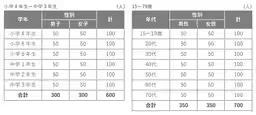
In an intriguing survey conducted by the Hakuhodo Foundation's Child Research Institute, the happiness score of Japanese elementary and middle school students has been reported as an impressive 82.7 out of 100 for the year 2025. Researchers surveyed 600 students from 4th grade to 9th grade, alongside 700 participants aged 15 to 79, providing vital insight into how they perceive their happiness and beliefs about the future.
Key Findings
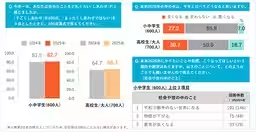
1. Happiness Scores: The average happiness score for children is markedly higher than that of high school students and adults. Students scored 82.7 points, compared to the 66.3 points recorded by older respondents, marking a 16.4 point gap. While both age groups reported a slight improvement from the previous year, children saw a modest increase of 1.2 points over last year.
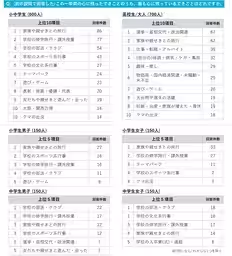
2. Memorable Events: Among the most significant events for students in 2025, family trips and gatherings topped the list, showcasing the importance of family connections during formative years. In contrast, older respondents pointed to political events, such as elections and changes in prime ministerial leadership, as pivotal moments.
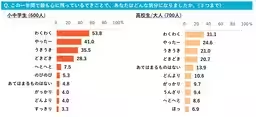
3. Sentiments Expressed: When asked to describe their feelings about their cherished memories using onomatopoeia, the leading terms ‘waku waku’ (excited), ‘yatta’ (yay), and ‘uki uki’ (happy) echoed through the responses, emphasizing the joy children experienced during memorable occasions.
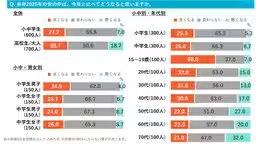
4. Expectations for 2026: As for the future, a striking 65.8% of children expressed belief that life in 2026 will remain unchanged from the current year. Among students and adults alike, only about 30% anticipate an improvement, while merely 7% of younger students expect things to worsen, revealing a more optimistic outlook compared to their older counterparts, where 18.7% foresaw negative changes.
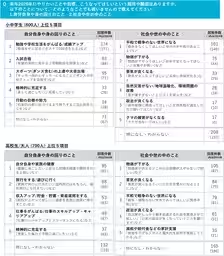
5. Aspirations and Hopes: Looking ahead to 2026, children's aspirations are notably influenced by a desire for peace and a stable world devoid of conflict. Many expressed wishes for lower prices, reflecting growing concerns about economic conditions. Comparatively fewer children voiced concerns about war compared to the previous year, marking a shift in sentiment. Instead, a rising focus on economic matters highlights children’s responsiveness to current global issues.
Detailed Insights
In the sophisticated landscape of children's thought, these insights reveal how they navigate happiness, societal expectations, and personal aspirations:
- - Happiness Score Analysis: The 82.7 score for children reflects a strong sense of contentment in their immediate experiences, with elementary students particularly exhibiting the highest scores (above 85) compared to middle school students, who averaged 78.1.
- - Significant Events: Family trips created profound memories, ranking them above school-related endeavors like field trips or cultural events. The introduction of new events such as the Osaka Kansai Expo demonstrates an evolving cultural landscape.
- - Emotional Responses: The emotional reactions captured during the survey reveal a shared joy among children that seems to transcend generations. The low percentage of those reporting feelings of exhaustion after significant events speaks to a generally positive mindset.
- - Vision for Change: While children expect little change in global circumstances, their hopes remain steadfastly rooted in a desire for peace. Increasing responses to economic concerns indicate a growing awareness of external pressures affecting their daily lives.
Conclusion
The 2025 sentiment survey provides a fascinating glimpse into the psyche of Japanese youth. Amidst rising tensions and economic uncertainty, children maintain a sense of optimism and connection to their families and communities. The reflections and aspirations highlighted in this study are valuable not only for understanding the aspirations of young people but also for shaping a supportive structure around them as they navigate their paths in an ever-changing world.

Topics People & Culture)




【About Using Articles】
You can freely use the title and article content by linking to the page where the article is posted.
※ Images cannot be used.
【About Links】
Links are free to use.