



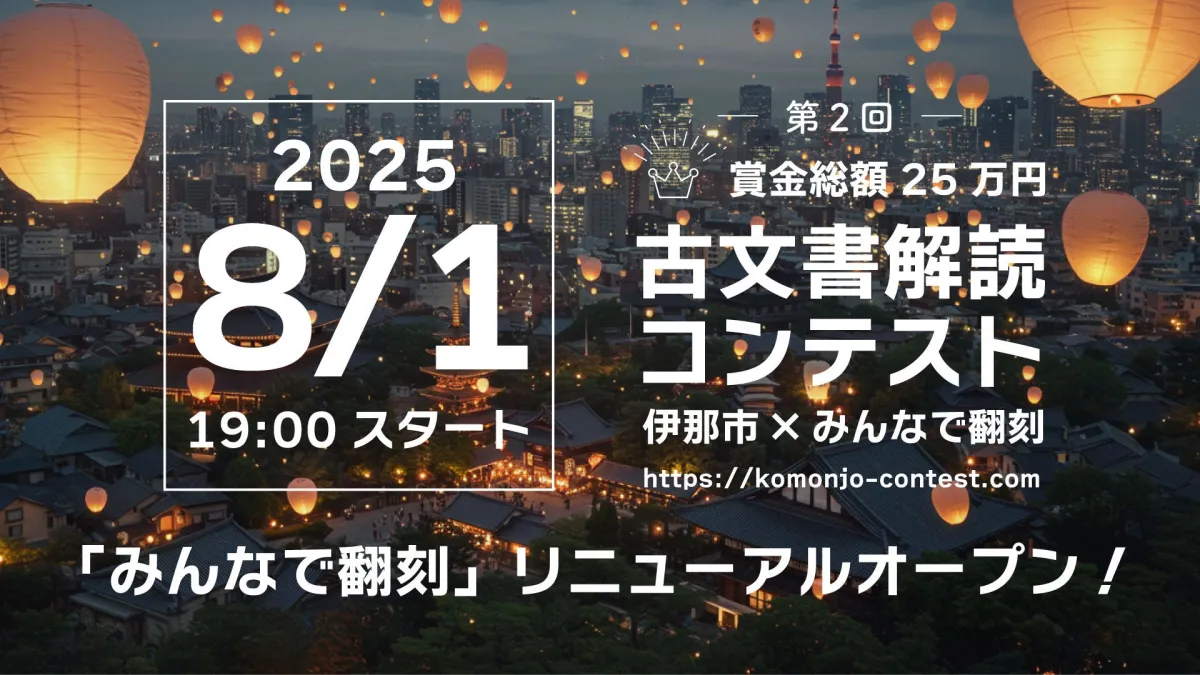
Exciting Second Ancient Manuscript Deciphering Contest to Start on August 1, 2025!
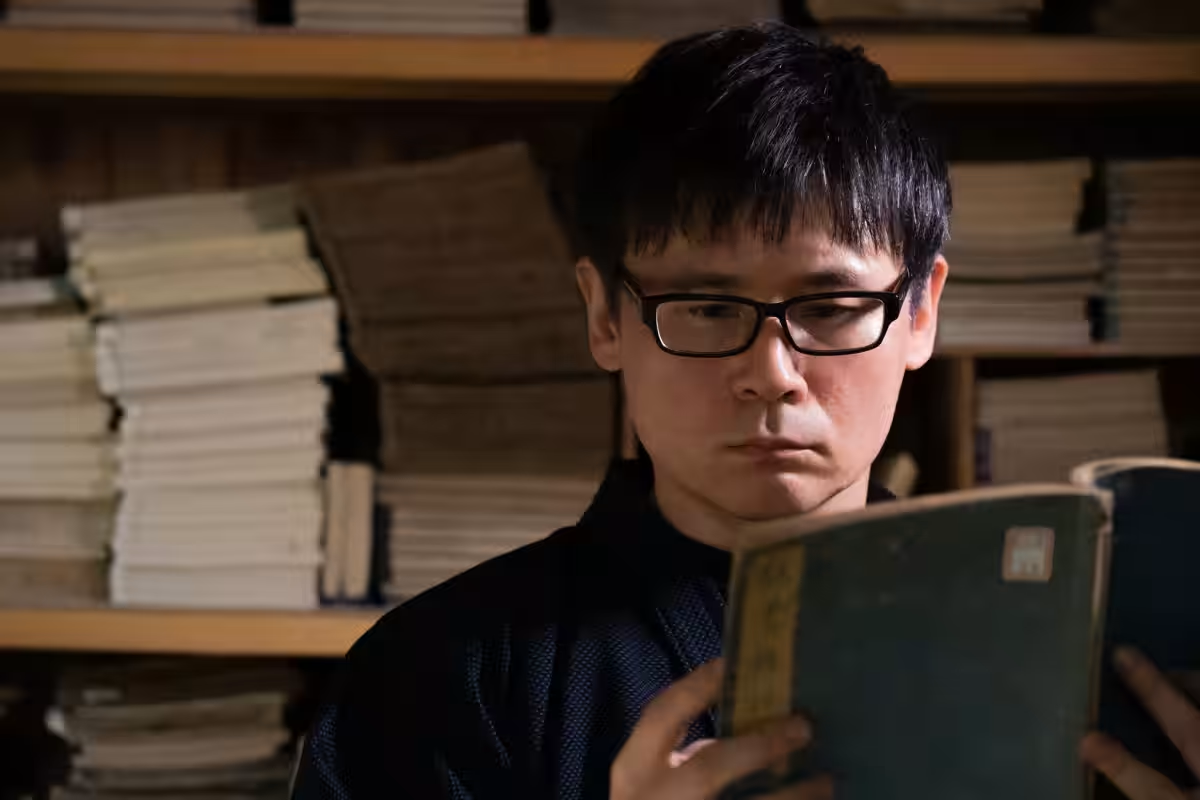
Dive into the World of Ancient Manuscripts
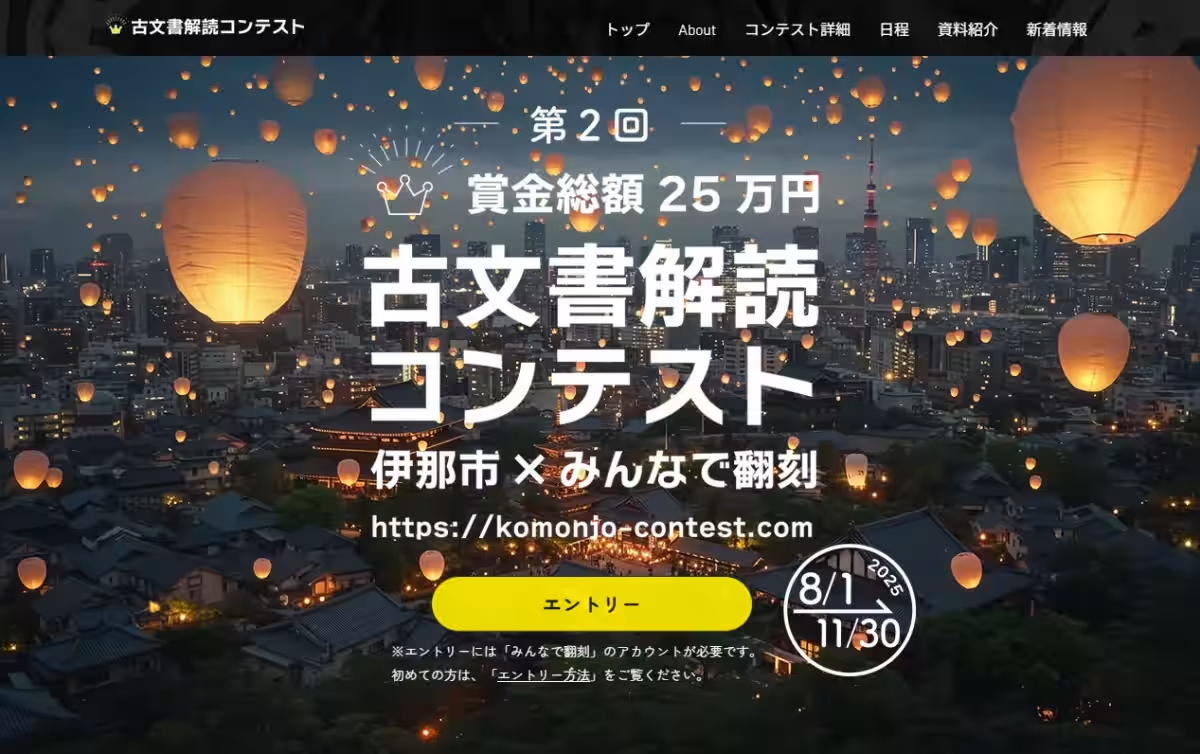
Get ready for an exciting opportunity to test your skills in deciphering ancient Japanese manuscripts! The second Ancient Manuscript Deciphering Contest is set to kick off on August 1, 2025. Participants from all over the country are invited to engage in a battle of wits, using the latest AI technology to decode manuscripts written in the intriguing cursive style of classical Japanese. The competition promises not just a fun learning experience but also a chance to win a prize pool of 250,000 yen!
Event Overview
The contest challenges participants to read as many ancient manuscripts as possible over the course of four months, with a total prize purse of 250,000 yen. This includes awards for the top contenders: 100,000 yen for first place, 50,000 yen for second, and smaller rewards for placements down to tenth.
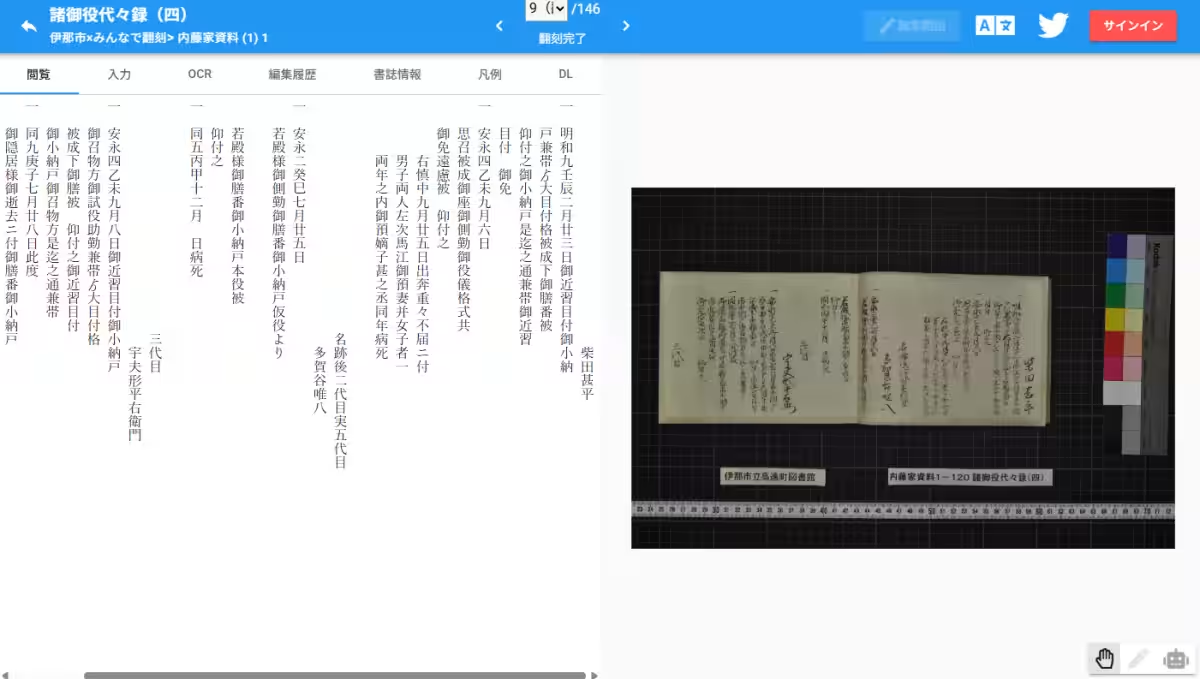
At the heart of the event is the newly revitalized online collaborative transcription platform, "Minna de Honkoku" (Everyone Transcribes), which will be launched in tandem with the contest. This platform has previously proven successful, with participants collectively transcribing over 4.8 million characters from various historical documents.
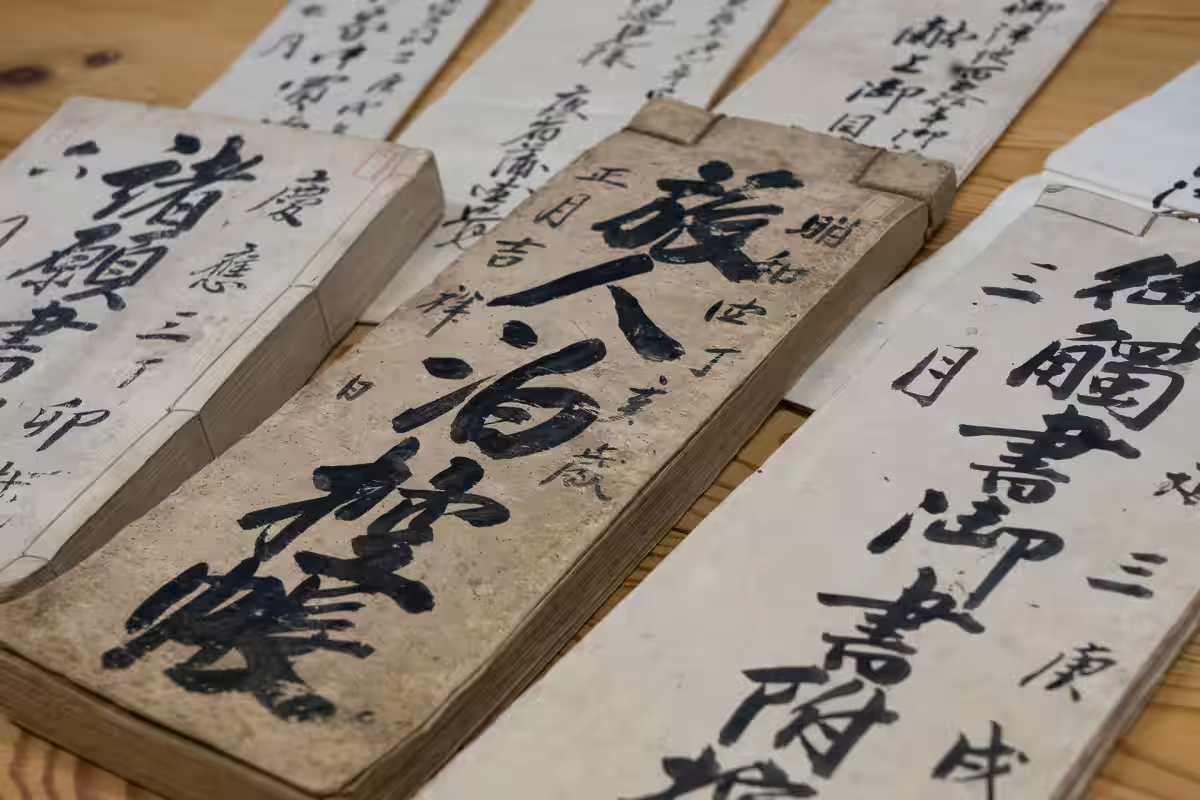
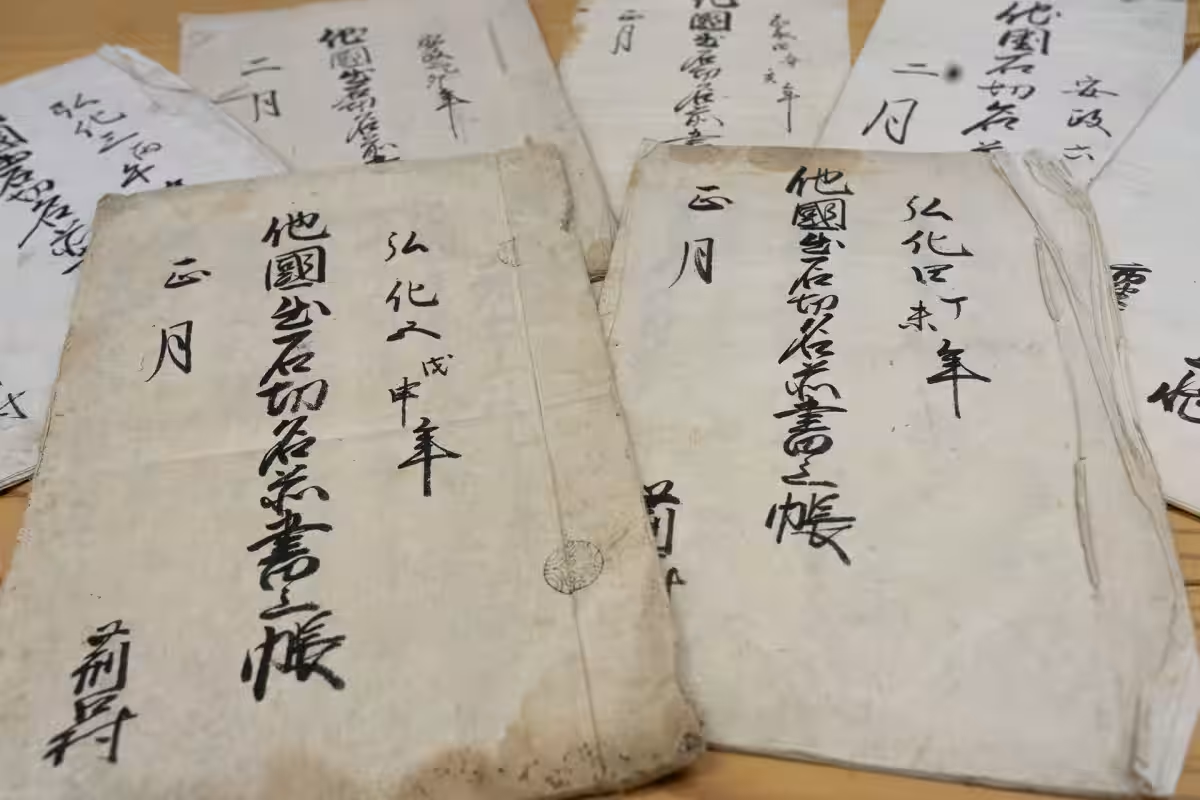
Last year's inaugural contest was a resounding success, where 158 participants helped transcribe over 1.58 million characters. This year's contest focuses on around 600 documents housed in the Takato Town Library in Ina City, Nagano Prefecture. The manuscripts primarily relate to the Takato stone craftsmen, opening a rich window into regional history.
Why It Matters
Ancient documents from Japan's Edo period number in the billions, making them a treasure trove of historical insight. However, very few specialists can read these classical cursive characters. Many valuable documents languish unexamined in private homes, often lost to neglect, disasters, or dismissive disposal. The contest aims to bring attention to this plight while promoting public engagement with these historical texts.
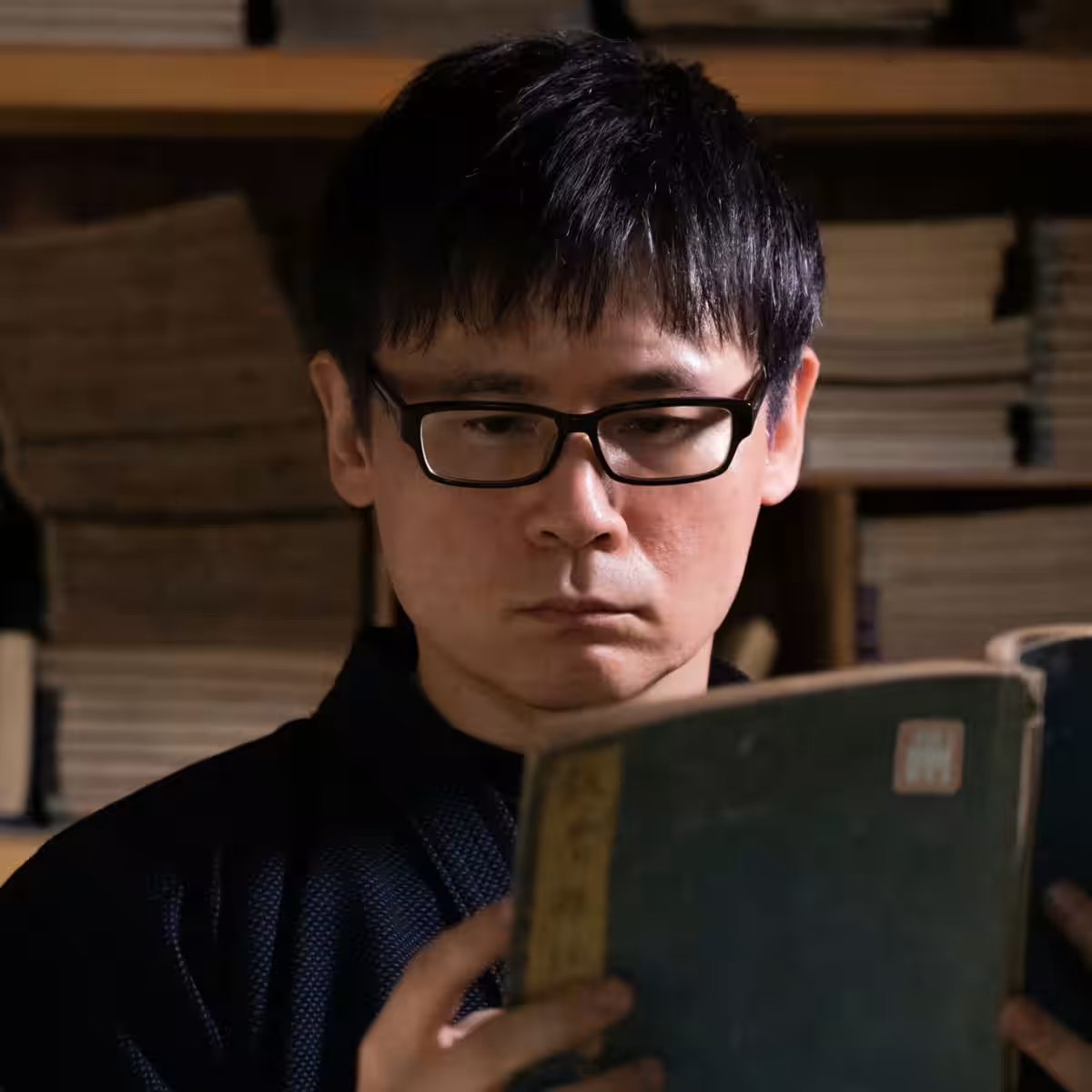
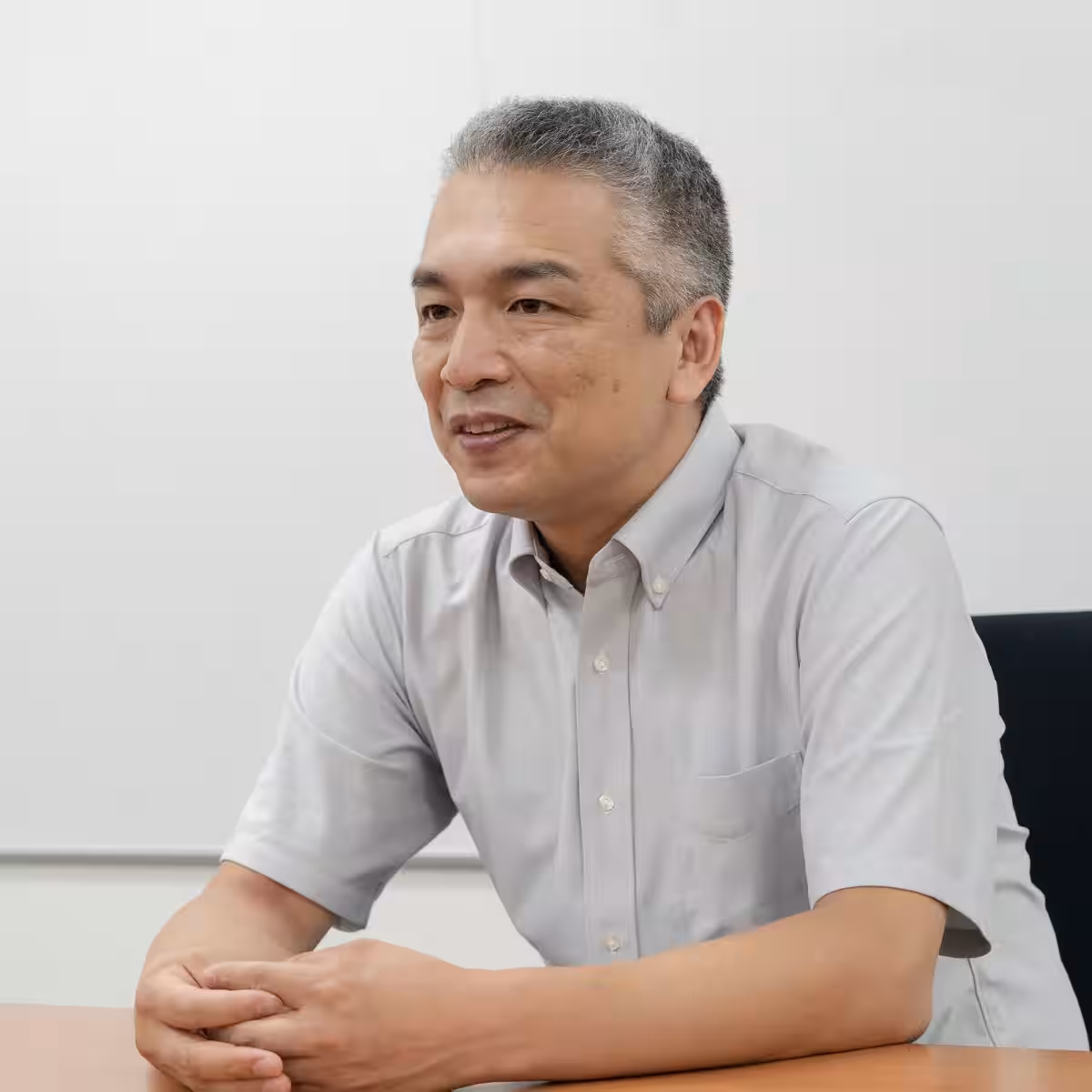
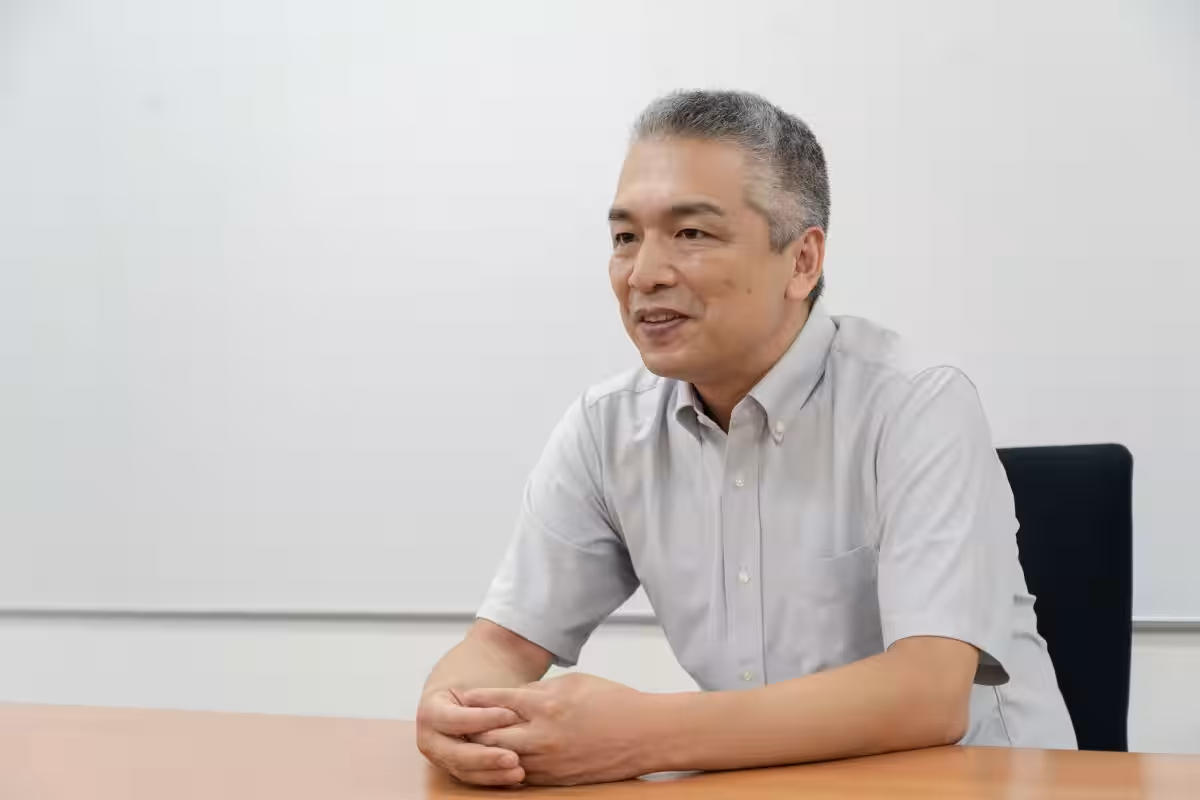
The project is led by Kazuhiro Maeda, a community revitalization volunteer, who recognized the potential of digitizing and making these texts accessible. His vision combines the joy of competition with serious efforts to preserve invaluable cultural heritage.
Innovations in the Transcription Platform
The upcoming version of "Minna de Honkoku" features several groundbreaking tools to enhance user experience and learning:
- - Cursive Character Recognition AI: This advanced AI can read entire manuscripts at once, offering significant support for aspiring transcribers.
- - Collection Functionality: Users can save specific characters and images for future reference, aiding their studies in cursive writing.
- - Forum Feature: Participants can interact within project groups, fostering collaboration and knowledge exchange.
- - User-driven Project Creation: Users can initiate their own transcription projects, making it easier for educational institutions to participate.
Event Schedule
The contest will run from August 1, 2025, to November 30, 2025. Participants aged 18 and older can register on the official contest website. A kickoff celebration will coincide with the platform launch, followed by an awards ceremony in late January 2026, where the top scorers will receive their prizes.
Kazuhiro Maeda emphasizes collaboration and regional promotion as key goals. By encouraging interest in ancient manuscripts through ingenious competition, he aims to address ongoing challenges in document preservation and knowledge dissemination.
A Community Effort
The second Ancient Manuscript Deciphering Contest not only represents a unique opportunity for individuals to hone their research skills but also symbolizes community action towards preserving invaluable cultural artifacts. As we look forward to this event, the hope is that it will inspire more people to appreciate and engage with Japan’s rich historical narrative.
For more information and to register for the contest, visit the official contest site. Join us in this wonderful journey to uncover the hidden treasures of Japan's past!
Topics People & Culture)
【About Using Articles】
You can freely use the title and article content by linking to the page where the article is posted.
※ Images cannot be used.
【About Links】
Links are free to use.