




Three Essential Tips for Effective Disaster Education and Communication
The Importance of Storytelling in Disaster Education
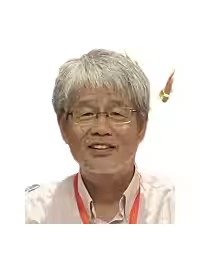
In the wake of natural disasters, the need for effective disaster education has become increasingly apparent. This article explores the insights of Seiji Suwa, a disaster education advisor and collaborator, on the role of storytelling in fostering a proactive culture of disaster preparedness among individuals, particularly the youth.
Setting the Stage for Disaster Education
Disaster education in Japan has evolved considerably since the Great Hanshin Earthquake. Recognizing that conventional evacuation drills alone couldn't adequately protect lives, officials began emphasizing the importance of teaching concepts like the value of life and community support. This shift was accompanied by the establishment of specialized courses, such as the Environmental Disaster Studies Program at Maiko High School in Hyogo Prefecture, which aims to provide students with practical and interactive learning experiences related to disaster response.
Engaging Educational Experiences
Suwa recalls an impactful lesson where a rescue team leader from Kobe Fire Department shared his personal story of rescuing victims during the earthquake. The emotional narrative resonated deeply with the students, particularly one who had lost her mother in the same hospital where the rescuer had worked. The interaction highlighted the significance of establishing genuine connections in learning environments to foster an atmosphere where young people feel encouraged to engage with and reflect upon their own experiences.
Keeping memories alive
Incorporating storytelling into disaster education serves as a crucial tool for preserving the memory of past disasters. Suwa underscores the importance of students sharing their experiences, creating a repository of narratives that can help inform future generations. This practice not only honors the past but also ensures that vital lessons are passed down, mitigating the risk of historical amnesia as survivors age.
Methods to Promote Personal Engagement in Disaster Preparedness
Suwa offers three critical strategies for encouraging individuals to view disaster preparedness as a personal responsibility:
1. Teaching the Process, Not Just the Conclusion: It's essential to present students with real-life scenarios and let them analyze and derive conclusions on their own. Instead of merely stating that collaboration is essential, educators should delve into specific instances to evoke critical thinking.
2. Peer Testimonials: Hearing from peers who have experienced disasters can significantly impact students' perceptions. When young individuals share their stories, it becomes easier for others to relate and understand the implications of disaster preparedness.
3. Connecting Dreams to Preparedness: By linking personal aspirations to disaster readiness, students are more likely to engage. For instance, asking a child who dreams of becoming a florist how their profession can aid in disaster care may ignite discussions about community support and resilience during emergencies.
The Role of Food in Disaster Preparedness
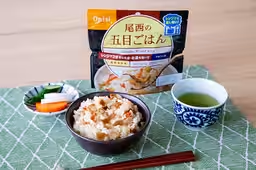
During emergencies, the importance of nutritious and palatable food cannot be overstated. Suwa suggests that individuals and families should aim to have food supplies that mirror their everyday meals, making the transition during a disaster less daunting. The notion is to minimize reliance on emergency facilities and ensure individuals have access to food they enjoy.
Ideal Disaster Education
Suwa envisions a world where disaster preparedness education becomes an integral school subject. Research shows that students exposed to disaster education exhibit improved understanding of safety and preparedness protocols. This proactive approach fosters the development of human resources capable of taking action in times of crisis.
As we continue to face environmental challenges, integrating disaster education into our communities will shape a more resilient future.
For more information about disaster preparedness, visit Onisi Foods.
Learn more about the ongoing programs at Maiko High School.

Topics People & Culture)
【About Using Articles】
You can freely use the title and article content by linking to the page where the article is posted.
※ Images cannot be used.
【About Links】
Links are free to use.