



Okayama University Launches Unique Agricultural Project to Revive Traditional Craft and Culture
Revitalizing Tradition: Okayama University's Unique Synecoculture Project
On October 12, 2025, Okayama University launched an innovative initiative known as the "Okayama Synecoculture Project in Niimi". This project is a part of the government's program aimed at strengthening regional core universities' capacity to foster innovation. The core mission is to regenerate abandoned farmland and develop a nature-symbiotic community through sustainable cooperative farming practices.
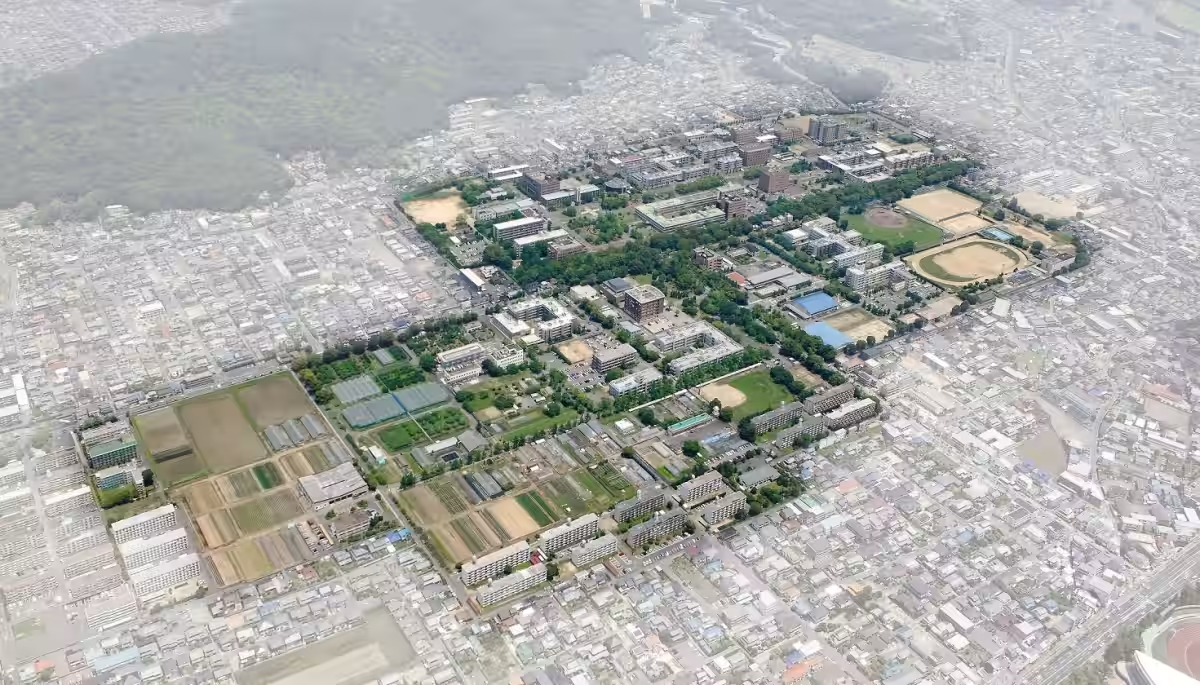
The impetus for this project arises from the dire state of traditional Japanese crafts, specifically the production of Kamiyama washi paper, which relies on certain plants such as Kozo (paper mulberry), Mitsumata, and Tororo-aoi. These plants, once prevalent in the region, have seen a drastic decline in cultivation, risking loss of both agricultural heritage and a cultural cornerstone of the community. As part of this initiative, the university's Tsushima Campus has already been experimenting with these concepts, laying the groundwork for broader community engagement.
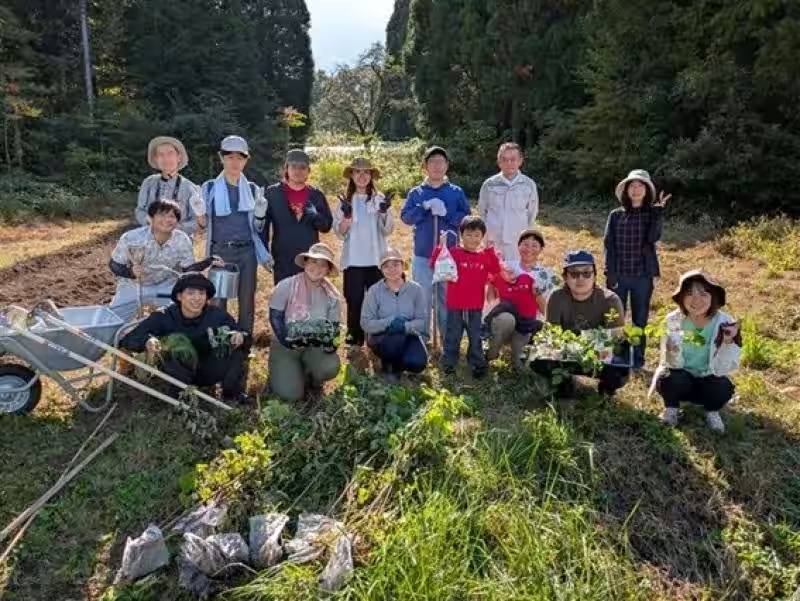
In this collaborative effort, students from various disciplines—including agriculture, engineering, economics, and the Global Discovery Program—join forces with researchers from the Resource Plant Science Institute. Notably, the group included representatives from two university-affiliated startups and local stakeholders, including kindergarten and elementary school children. This intergenerational collaboration embodies the essence of community involvement in education and cultural preservation.
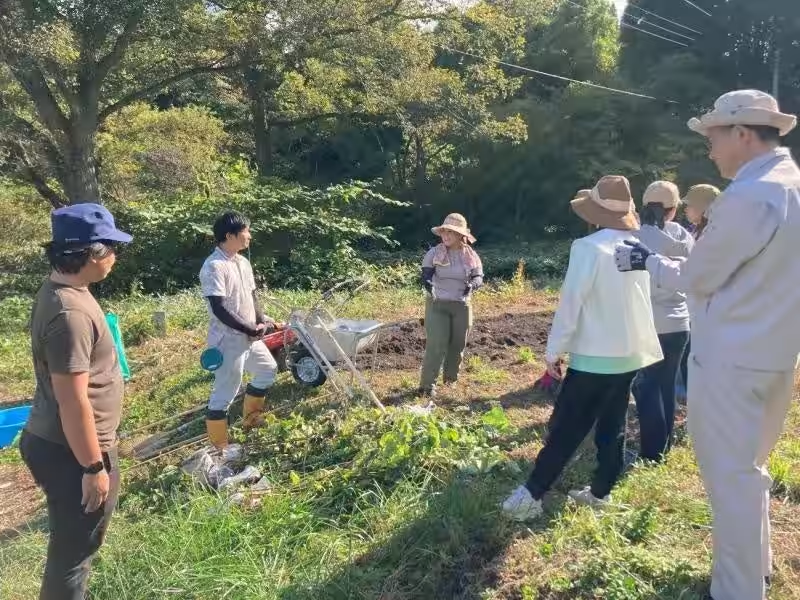
The project was conceptualized and spearheaded by Chihiro Tsuchiya, a recent graduate of Okayama University who now serves as a local revitalization coordinator in Niimi. At the commencement of the activities, Shunsuke Tsuchiya, the head of the Kojiro Washiya, shared essential insights about the characteristics of washi materials and the fundamental principles of synecoculture.
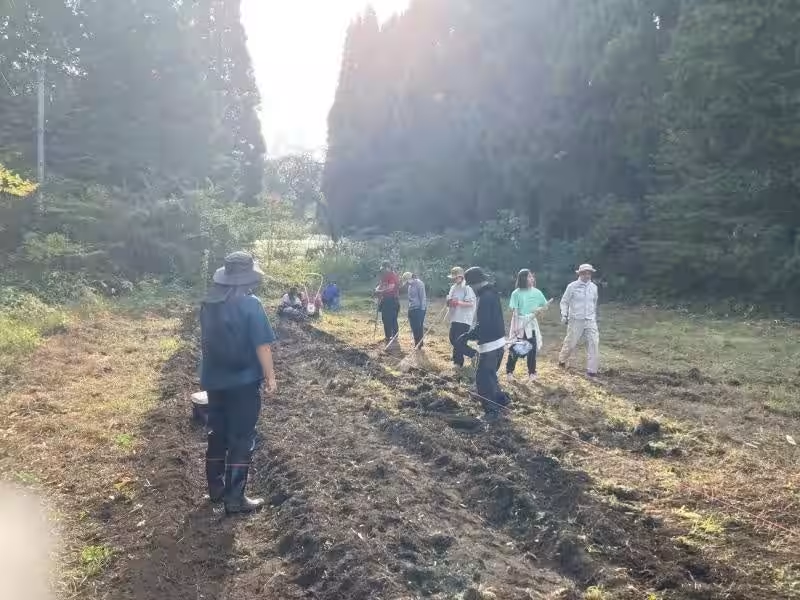
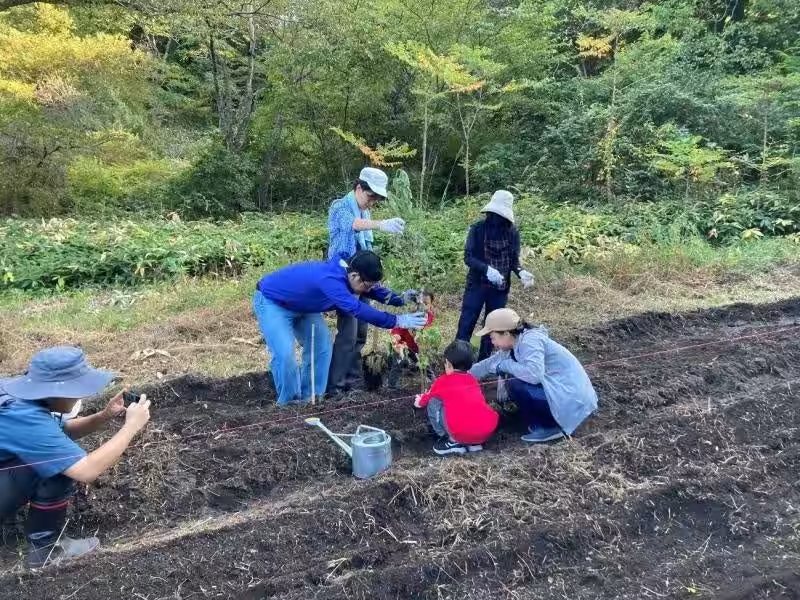
Following the introduction, participants engaged in various agricultural tasks, including weeding and constructing planting beds. They sowed Kozo seedlings in a restored plot of land that was once a commercial chrysanthemum farm, taking advantage of optimal sunlight and air circulation conditions. Emphasizing the synecoculture philosophy, a diverse ecosystem was established by planting strawberries and garlic alongside the Kozo to foster interdependency among plants. This approach not only caters to sustainability but also enhances soil health and biodiversity, moving towards a more resilient farming model.
The day’s events featured a vibrant atmosphere filled with enthusiasm as both participants and observers from local media highlighted the community's engagement in learning about nature and their cultural heritage.
Looking ahead, the project aims to maximize the potential of Kozo, Mitsumata, and Tororo-aoi for producing washi paper. Future plans include efforts to brand the washi paper, integrating advanced technologies such as AI, image recognition, and robotics, merging environmental and technological strategies to create a sustainable cooperative model. Okayama University is committed to exploring new forms of regional co-creation through collaboration among academia, industry, and government, always with a focus on nurturing natural ecosystems and revitalizing cultural heritage.
This initiative marks a significant first step toward a sustainable agricultural practice rooted in community, education, and tradition, and further underlines the ongoing commitment of Okayama University as a core research institution dedicated to enhancing community well-being and education.




Topics People & Culture)
【About Using Articles】
You can freely use the title and article content by linking to the page where the article is posted.
※ Images cannot be used.
【About Links】
Links are free to use.