



Understanding Children in Foster Care: Insights from Palsystem's Youth Support Fund
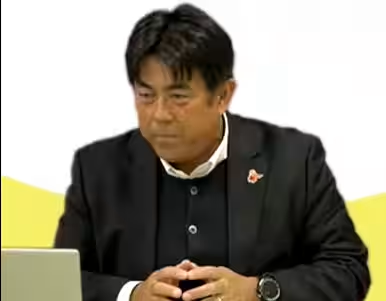
On December 3, the Palsystem Group organized an insightful online seminar through its Youth Support Fund to raise awareness about the current state of children under social care, specifically targeting the unique experiences of those in foster care. Attended by around 50 participants, the event featured a presentation by Yoshida Masahiro, the principal of the Koyama Home, a child welfare facility located in Isumi City, Chiba Prefecture. Yoshida's talk aimed to deepen the attendees' understanding of the growth contexts and challenges faced by these children, encouraging local community members to think about what they could do to help.
Yoshida emphasized the importance of recognizing that children in foster care are "ordinary kids". He urged attendees to first gain accurate knowledge about child welfare facilities to eliminate any fears or misconceptions that might exist in the community about these institutions. He believed that by discussing and sharing this information within the community, a greater understanding could be cultivated, thus reinforcing a supportive environment for these children.
Social care systems are designed to protect children unable to receive proper parenting from their biological parents. In Japan, there are currently 610 child welfare facilities, providing a stable home-like environment for approximately 23,008 children, facilitated by trained professionals including childcare workers and consultants from related fields. Many children are residing in these facilities due to complex reasons, with more than half affected by parental abuse, coupled with socio-economic difficulties or mental health issues. The age criterion for staying in these facilities has recently been eliminated, allowing for more flexible support based on individual circumstances.
At Koyama Home, children aged between 4 to 18 years live together in a nurturing environment, resembling that of a family unit. Their daily life includes shared meals, school activities, and playtime on the grounds, shaping a routine filled with warmth and care. Unfortunately, most of the children there come from backgrounds of abuse, with around 60% exhibiting developmental or intellectual disabilities, necessitating close collaboration with medical and mental health services for their care.
Yoshida illustrated the children’s experiences through an interactive session. Participants were asked to write down three important people, places, or items in their lives, crumple the papers, and toss them aside. This exercise was aimed at helping them grasp the emotional weight that children in foster care carry—when taken into care, many leave behind their loved ones and belongings, entering an unfamiliar system with profound feelings of loss.
He shared poignant reflections from children in care, who may feel stigmatized or fear that their friendships might collapse if peers discover their situation. As these youths approach the age of 18, they face the daunting challenges of independence and self-sufficiency, raising questions about their ability to navigate life without familial support. Yoshida encouraged attendees to consider the repercussions of a single setback in these children's lives and emphasized the importance of community support for former residents of welfare facilities.
To assist these youth, Palsystem offers a scholarship program established through donations from users, providing monthly financial support to students from fostering backgrounds. This program aims to not only alleviate financial burdens but also to support their social engagement through hands-on experiences in areas like agriculture and community volunteering. Palsystem believes this initiative can help build a supportive network, connecting these individuals with a diverse range of adult mentors that can guide them during their academic and life journeys.
Notably, the Palsystem Scholarship Program was recognized with the Good Design Award for its innovative approach to youth support through community involvement. Having begun in 2019, this initiative transitioned into a full-scale operation in 2021 under the management of the Palsystem Youth Support Fund established on December 1, 2023. The ongoing success and growth of this program depend significantly on community engagement and charitable contributions from across the board.
As an influential cooperative organization located in Shinjuku, Tokyo,Palsystem comprises various member cooperatives throughout Japan. By fostering connections and collaboration among these groups, Palsystem aims to continue nurturing the growth of young individuals who have experienced hardship, paving the way for brighter futures for all children in our society.


Yoshida emphasized the importance of recognizing that children in foster care are "ordinary kids". He urged attendees to first gain accurate knowledge about child welfare facilities to eliminate any fears or misconceptions that might exist in the community about these institutions. He believed that by discussing and sharing this information within the community, a greater understanding could be cultivated, thus reinforcing a supportive environment for these children.
Social care systems are designed to protect children unable to receive proper parenting from their biological parents. In Japan, there are currently 610 child welfare facilities, providing a stable home-like environment for approximately 23,008 children, facilitated by trained professionals including childcare workers and consultants from related fields. Many children are residing in these facilities due to complex reasons, with more than half affected by parental abuse, coupled with socio-economic difficulties or mental health issues. The age criterion for staying in these facilities has recently been eliminated, allowing for more flexible support based on individual circumstances.
At Koyama Home, children aged between 4 to 18 years live together in a nurturing environment, resembling that of a family unit. Their daily life includes shared meals, school activities, and playtime on the grounds, shaping a routine filled with warmth and care. Unfortunately, most of the children there come from backgrounds of abuse, with around 60% exhibiting developmental or intellectual disabilities, necessitating close collaboration with medical and mental health services for their care.
Yoshida illustrated the children’s experiences through an interactive session. Participants were asked to write down three important people, places, or items in their lives, crumple the papers, and toss them aside. This exercise was aimed at helping them grasp the emotional weight that children in foster care carry—when taken into care, many leave behind their loved ones and belongings, entering an unfamiliar system with profound feelings of loss.
He shared poignant reflections from children in care, who may feel stigmatized or fear that their friendships might collapse if peers discover their situation. As these youths approach the age of 18, they face the daunting challenges of independence and self-sufficiency, raising questions about their ability to navigate life without familial support. Yoshida encouraged attendees to consider the repercussions of a single setback in these children's lives and emphasized the importance of community support for former residents of welfare facilities.
To assist these youth, Palsystem offers a scholarship program established through donations from users, providing monthly financial support to students from fostering backgrounds. This program aims to not only alleviate financial burdens but also to support their social engagement through hands-on experiences in areas like agriculture and community volunteering. Palsystem believes this initiative can help build a supportive network, connecting these individuals with a diverse range of adult mentors that can guide them during their academic and life journeys.
Notably, the Palsystem Scholarship Program was recognized with the Good Design Award for its innovative approach to youth support through community involvement. Having begun in 2019, this initiative transitioned into a full-scale operation in 2021 under the management of the Palsystem Youth Support Fund established on December 1, 2023. The ongoing success and growth of this program depend significantly on community engagement and charitable contributions from across the board.
As an influential cooperative organization located in Shinjuku, Tokyo,Palsystem comprises various member cooperatives throughout Japan. By fostering connections and collaboration among these groups, Palsystem aims to continue nurturing the growth of young individuals who have experienced hardship, paving the way for brighter futures for all children in our society.
Topics People & Culture)

【About Using Articles】
You can freely use the title and article content by linking to the page where the article is posted.
※ Images cannot be used.
【About Links】
Links are free to use.