



Essential Disaster Preparedness for New Mothers: Insights from a 2026 Survey
Understanding the Preparedness Gap for New Mothers
In light of recent natural disasters, disaster preparedness has become an urgent concern for families, especially those with infants. A 2026 survey conducted by Meiji Corporation surveyed 464 women either pregnant or with children under two years old. This study aimed to assess their awareness and preparedness regarding disaster supply stockpiling for infants, revealing significant gaps between perception and action.
Survey Overview
Conducted via an online survey from May 29 to June 2, 2026, the research consisted of responses from 155 expectant mothers and 309 women with children aged 0 to 2 years. As disasters like earthquakes and typhoons become more frequent, the need to prepare not just for adults but especially for newborns, in consideration of their feeding and care needs, has never been more crucial.
The Importance of Preparedness
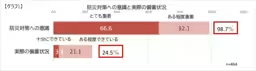
An overwhelming 98.7% of respondents believe that disaster preparedness is critical. However, only 3.4% reported being adequately prepared with supplies for their infants, and just 24.5% admitted to somewhat meeting their preparedness needs. This stark contrast highlights a widespread inconsistency between recognizing the importance of preparedness and actually taking the necessary steps.
Vulnerabilities During Pregnancy
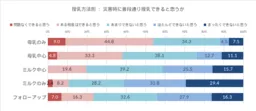
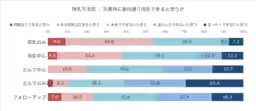
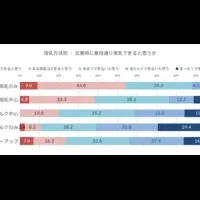
When comparing preparedness levels between pregnant women and those currently raising children under two years of age, the results were concerning. A staggering 47.1% of pregnant women reported being almost entirely unprepared, compared to 30.7% of mothers with children. The predominant reasons for this lack of preparedness included procrastination (55.4%), uncertainty about what supplies to gather (42.0%), and confusion about the quantity needed (37.4%).
Comparing Essential Supplies
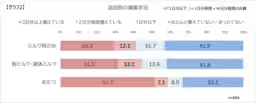
When looking at the preparedness for specific items needed by infants, the survey showed that only 31.5% had more than three days' worth of milk, while 29.3% had a sufficient supply of water. In stark contrast, 51.7% of respondents had adequate supplies of diapers. Alarmingly, over 41% of participants admitted to not having enough milk or water prepared, particularly among pregnant women, where the shortage rate soared to 72.9% for formula milk and 65.8% for water.
Concerns During Power Outages
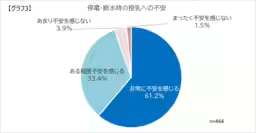
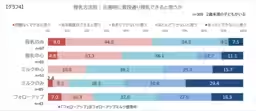
An alarming 94.6% of mothers expressed significant anxiety regarding the challenges of breastfeeding during power outages or water shortages. Among pregnant respondents, the level of anxiety was even higher, with 66.5% feeling extremely apprehensive. For mothers relying solely on formula feeding, 61.2% felt they would struggle to provide milk during these emergencies, as opposed to just 12.0% of breastfeeding mothers.
Information Deficiency
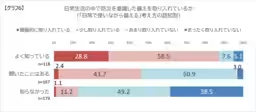
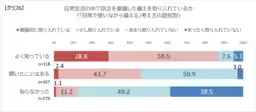
Nearly half of the respondents (49.8%) admitted not knowing what preparations or quantities were necessary for disaster preparedness. Additionally, about 60.8% had not contemplated their feeding plans during emergencies. The analysis underscores a crucial need for enhanced information dissemination, as many parents lack practical readiness and guidance on disaster preparations.
Identifying Must-Have Items
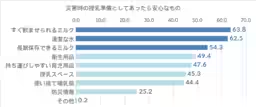
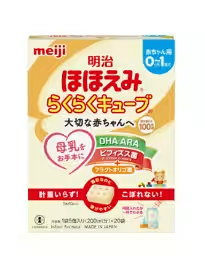
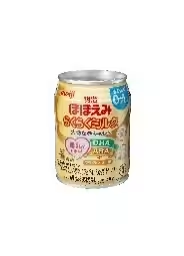
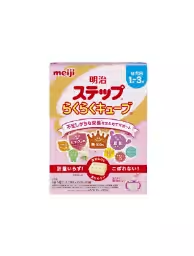
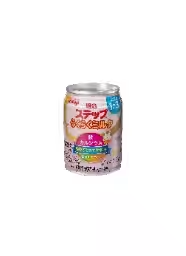
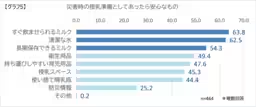
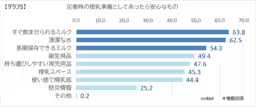
When asked about essential items for breastfeeding during a disaster, the leading response was ready-to-drink milk (63.8%), followed by clean water (62.5%) and long-lasting milk (54.3%). This indicates a strong preference for high-demand items requiring minimal preparation during crises.
Bridging the Knowledge-Action Gap
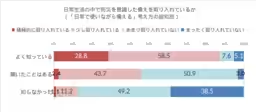
Awareness of strategies like the


Topics Other)




【About Using Articles】
You can freely use the title and article content by linking to the page where the article is posted.
※ Images cannot be used.
【About Links】
Links are free to use.