



The Importance of Subtle Support for Returning Workers: Findings from Rodina's Survey
The Power of Subtle Support for Returning Employees
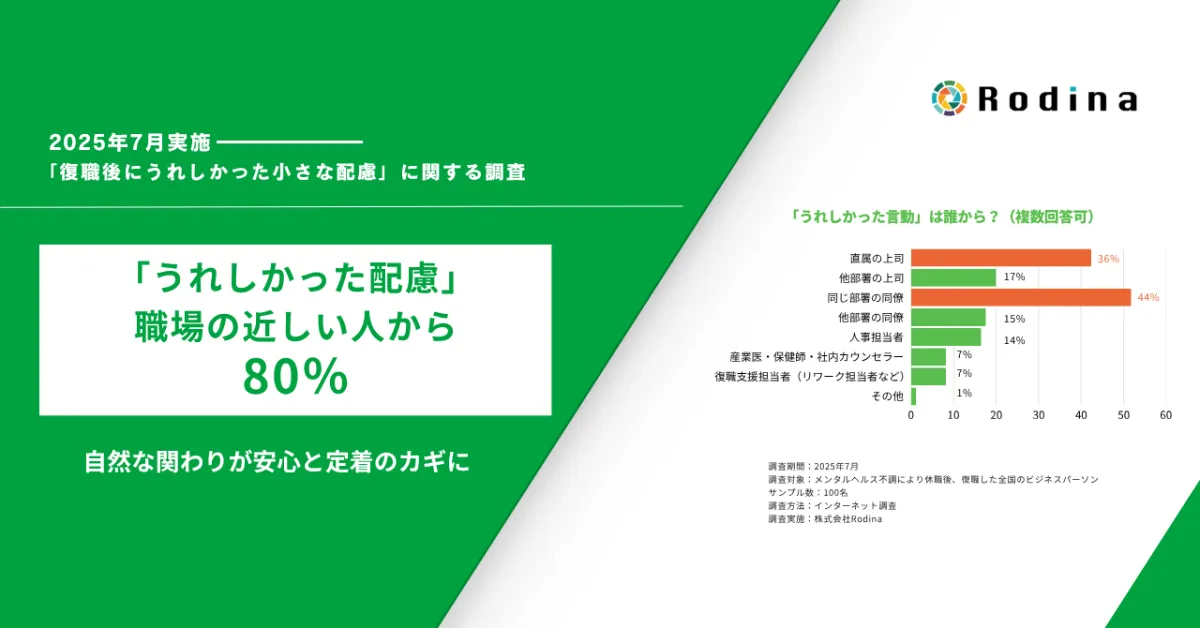
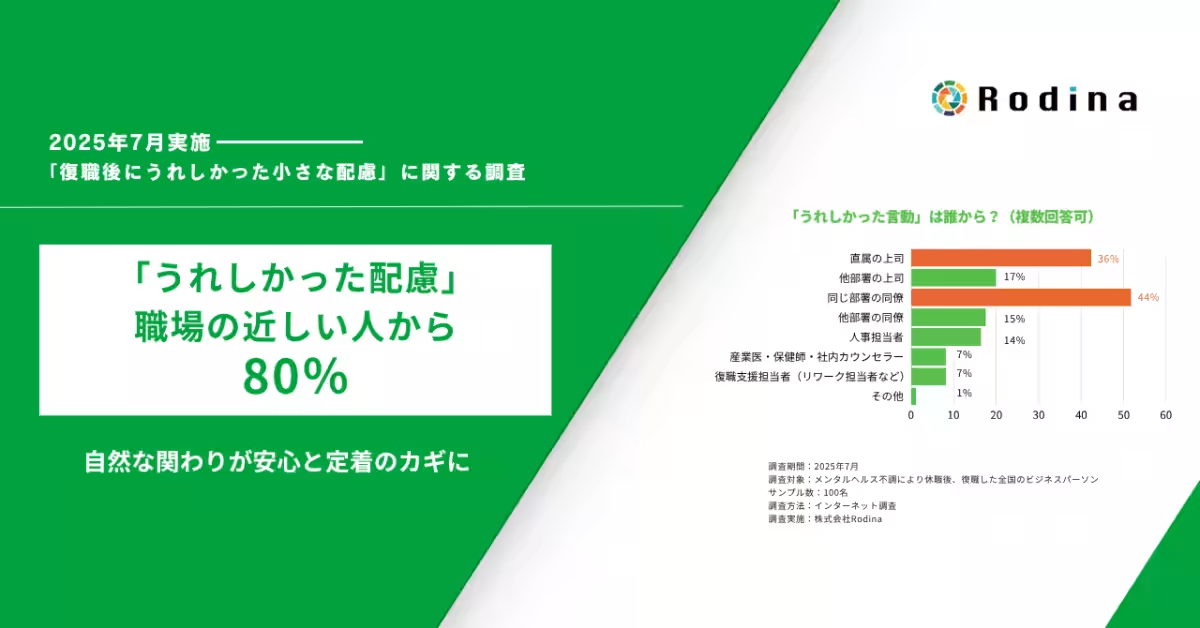
In a recent survey conducted by Rodina, a company specializing in re-employment support for individuals recovering from mental health issues, it was found that 80% of returning workers felt benefited by the thoughtful gestures of their colleagues and managers. This study involved 100 business professionals nationwide who had taken leave due to mental health issues such as depression or adjustment disorders and subsequently returned to work.
Key Findings
- - Natural Interactions Matter: A significant 80% of respondents expressed gratitude for the "natural words or actions from close colleagues" that made their reintegration easier. This underscores how everyday interactions can foster a sense of security for those returning to work.
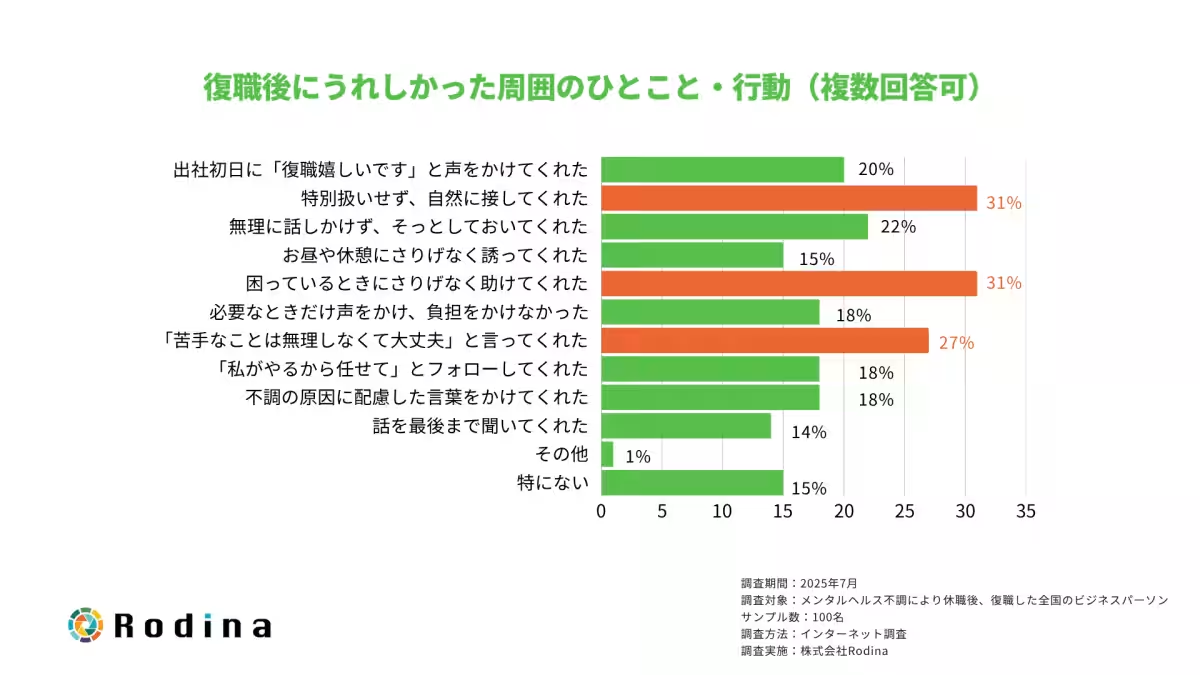
- - Examples of Support: Two prominent ways colleagues showed their support included treating returning employees without special distinction (31%) and offering help unobtrusively during tough times (31%). These interactions were perceived as incredibly supportive and affirming, enhancing the returning workers' comfort levels.
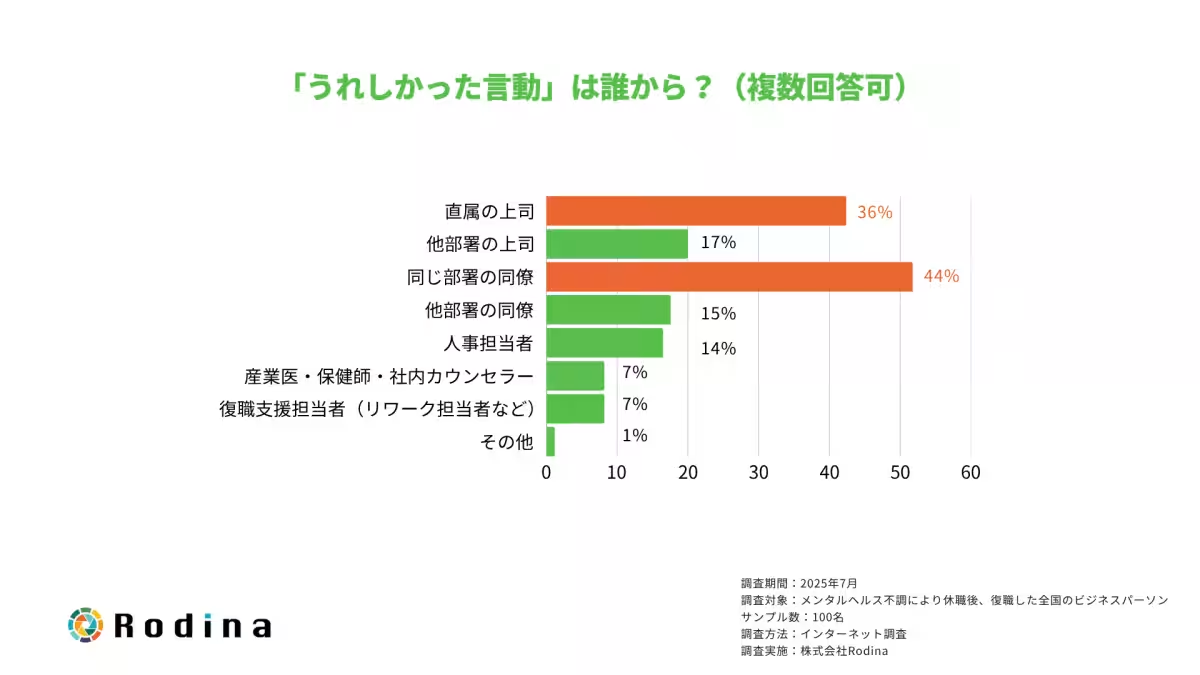
- - Support from Peers: Among the support providers, 44% of respondents highlighted the role of colleagues in the same department, while 36% noted the importance of their direct supervisor's encouragement. This indicates that close, informal relationships within the workplace can be more effective than formal support systems.
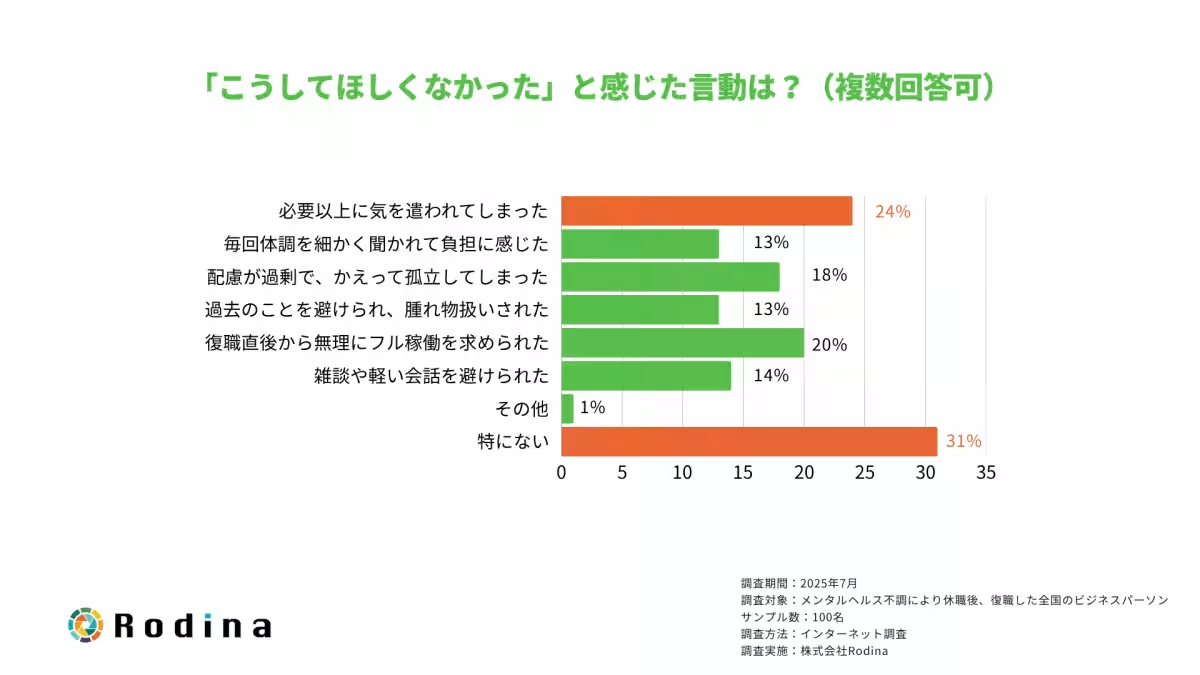
- - The Fine Line of Care: Interestingly, the survey also revealed that excessive concern could sometimes backfire. 24% of respondents felt that too much attention was placed on them, and 13% indicated that being frequently asked about their health became burdensome. This points toward the delicate balance required in offering support—genuine care without overstepping personal boundaries.
Insights and Implications
The survey highlights a significant trend: small gestures and informal interactions can significantly impact the emotional well-being and workplace integration of returning employees. The insights gleaned from this research suggest that a normal, collegial atmosphere contributes greatly to the sense of belonging among employees, which can ultimately improve retention rates.
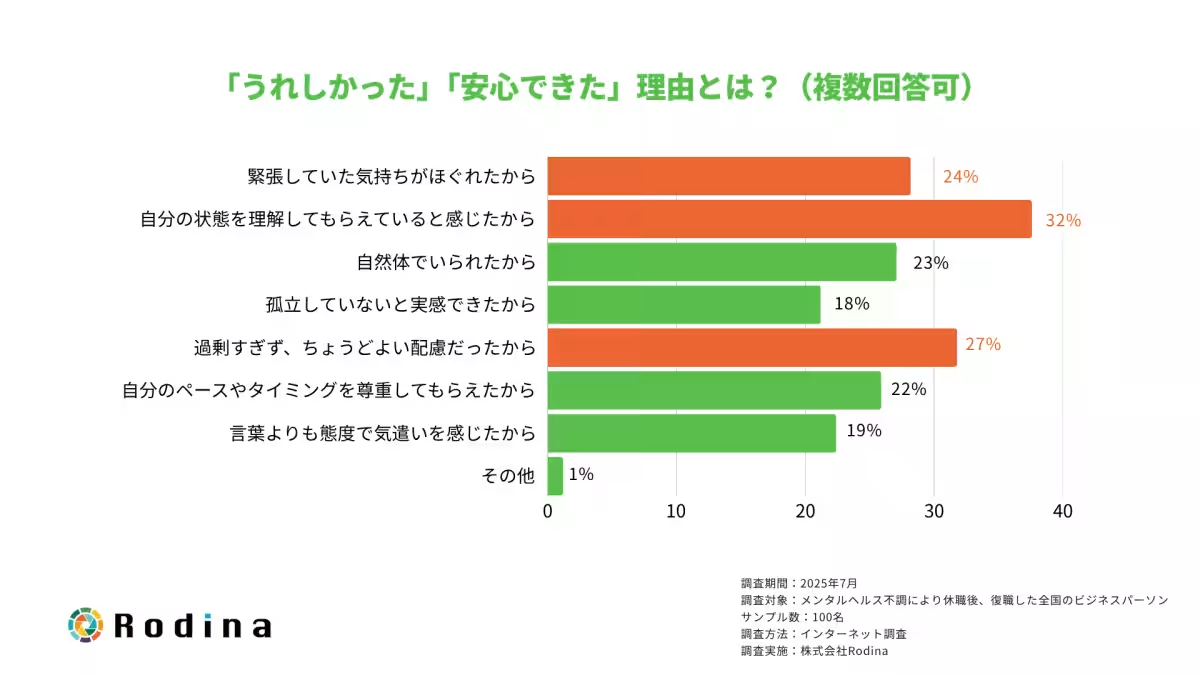
Key supportive behaviors that fostered comfort included avoiding excessive praise or attention and instead simply being present. For example, employees appreciated when colleagues would casually check in without making a fuss over their return. This naturalistic approach brings psychological safety and encourages reintegration without the pressure often associated with being treated differently.
Moreover, the research emphasizes that support should not stem solely from particular individuals or structured programs. Instead, building a supportive atmosphere requires collective involvement from the entire team, where consistent, casual communication remains paramount.
Going forward, employers should strive to cultivate relationships that naturally accommodate returning employees. This orientation not only aids in their adjustment but also enhances the workplace environment for everyone involved.
Survey Details
- - Name: Survey on "Moments of Appreciated Small Considerations by Returning Employees"
- - Method: Online survey
- - Participants: 100 business professionals who returned to work after a mental health-related leave
Closing Thoughts
Overall, fostering a workplace conducive to the return of individuals recovering from mental health challenges requires subtle yet impactful interactions. Employers who encourage such supportive practices will likely see a more engaged and satisfied workforce, where employees feel embraced as integral parts of the team. As we move forward, the necessity of nurturing these organic relationships remains clear—the focus should not just be on formalized support structures but on enhancing daily human interactions that inspire security, comfort, and a true sense of belonging.
About Rodina
Rodina is committed to facilitating the reintegration of individuals facing mental health challenges into the workforce, emphasizing the importance of effective support systems not just from managers but also from peers. With a successful track record of assisting over 2,200 employees in their journey back to work, Rodina continues to champion the establishment of a work environment where everyone can thrive.

Topics People & Culture)

【About Using Articles】
You can freely use the title and article content by linking to the page where the article is posted.
※ Images cannot be used.
【About Links】
Links are free to use.