



Exploring the Science and Politics of the Mekong River Drought in 2019
The Science and Politics of the Mekong River Drought in 2019
On September 29, 2025, the Japan Global Infrastructure Foundation hosted an online seminar titled 'The Science and Politics of the Mekong River Drought in 2019: The Role of Evidence and Pathways to International Cooperation.' This virtual event was led by Kenji Otsuka from the Japan External Trade Organization's (JETRO) Asia Economic Research Institute. The seminar aimed to delve into the complexities of Evidence-Based Policy Making (EBPM) in international relations, particularly in the context of the Mekong River, where geopolitical tensions intersect with environmental issues.
Purpose of the Seminar
The seminar addressed a pressing question: What happens when the evidence that should be shared among nations triggers conflict instead? The discussion centered around the significant drought that struck the Mekong River in 2019, which came under scrutiny from various analysts. A report from an American think tank connected the drought to the operations of dams in upstream China, prompting a series of rebuttals from Chinese officials who presented data disputing these claims. This sparked an international debate that highlighted the importance of cooperative governance in resource management.
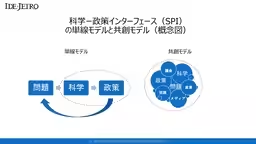
Starting in November 2020, China began to share hydrological data with the Mekong River Commission (MRC), signaling a change in its stance on data transparency regarding upstream water management. Otsuka presented the evolution of this situation through the 'Science-Policy Interface' (SPI) lens, examining how evidence is interpreted and how it may lead to international collaboration amid ongoing tensions.
Key Topics Addressed
1. Water Resources and Environmental Issues in the Mekong Basin
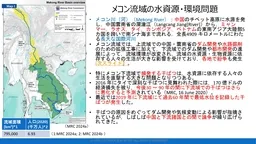
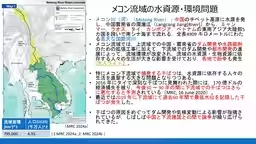
- - The Mekong River, originating from Tibet and running through several Southeast Asian countries, has become a battleground for water resource management disputes.
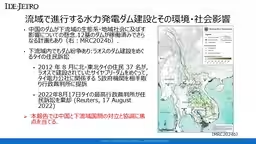
- - China’s extensive dam projects have raised alarms in downstream countries, leading to substantial natural environmental changes.
- - Climate change has exacerbated these issues, with the 2019 drought marking the lowest water levels recorded in 60 years, prompting debates over the responsibility for such climatic disasters.
2. International Frameworks and Cooperation for Transboundary Water Management
- - The only member of the United Nations Water Course Convention from the Mekong basin is Vietnam, underscoring the lack of a comprehensive international framework governing all nations within the basin.
- - The MRC, established by four downstream countries in 1995, competes with the China-led Lancang-Mekong Cooperation mechanism launched in 2016.
- - Since 2002, China has shared hydrological data seasonally with the MRC, although these arrangements have often been contested.
3. The Intersection of Science and Politics during the 2019 Drought
- - Following the unprecedented drought, the Stimson Center’s report implicated Chinese dams as a primary cause, igniting a political firestorm.
- - Both the U.S. and Chinese governments became involved, framing the issue within international diplomatic tensions.
- - Various stakeholders, including the MRC and independent research, provided counterarguments analyzing the drought's causes, demonstrating the layered complexities of global water governance.
4. Reflection on the Role of Evidence and Pathways to International Cooperation
- - The SPI framework suggests that the exchange of evidence can lead to constructive international collaboration, more than just one-way communication from scientists to policymakers.
- - The political discourse surrounding the drought illustrated that interplay among diverse stakeholders can foster new frameworks for cooperation in transboundary water management.
- - It emphasizes the necessity for comprehensive governance models that effectively address the region's pressing environmental challenges.
Q&A and Feedback
The seminar concluded with a vibrant Q&A session, covering discussions on future dam projects on the Mekong River, the role of the MRC, comparative international river governance, and other pertinent issues. According to post-seminar feedback, many attendees expressed keen interest in the discussions surrounding international cooperation mechanisms in the Mekong basin, highlighting a robust community concern about water management in the context of climate change.
This seminar highlighted the imperative for collaborative governance frameworks among nations sharing vital water resources, paving the way for constructive strategies to tackle complex transboundary issues effectively. In light of the seminar's discourse, the potential for a more cooperative approach toward resource management in the Mekong River basin seems hopeful yet fraught with challenges ahead.

Topics Policy & Public Interest)

【About Using Articles】
You can freely use the title and article content by linking to the page where the article is posted.
※ Images cannot be used.
【About Links】
Links are free to use.