



WizWe's Research Reveals Impact of Driver Sleep Improvement Programs on Behavioral Stages.
WizWe's Insightful Study on Driver Sleep Improvement
In a significant advancement in the realm of driver safety, WizWe, a Tokyo-based company, has recently announced the results of a research study presented by Dr. Hiroaki Tano, a chief researcher at the WizWe Habit Formation Institute. The findings address the correlation between behavioral stages and outcomes in a sleep improvement program specifically designed for drivers. This research was shared at the 89th annual meeting of the Japanese Psychological Association, held from September 5 to 7, 2025, at Tohoku Gakuin University.
Background of the Study
The focus on driver sleep health has gained traction over recent years, especially in light of increased traffic accidents linked to sleep deprivation. As of 2018, regulations have mandated checks on the sleep conditions of drivers, underscoring the societal significance of this issue. Furthermore, numerous transportation companies have begun implementing sleep improvement programs.
However, disparities in participation levels and outcomes tied to participants’ awareness and behavioral stages have previously been noted (Oso, 2025; Grandner et al., 2021). The Stages of Change model (Prochaska & Velicer, 1997) identifies five sequential phases in health behaviors: pre-contemplation, contemplation, preparation, action, and maintenance. This framework applies to the gradual transformation of sleep habits.
In this study, researchers explored changes in awareness and behaviors relating to sleep improvement among participants in the driving community. The research classified behavioral stages and reviewed sleep conditions across these stages.
Research Methodology
The study involved 27 male drivers, aged between 30 and 60, employed in transportation sectors throughout the Kanto and Koshinetsu regions. Conducted over a four-month period from April to July 2024, the sleep improvement program incorporated various activities:
1. Sleep measurements using smartwatches
2. Weekly LINE updates with sleep improvement information, including articles and videos
3. Selection of sleep improvement action goals (e.g., getting sunlight upon waking, darkening rooms three hours before bed) — six choices in total during the study
4. Recording sleep improvement actions
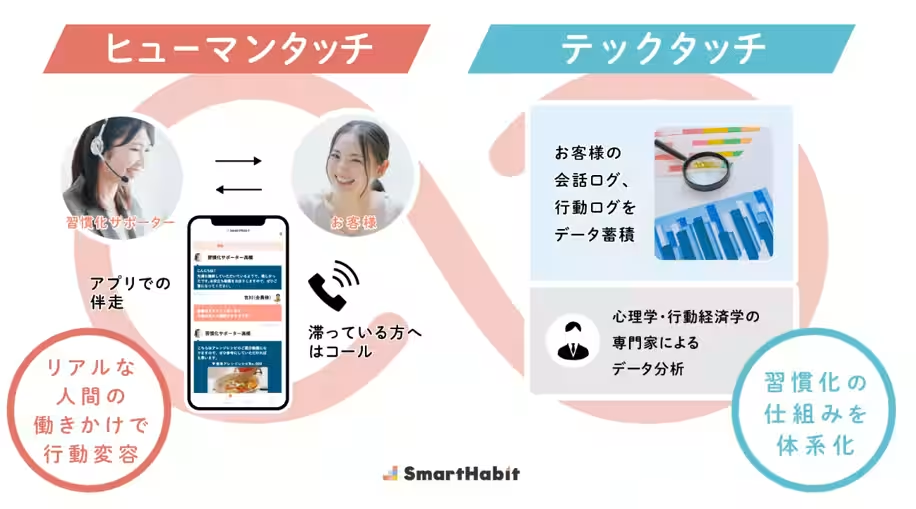
As the program progressed past its first month, participants received personalized messages based on their sleep scores and recording data. They also had the opportunity to interact freely with a support staff member via LINE during the program duration to facilitate ongoing encouragement.
Results and Discussion: Progression Through Stages Enhances Sleep Quality
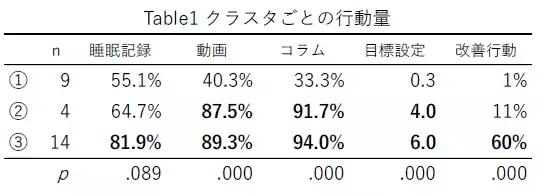
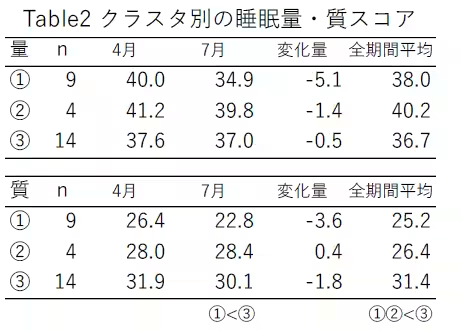
Based on the amount of activity reported during the program, researchers categorized participants into three clusters:
- - Inactive Group: Low levels of engagement
- - Interested Group: High engagement in videos and articles, but low recording of sleep data
- - Active Group: High levels of action across all metrics
When comparing the average sleep scores (both quantity and quality) and examining changes from the start to the end of the program, no significant differences in average sleep quantity scores were found among groups. However, the average sleep quality score remained high in the Active Group. Notably, while there were no significant differences at the program's onset, by the conclusion, the Inactive Group exhibited a marked decline in sleep quality scores.
Ultimately, this indicates a movement through behavioral stages — from Inactive to Interested, culminating in the Active Group — correlates positively with improved sleep quality.
Note: This research was funded by contributing companies and WizWe, with no conflict of interest.
Significance of the Research
The study underscores the necessity for effective support mechanisms tailored to each participant's behavioral stage, highlighting that merely introducing programs isn’t enough to ensure driver well-being and safety. The implications of this research extend beyond the transportation industry, holding promise for broader applications within healthcare.
About Dr. Hiroaki Tano
Dr. Tano, a prominent researcher at the WizWe Habit Formation Institute, holds a Ph.D. in psychology from the University of Tsukuba. His scholarly work includes engagements at Tokyo Welfare University and research focused on communication training through games, as well as programs aimed at preventing absenteeism in schools.
Conclusion
The findings of this important research resonate within both driver safety and health promotion sectors. It is pivotal for future endeavors to incorporate participants' behavioral stages for effective implementation of improvement programs.
Upcoming Event:
The 89th Annual Meeting of the Japanese Psychological Association will take place from September 5-7, 2025, at Tohoku Gakuin University, where Dr. Tano will elaborate on the correlations between behavioral stages and outcomes in sleep improvement programs for drivers.
Topics Health)
【About Using Articles】
You can freely use the title and article content by linking to the page where the article is posted.
※ Images cannot be used.
【About Links】
Links are free to use.