



Understanding the Differences in Break Policies Between Management and Non-Management Employees
Investigating Work Breaks: Management vs Non-Management
A recent survey conducted by MENTAGRAPH Corporation sought to uncover the differences in break policies between management and non-management employees in Japan. The study included responses from 1,800 business professionals aged 22 to 65, equally divided between managerial and non-managerial roles. The results reveal significant insights regarding perceptions of breaks and overtime work across different levels of employment.
The Atmosphere Around Breaks
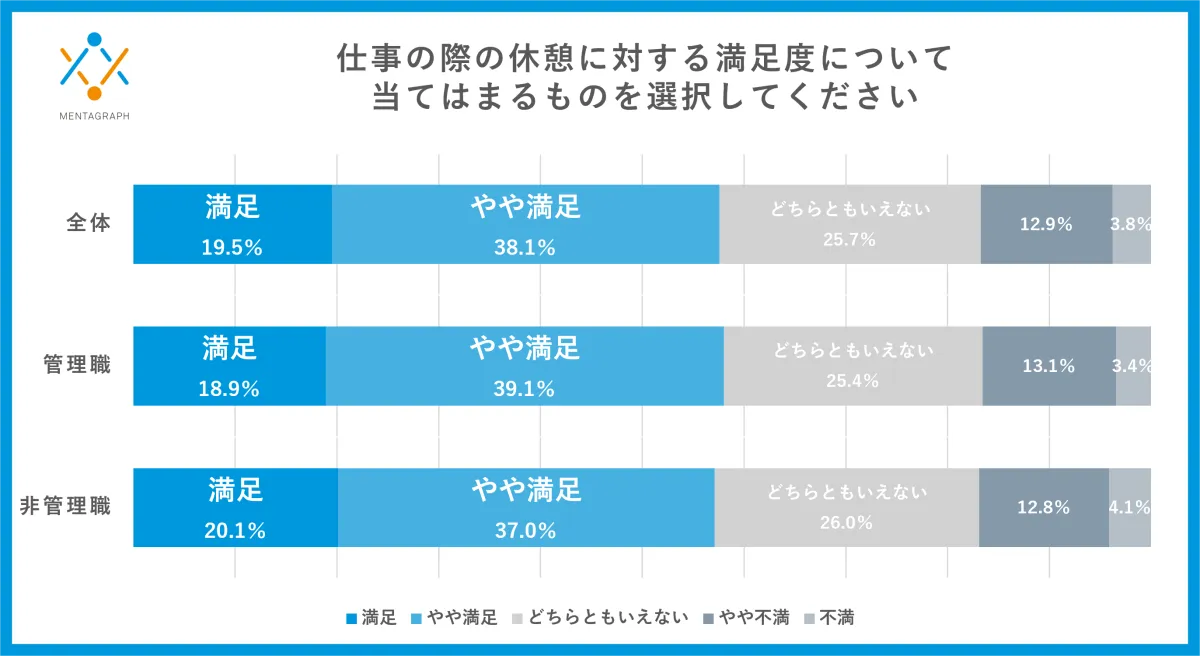
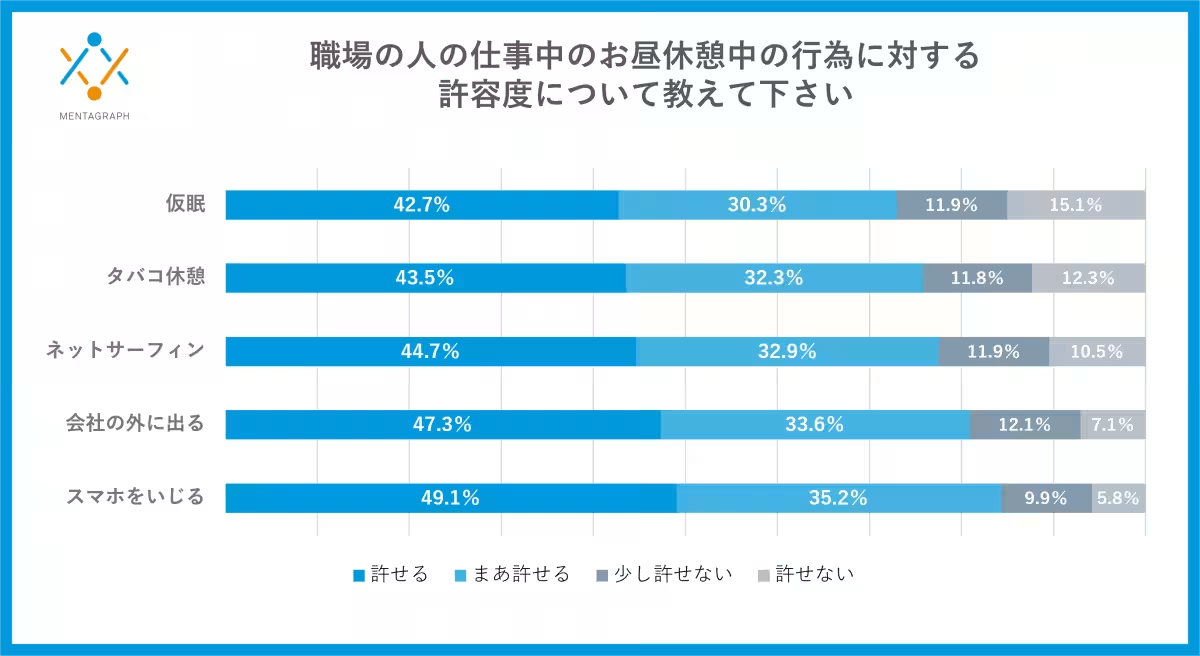
The survey highlighted that while 57.6% of all respondents expressed satisfaction with their ability to take breaks during work hours, this satisfaction level is closely similar between management (58.0%) and non-management (57.1%). However, there exists a marked discrepancy regarding the willingness to take breaks, especially when it comes to napping during lunch hours. Non-management employees showed a more lenient attitude towards napping, with 76.0% accepting it, compared to just 70.0% of management.
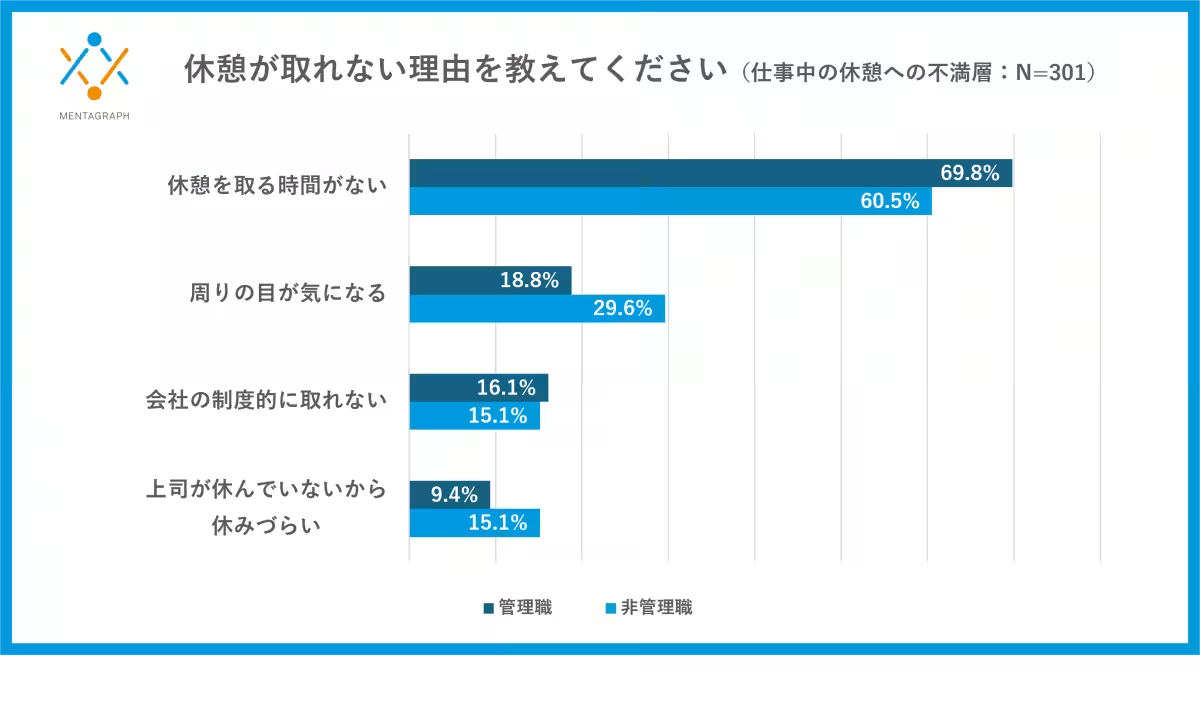
The primary reason cited for the inability to take breaks was the lack of time, affecting 65.1% of participants overall. Interestingly, non-management employees reported feeling more pressure from their surroundings, with 29.6% stating they hesitated to take a break due to being watched, and 15.1% felt uncomfortable resting when their superiors were working.
Cultural Pressures Affecting Break Time
Interestingly, 70.6% of respondents supported the belief that all employees, regardless of rank, should be allowed to take breaks equally. However, there were still reservations about “visible breaks”—with only 16.6% agreeing that managers should take breaks in plain sight of their subordinates. This indicates a troubling cultural phenomenon wherein, despite agreeing on equitable break times, there are pressures that lead to breaks being perceived as a privilege rather than a right.
Insights on Overtime Perceptions
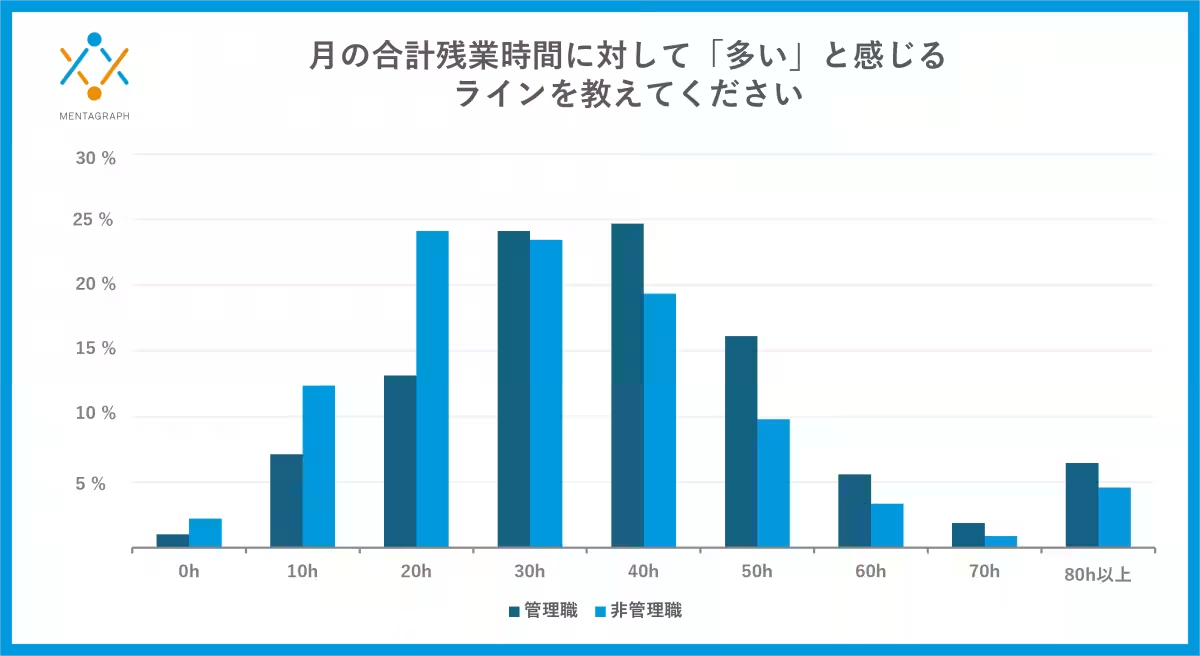
In addition to examining break policies, the survey also investigated perceptions of overtime hours. While the majority (23.8%) considered 30 hours of overtime to be excessive, this threshold differed between management and non-management. A notable percentage of non-management employees characterized 20 hours as the tipping point for “too much work,” with only 24.1% agreeing with this. In contrast, management members were more likely to consider 40 hours as the beginning of excessive overtime, underlining the gap in understanding between the two categories.
Management's tolerance for higher overtime hours was reflected in their responses, with 54.7% claiming that only over 40 hours constitutes “too much work.” This perception can result in tension within the workplace, as non-management employees may feel overwhelmed while management continues to tolerate what they view as acceptable workloads.
Bridging the Gap Between Management and Non-Management
The findings suggest a need for companies to address the discrepancies in attitudes towards breaks and overtime hours between management and non-management employees. Establishing workplace policies that recognize the need for frequent and adequate breaks, while also aligning managerial expectations around overtime could help enrich the work culture and improve overall employee satisfaction and performance.
Conclusion
In conclusion, MENTAGRAPH’s survey illustrates critical differences in perceptions of break times and workloads between management and non-management employees. Bridging this gap through effective policies and cultural adjustments is essential for fostering a healthier workplace environment.
About MENTAGRAPH Corporation
Founded as a subsidiary of Japan Tobacco, MENTAGRAPH is dedicated to visualizing the mental well-being of employees and promoting adequate breaks within the workplace. Their innovative ‘Mental Battery Service’ is designed to measure and manage stress levels, helping foster a culture where taking breaks is normalized.
Topics People & Culture)


【About Using Articles】
You can freely use the title and article content by linking to the page where the article is posted.
※ Images cannot be used.
【About Links】
Links are free to use.