



41.2% of New Graduates Aspire to Become Freelancers Soon
The Rise of Freelancing Among 2025 Graduates
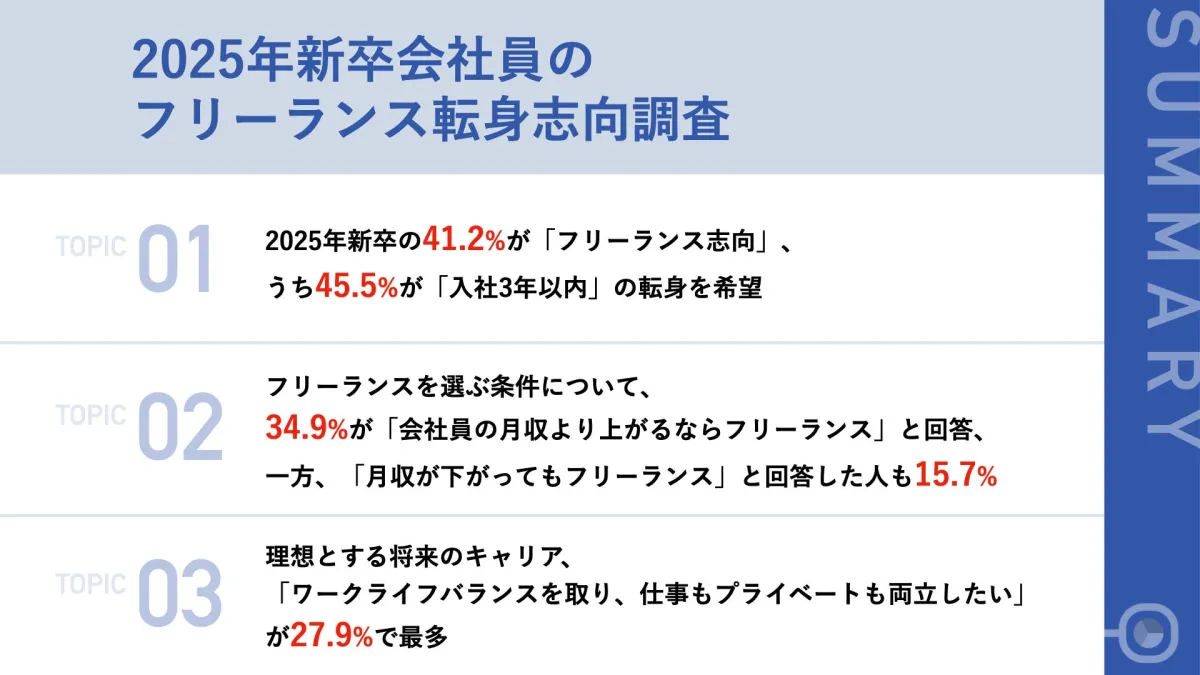
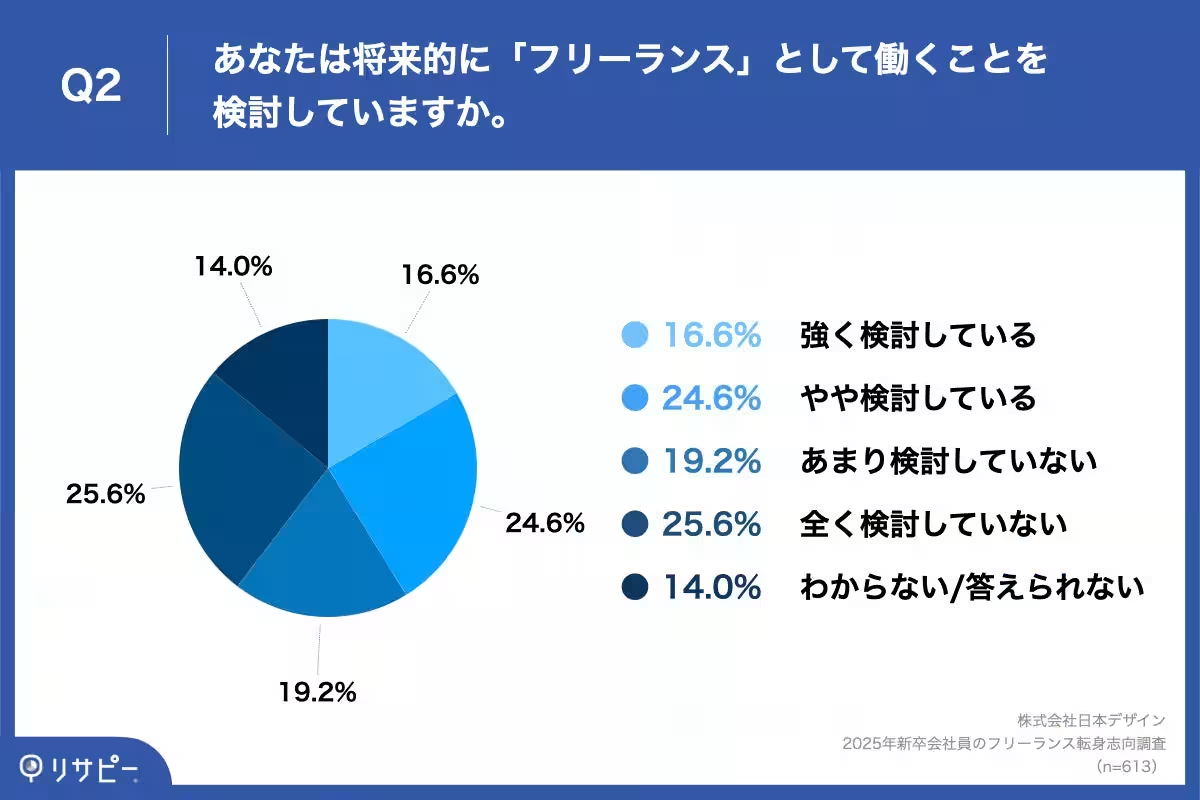
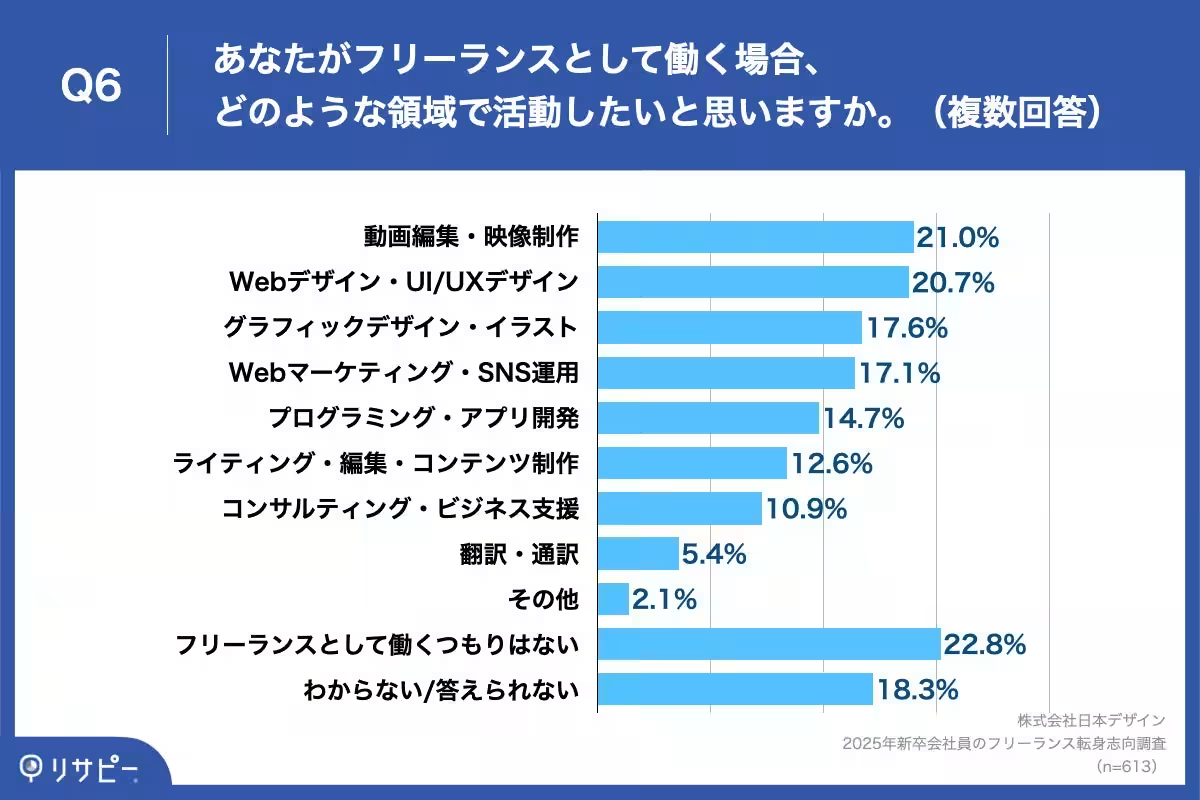
A recent study conducted by Japan Design revealed significant insights into the career aspirations of new graduates entering the workforce in 2025. Among 613 respondents, an impressive 41.2% expressed a desire to pursue freelancing, highlighting a notable shift in the professional landscape.
Key Findings
1. Freelancing Aspirations
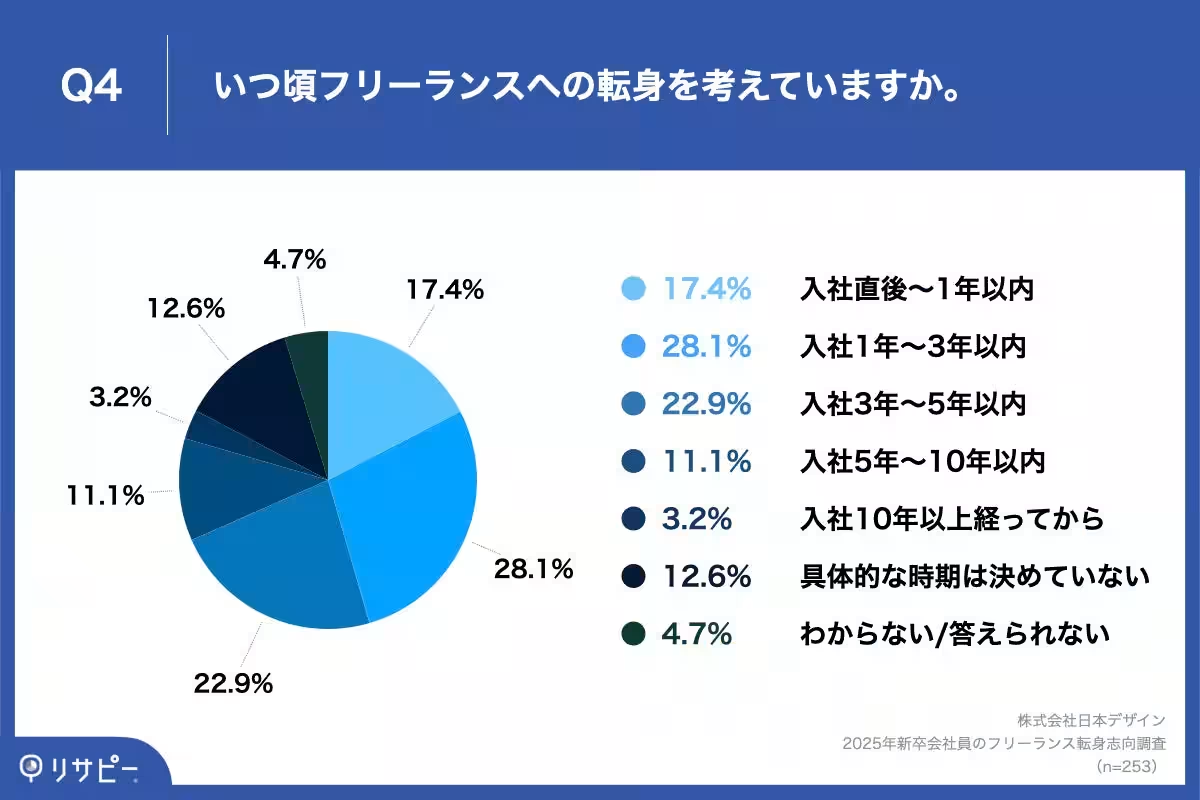
- Of those surveyed, 45.5% indicated they are interested in becoming freelancers within three years of their employment. This finding suggests a trend toward autonomy in career choices and a preference for flexible work environments.
2. Reasons for Pursuing Freelancing
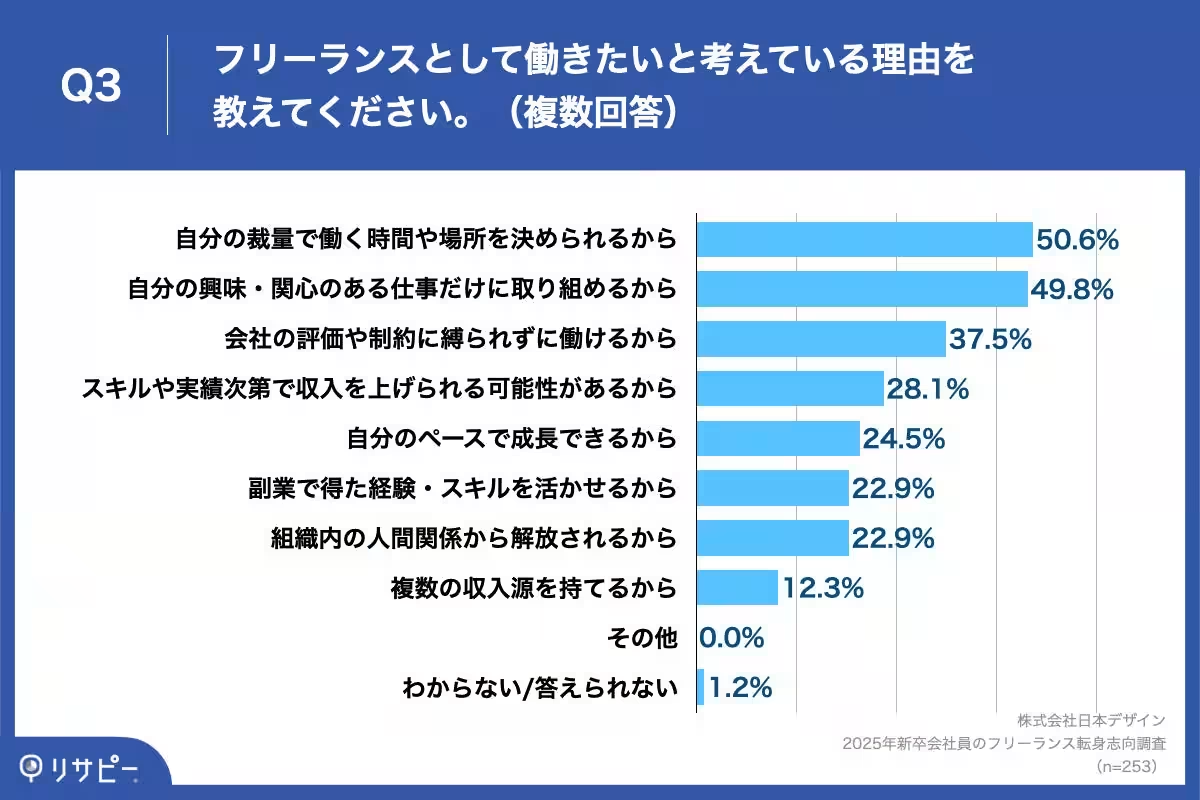
- The survey also revealed motivations behind this shift. 50.6% of the participants emphasized the freedom to choose their working hours and locations as a key factor. Additionally, 49.8% expressed a desire to engage only in work that aligns with their interests and passions, free from corporate constraints.
3. Concerns About Freelancing
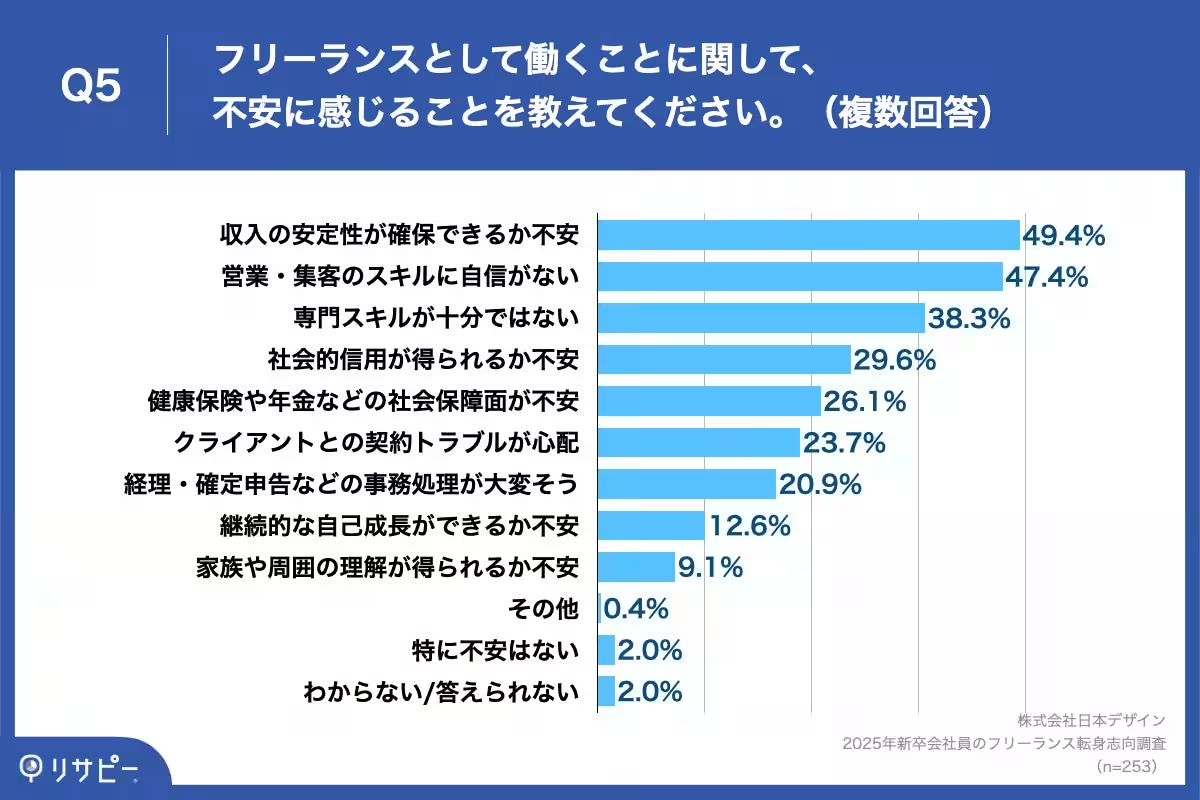
- Despite the enthusiasm, many aspiring freelancers shared concerns about the stability of income and the need for sales and marketing skills. A staggering 49.4% voiced worries about securing stable income, while 47.4% lacked confidence in their ability to attract clients.
4. Career Preferences
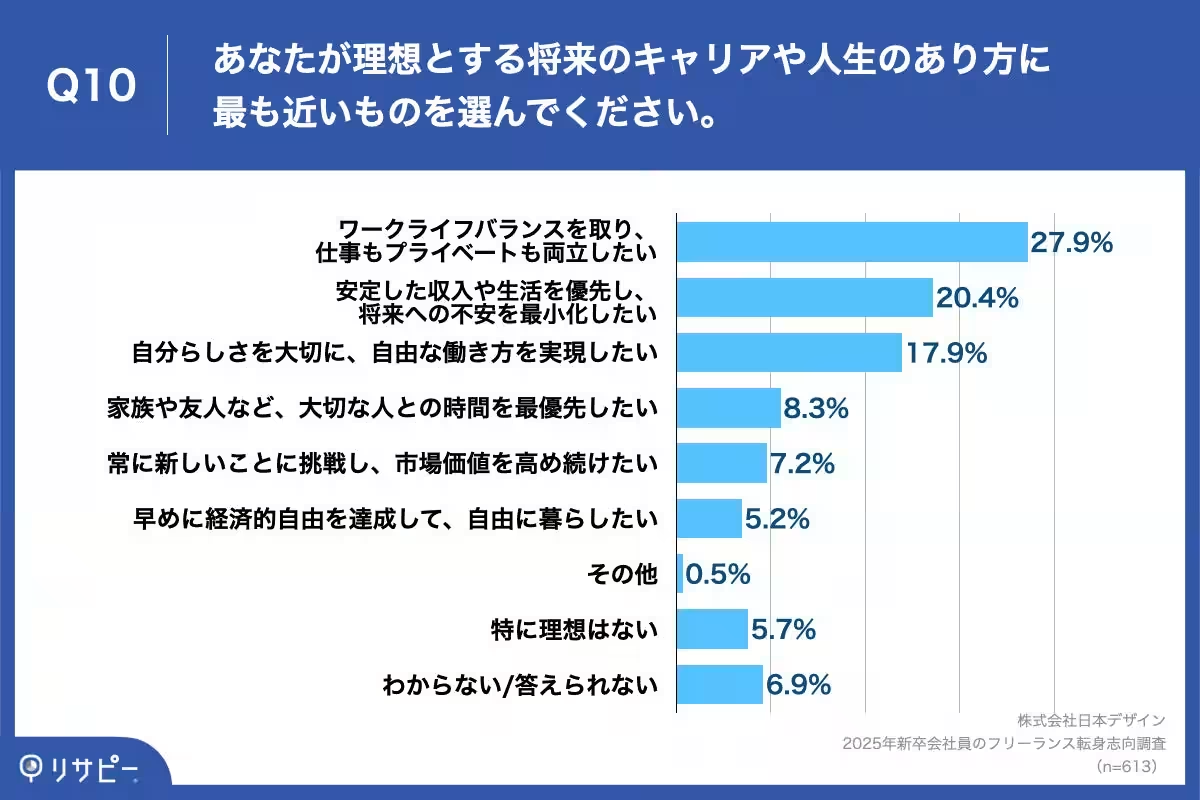
- When asked about ideal career paths, the most common response at 27.9% focused on achieving a work-life balance. A significant portion also indicated a preference for stability, with 20.4% prioritizing secure income to alleviate future anxieties.
Insights from the Study
This survey reflects a broader trend among Generation Z graduates. As these young professionals increasingly explore the freelance route, their desire for independence and work-life balance underscores a significant transformation in how careers are perceived. Traditional employment, characterized by long-term commitment, seems to lose its appeal as this generation prefers flexibility and personal choice over security.
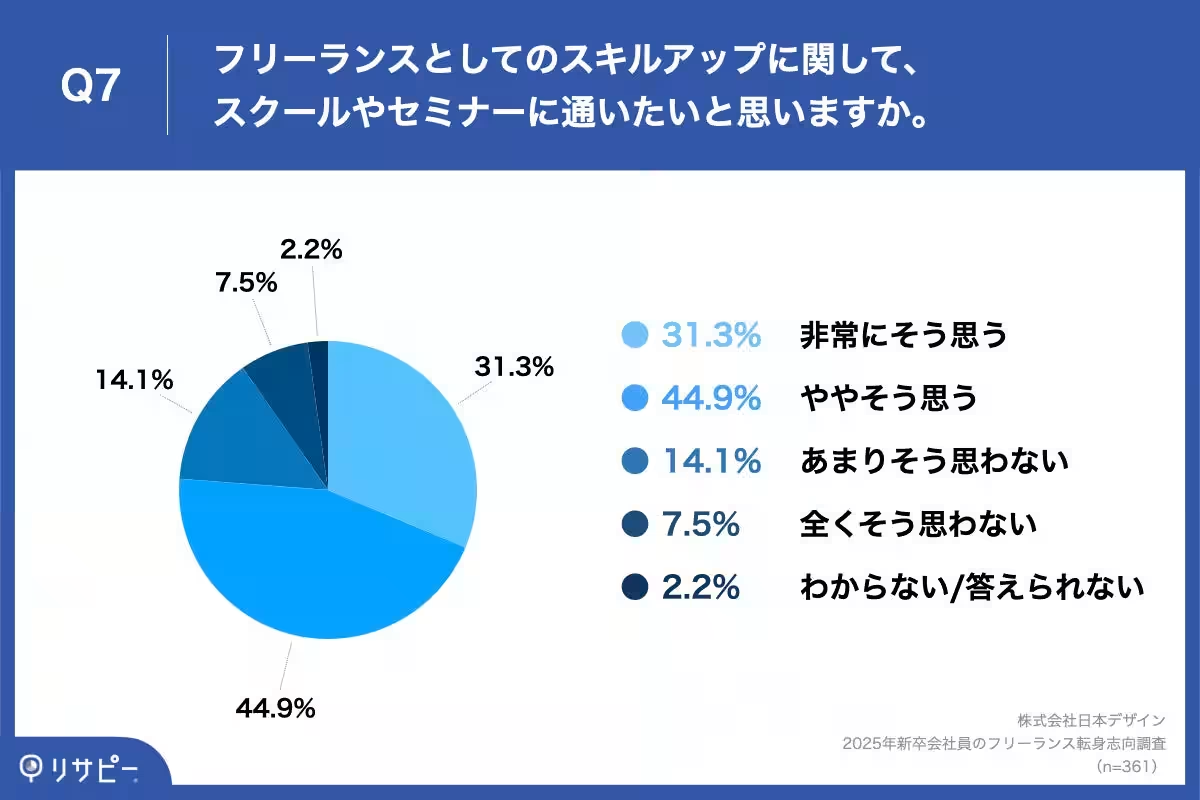
The study highlights the importance for universities and career training programs to adapt in order to provide these new professionals with the necessary skills to thrive in a freelancing economy. With around 80% of respondents expressing interest in attending schools or seminars for skill enhancement, the demand for educational programs is urgent. Institutions are encouraged to bridge the gap between academic knowledge and practical skills relevant to successful freelancing.
Preparing for the Future
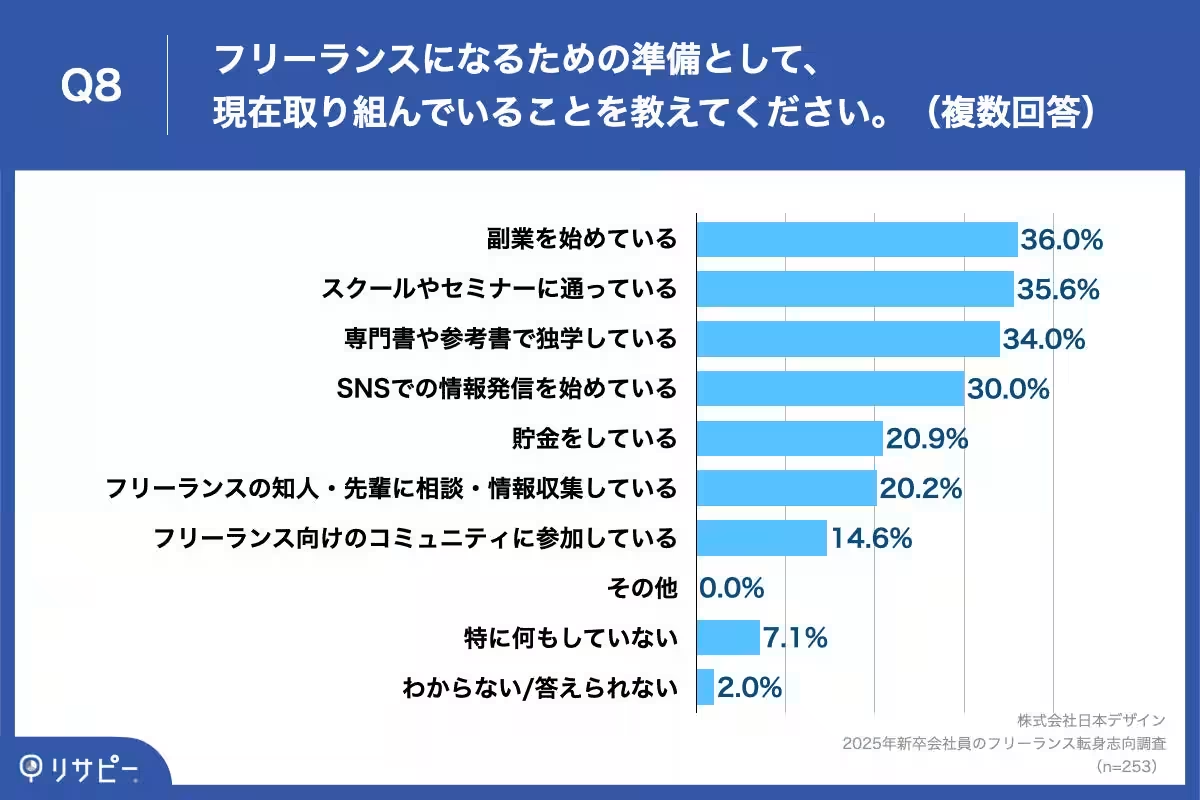
As a proactive step, many participants are already engaging in preparatory actions for their freelancing careers. About 36.0% have started side jobs, while 35.6% participate in training courses. This is essential for building a solid foundation before taking the leap into full-time freelancing. The interest in continuous education and skills enhancement highlights a critical shift in mindset toward lifelong learning.
Conclusion
The desire for freelancing among 2025's fresh graduates signals a changing workforce paradigm. With the emphasis on work-life balance and personal fulfillment, companies might need to reconsider employment practices to attract and retain talent. The ideals of traditional job security and long tenures may evolve as the new generation seeks opportunities that align closely with their aspirations.
In summary, the shift toward freelancing reflects changing values in today's working environment, where independence, flexibility, and alignment between personal interests and professional roles become paramount. Future studies will be necessary to explore how this trend develops and the measures that can be taken to support this transition effectively.


Topics People & Culture)

【About Using Articles】
You can freely use the title and article content by linking to the page where the article is posted.
※ Images cannot be used.
【About Links】
Links are free to use.