



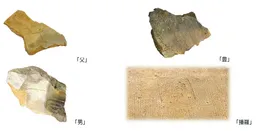
Rissho University Museum's Mini-Exhibition on Ancient Tiles Featuring Inscription
Rissho University Museum Hosts Mini-Exhibition on Ancient Tiles
Overview of the Exhibition
Rissho University, located in Shinagawa, Tokyo, is pleased to announce the upcoming mini-exhibition titled "Ancient Tiles from the Rissho University Museum Collection - Focus on Inscription Tiles." This exhibition will take place at the university's museum in Kumagaya City, Saitama Prefecture, from August 16 to September 27, 2023.
The exhibition is organized by students who have participated in a museum internship program. These interns have selected items from the museum's collection based on themes of their choosing and have been involved in creating and setting up display panels and captions. This year, the focus is on ancient tiles known as inscription tiles, which have been excavated primarily from kilns located in the Saitama region.
What Are Inscription Tiles?
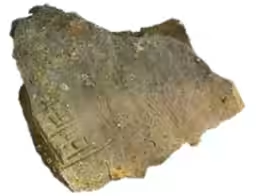
Inscription tiles are unique in that they feature letters or symbols that denote geographic regions, such as initials of counties. The tradition of producing such tiles can be traced back to an important historical period when Emperor Shomu sought to stabilize the nation through the promotion of Buddhism in response to frequent famines and plagues. In 741 AD, he issued an edict to establish temples throughout the country, including in the Musashi Province (which encompasses parts of present-day Tokyo, Saitama, and Kanagawa). The construction of these temples required a significant number of tiles, leading to the establishment of multiple kilns in the region, such as those in Maneno (Yorii Town), Minami-Hiki (Hatoyama Town), Higashikaneko (Iruma City), and Minami-Tama (encompassing areas in Inagi City, Tama City, Hachioji City, etc.). Rissho University has been actively involved in archaeological excavations of these kilns since the 1950s, resulting in a substantial collection of artifacts now housed in the museum, making this exhibition an invaluable opportunity to utilize research materials.
Training for Curatorial Education
Museum internships, essential to the museum studies curriculum as mandated by the Museum Act, allow students at the university to gain practical experience in registered museums or equivalently approved facilities. The program includes a comprehensive array of lectures covering museum theory, management, artifact preservation, exhibition design, and educational strategies, which are complemented with field training. This hands-on experience is designed to cultivate the fundamental skills necessary for a career as a research curator.
Rissho University's museum is one of the few designated university museum facilities in the prefecture, accommodating numerous internship applicants annually.
Exhibition Details
- - Date: August 16 (Saturday) - September 27 (Saturday), 2023 (26 days total)
- - Location: 1st Floor, 1st Exhibition Room, Rissho University Museum, Kumagaya Campus (1700 Manchi, Kumagaya City, Saitama)
- - Opening Hours: 10:00 AM to 4:00 PM
- - Closed: Tuesdays, Saturdays, and Sundays. Special openings will occur on August 16, 17, and September 27.
Display Overview
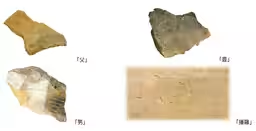
The exhibition will include a case display and explanatory panels showcasing inscription tiles discovered at the Shin-Kyu kiln (Iruma City) and the Shin-Numa kiln (Hatoyama Town). Featured artifacts include:
- - Tiles from "Kura" or "Kudara" county (near present-day Yokohama)
- - Tiles from "Ozato" county (near present-day Kumagaya)
- - Tiles from "Hara" county (near present-day Kumagaya and Fukaya)
- - Tiles from "Komori" county (near present-day Hidaka and Tsurugashima)
- - Tiles from "Chichibu" county (near present-day Chichibu)
- - Tiles from "Obusuma" county (covering sections of Kumagaya and Yorii Town)
- - Tiles from "Bunko" county (covering various districts in Tokyo)
- - Tiles from "Iruma" county (near present-day Hannou and Hidaka)
Access to the Museum
- - From Kumagaya Station (JR Takasaki Line, Shinkansen, Chichibu Railway): Take the bus from the south exit (about 10 minutes) to Rissho University and get off at the stop.
- - From Shinrin-Koen Station (Tobu Tojo Line): Board the bus from the north exit (about 12 minutes) to Rissho University and alight there.
Don’t miss this fascinating exhibition that bridges the ancient past and modern academic pursuit, reflecting the dedication of our student interns and the rich history embedded within our regional artifacts.
Topics Entertainment & Media)



【About Using Articles】
You can freely use the title and article content by linking to the page where the article is posted.
※ Images cannot be used.
【About Links】
Links are free to use.