



Towards an Inclusive Society: New Standards for Color Combinations for Color Blind and Low Vision Individuals
Towards an Inclusive Society: New Standards for Color Combinations for Color Blind and Low Vision Individuals
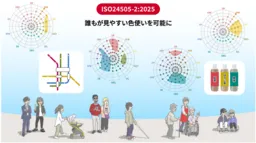
In a significant step toward enhancing accessibility, a new international standard titled ISO 24505-2:2025 has been released, aimed at improving color combinations for individuals with color blindness and low vision. This standard promotes the use of identifiable and distinguishable colors in visual displays, making it easier for everyone to navigate their environment safely and comfortably.
Background and Development Process
The development of this standard was spearheaded by the National Institute of Advanced Industrial Science and Technology (AIST), which collaborated with groups representing individuals affected by color vision deficiencies over a span of five years. Researchers gathered extensive data on the visual characteristics of color blind and low vision individuals, which was crucial for establishing effective color specifications.
Human perception of color varies significantly, influenced by various factors ranging from genetic traits to visual impairments. The challenge has been finding a universally applicable method for creating color combinations that are easy to interpret for everyone, especially those with specific visual limitations. For many years, there was no standardized way to approach this, leaving many individuals struggling with confusing color coding in everyday life.
The Role of Research and Collaboration
The AIST's Human Information Interaction Research Division focused on the categorical nature of human color perception, enabling the creation of effective color combinations tailored for visibility based on rigorous scientific data. The initial outcomes of this research, which included the establishment of ISO 24505:2016 aimed at young and older people without visual impairments, led to the recognition of the need for inclusive design methods that consider individuals with color vision deficiencies. Thus, the extension into ISO 24505-2 was born.
In order to create this standard, AIST gathered extensive observational data involving numerous participants influenced by color vision issues. This effort resulted in a robust database that provided the essential groundwork for drafting color combination guidelines specifically for the visually impaired.
Impacts and Future Prospects
With the adoption of ISO 24505-2, organizations across various sectors—product developers, designers, and accessibility advocates—now have a core reference for designing visual displays in a way that avoids the common pitfalls that often lead to misunderstandings among those with color vision deficiencies. Accessible color combinations are critical, particularly in safety signage which often relies heavily on color coding.
This standard aims not only to enable clearer communication through visual aids but also to contribute to a more inclusive society where everyone can expect a certain level of accessibility. The future development plans include establishing additional standards that encompass the full spectrum of individuals’ needs, including further research into color combinations compatible with young and elderly populations, ensuring that inclusivity remains at the forefront.
Community Responses
Organizations such as the Color Universal Design Organization (CUDO) have expressed strong support for this initiative. CUDO highlighted the importance of having established standards that consider color vision diversity, reinforcing the notion that a well-implemented system could create environments where individuals feel safe and included while navigating their daily lives.
Moreover, feedback from the Japan Council on Disability continues to be overwhelmingly positive, emphasizing how such standards equip users with a common language to communicate their needs regarding color visibility. This paves the way for collaborative efforts between those affected by color vision deficiencies and those creating visual signage and displays.
Conclusion
In summary, the introduction of ISO 24505-2 heralds a new era in accessible design. It is expected to transform how we approach color in contexts that matter for safety and usability, ultimately fostering a society that embraces the diverse needs of all its members. As more organizations adopt these practices, we move closer to a future where accessibility is the norm, not an exception.

Topics People & Culture)


【About Using Articles】
You can freely use the title and article content by linking to the page where the article is posted.
※ Images cannot be used.
【About Links】
Links are free to use.