



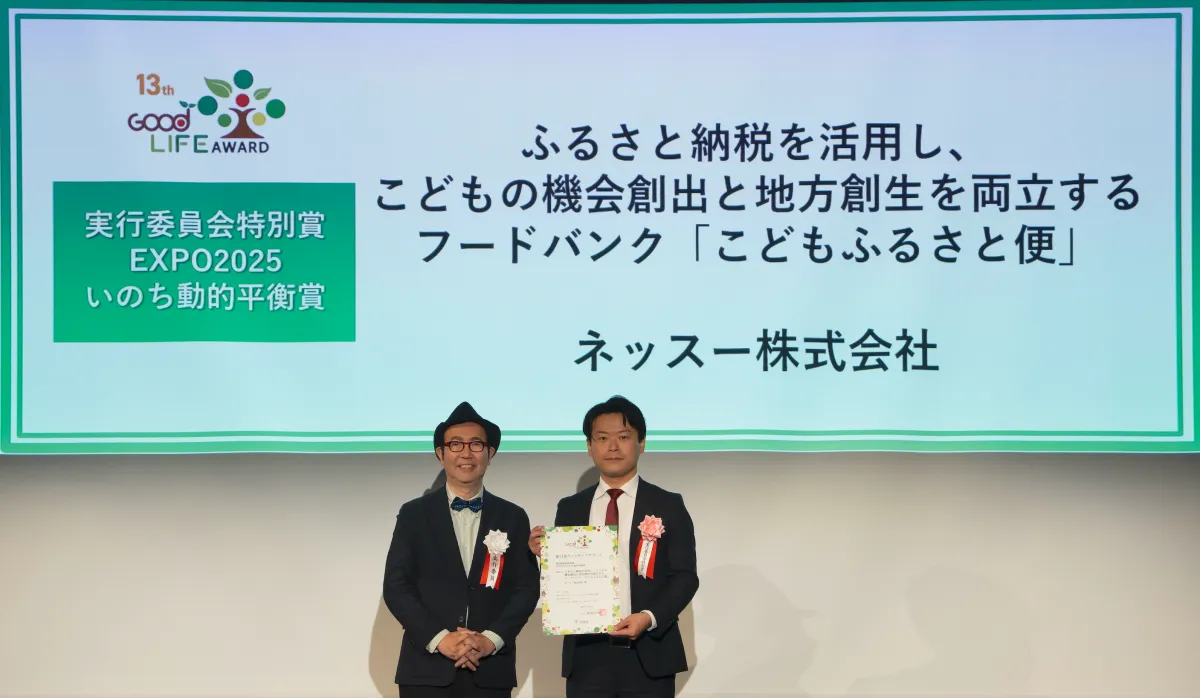
Nessou's Kodomo Furusato Bin Wins Special Award at Good Life Award 2023
Kodomo Furusato Bin Recognized at the 2023 Good Life Award
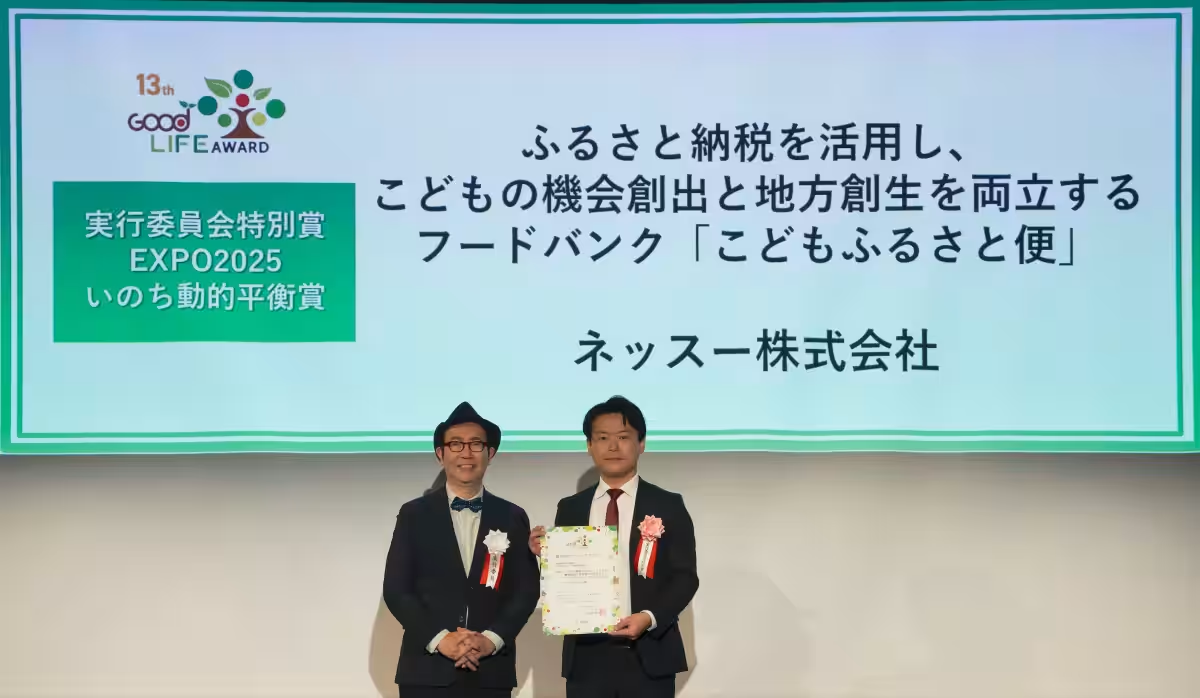
Nessou Inc., a startup based in Setagaya, Tokyo, aimed at alleviating disparities in opportunities for children, has recently been awarded the "EXPO2025 Inochi Dynamic Balance Award" at the 13th Good Life Award ceremony hosted by the Ministry of the Environment. This accolade was given to them for their initiative, Kodomo Furusato Bin, which employs the furusato tax system to deliver local specialty products to children's cafeterias, single-parent families, and children facing serious health challenges.
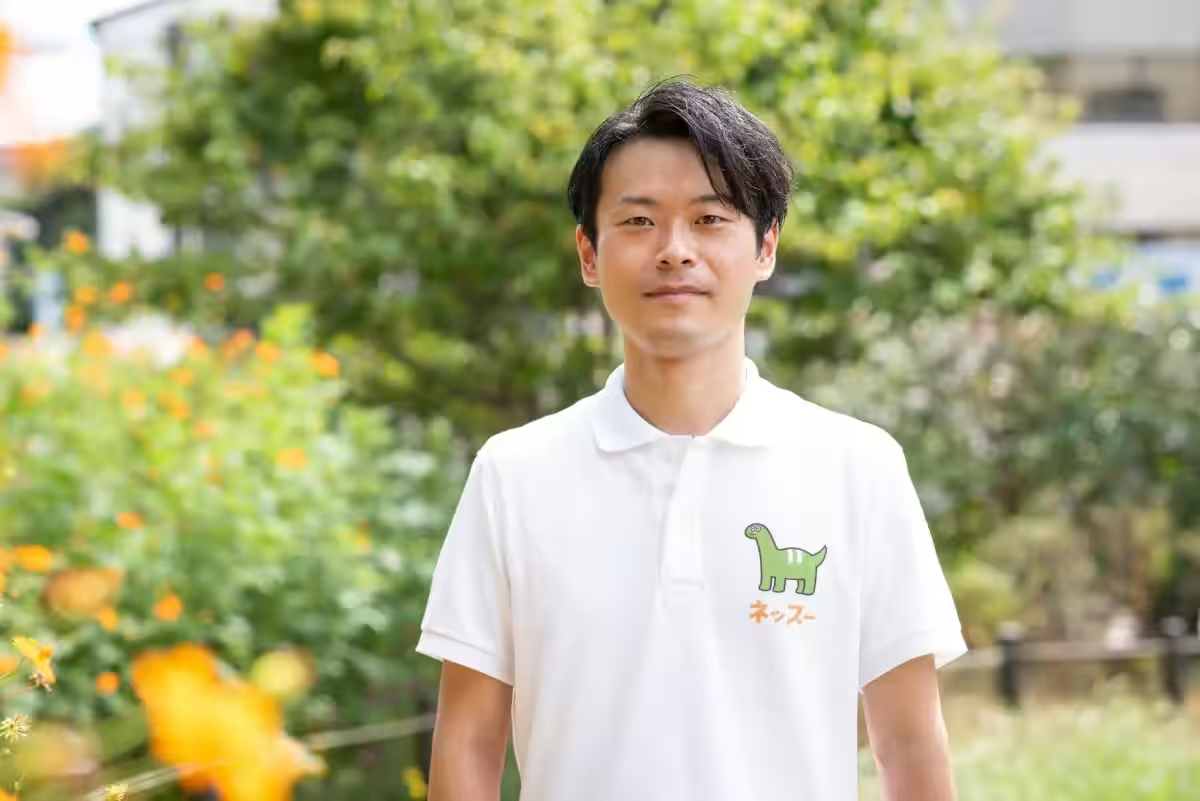
The Kodomo Furusato Bin was highly praised for its altruistic approach, premised on the idea of continuous circulation of goods and life. The award ceremony took place on December 6, 2025, in Tokyo, where Nessou's CEO, Yuuki Kido, took the stage to accept the award.
Addressing Social Issues: Child Poverty and Food Waste
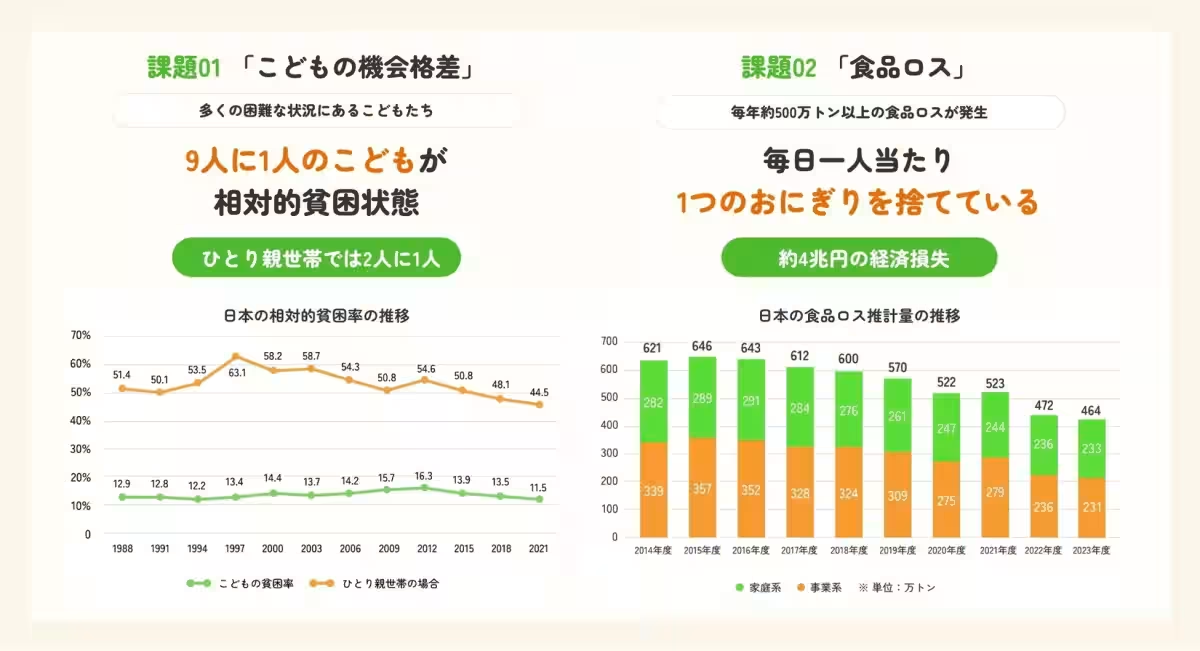
In Japan, approximately one in nine children live in relative poverty, with single-parent households facing an even more daunting situation—one in two experiences poverty. Simultaneously, the country generates over 5 million tons of food waste each year, equating to a daily waste of food approximating the weight of one rice ball per person.
Despite these critical societal issues, the mechanisms to deliver excess food to children in need are still inadequate. With no financial leeway, both national and local governments struggle to secure new resources, and the logistics system for transporting donated food remains insufficient.
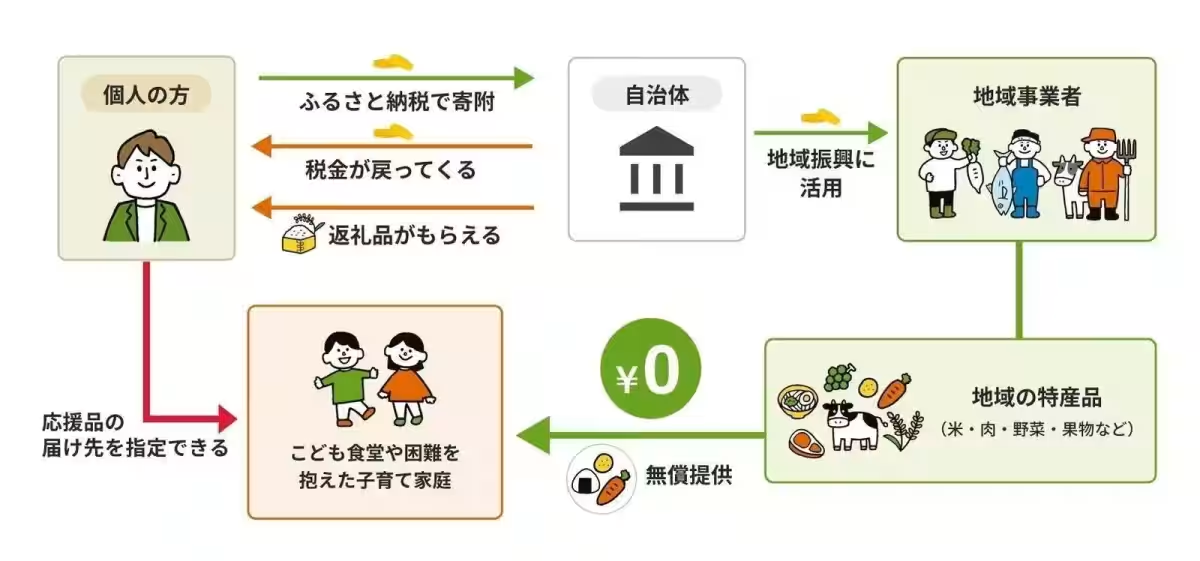
Kodomo Furusato Bin seeks to tackle these challenges by utilizing the furusato tax as a funding source, collaborating with local producers, agricultural cooperatives, fishery cooperatives, and food manufacturers to distribute local products to children's cafeterias and families in difficult circumstances. Donors receive the same rewards as traditional furusato tax contributions while easily participating in child support, making it a convenient model for social contribution.
Highlighting the Tsushima Project: Reviving the Ocean and Supporting Children
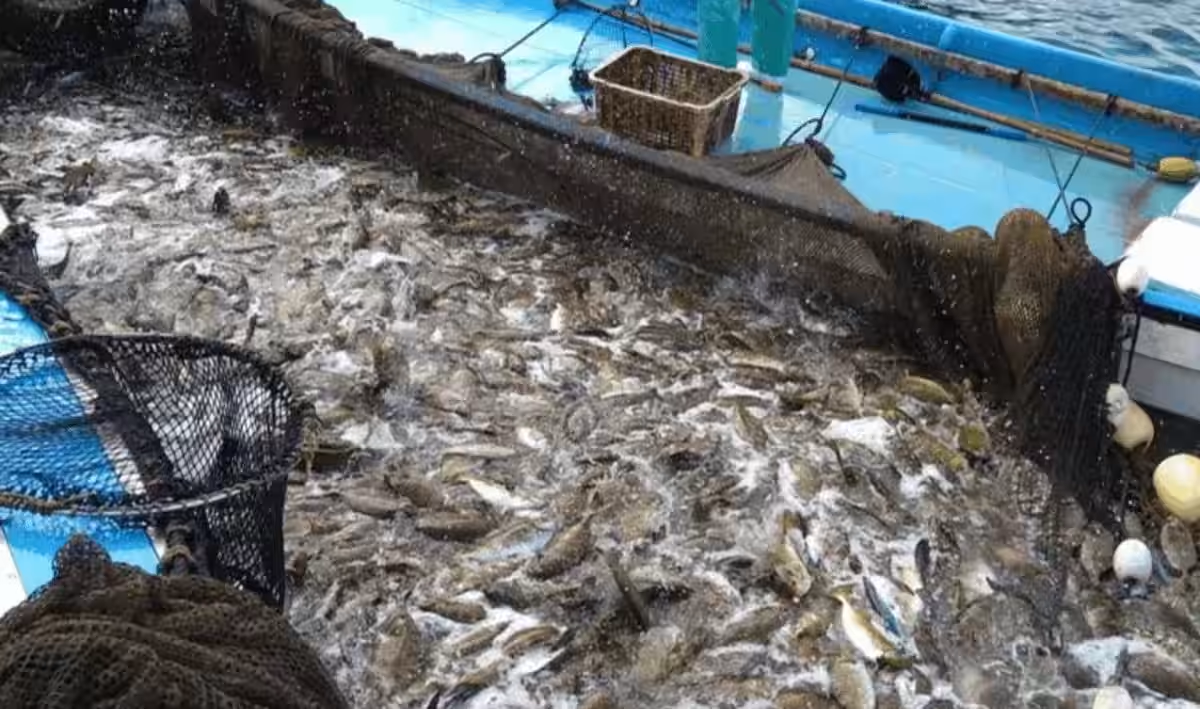
A notable example of this initiative in action can be found in Tsushima City, Nagasaki Prefecture. Starting in August 2025, the city launched a project that utilizes underutilized fish to reduce food waste and support children's nutrition education. This project aims to showcase the rich seafood from Tsushima and deliver it as “support items” to children's cafeterias and single-parent households nationwide.
Tsushima boasts diverse marine life due to its geographical features, but many underutilized fish and seafood products remain undistributed. Fish like Isuzumi and Aigo, which harm underwater plant beds, are among those most commonly overlooked. The project is dedicated to effectively utilizing these precious oceanic resources while connecting children with the joys of eating fish, preserving culinary culture, and providing nutritional education.
The efforts in Tsushima have received accolades, including the Consumer Affairs Agency’s Minister’s Award in the 2023 Food Loss Reduction Promotion Awards, thanks to the significance of these initiatives in fostering sustainable practices.
Insights from Nessou’s CEO, Yuuki Kido
Yuuki Kido expressed his gratitude upon receiving the award, emphasizing the potential of Kodomo Furusato Bin to play a crucial role in addressing environmental and social issues. He hopes the recognition expands the circle of empathy toward their efforts.
Moving forward, Nessou is committed to collaborating with local governments, businesses, and individuals to realize a society where children experience no opportunity disparities due to their birth circumstances.
About Kodomo Furusato Bin
Kodomo Furusato Bin is a system that leverages the furusato tax process to deliver local specialties and experiences as support items to children's cafeterias, single-parent families, and children facing health challenges. Donors can choose where their “support items” go from various regions and organizations, allowing them to express their intentions and support through their contributions.
Since its launch in 2023, six municipalities, including Asahikawa City in Hokkaido, have participated in the program, with plans to expand to 10 to 20 regions by 2025.
Conclusion
Nessou’s dedication to bridging opportunity gaps for children through innovative social solutions has garnered national recognition. With ongoing community engagement and the commitment to sustainable practices, initiatives like Kodomo Furusato Bin are setting a new standard for social responsibility and giving back in Japan.

Topics People & Culture)


【About Using Articles】
You can freely use the title and article content by linking to the page where the article is posted.
※ Images cannot be used.
【About Links】
Links are free to use.