



Identification of Factors Contributing to Aggressive Progression of Refractory Acute Lymphoblastic Leukemia
Understanding Refractory Acute Lymphoblastic Leukemia
Introduction
Acute lymphoblastic leukemia (ALL), particularly the B-cell subtype (B-ALL), presents significant challenges in treatment, especially in its refractory forms. Researchers have long sought to understand the molecular underpinnings of the aggressive nature of this disease, where rapid progression often correlates with severe bone destruction. A recent study carried out by a collaborative team led by Professor Tomokatsu Ikawa at Tokyo University of Science sheds light on these mechanisms, potentially leading to the development of novel therapies.
Research Overview
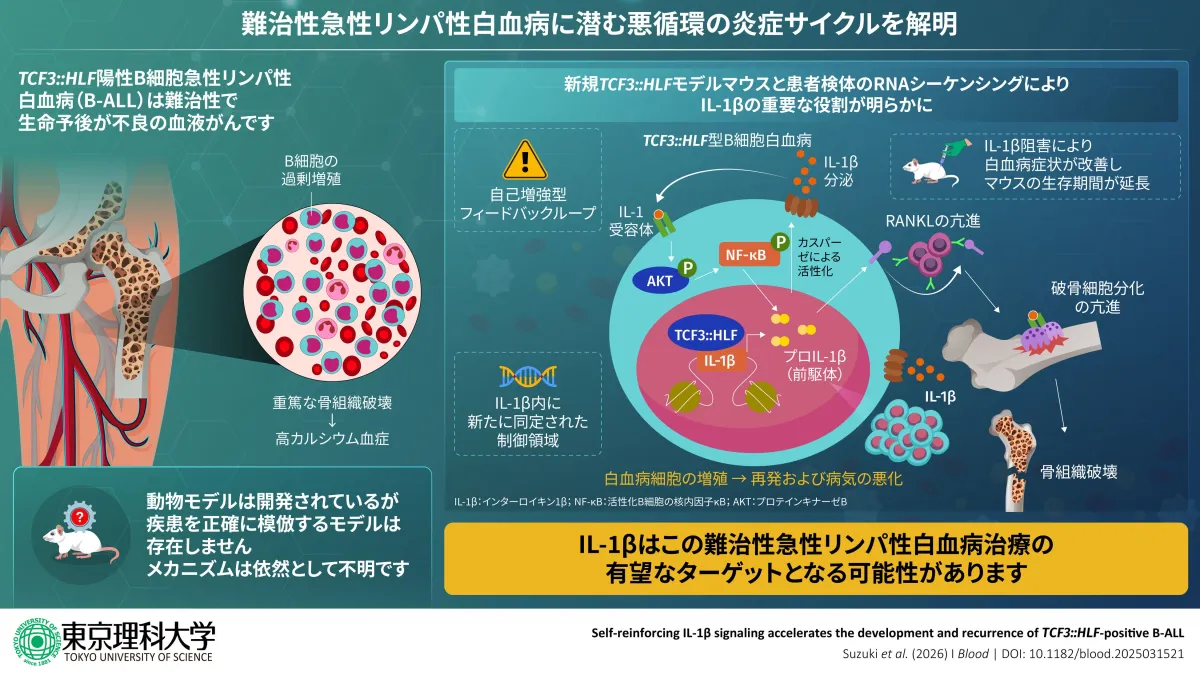
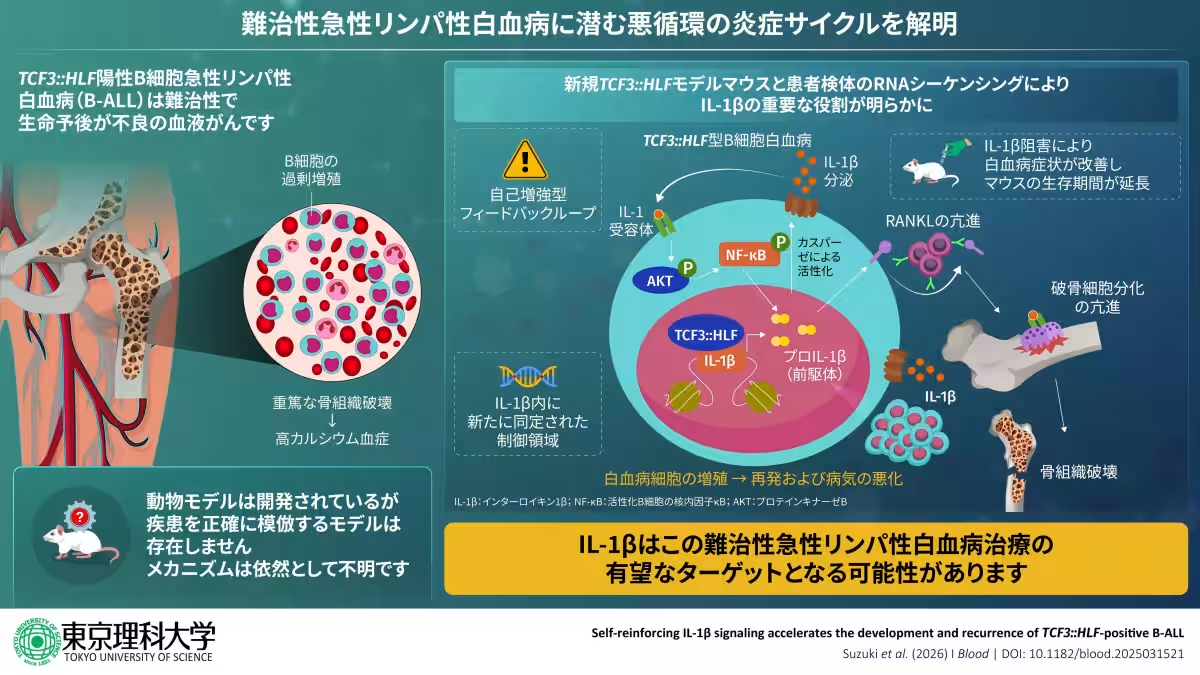
The study identifies that in cases of refractory B-ALL, leukemia cells produce an inflammatory cytokine known as IL-1β, which promotes their proliferation and influences the differentiation of osteoclasts, leading to significant bone damage. This discovery suggests a dual threat—accelerated disease progression and exacerbated bone degradation—within the disease's molecular framework.
Researchers faced challenges in understanding the disease due to the lack of suitable models that mimic B-ALL symptoms effectively. To overcome this, they developed a model mouse with a TCF3::HLF genetic translocation, which closely represents the refractory B-ALL phenotype. The team observed that leukemia cells not only proliferated but also influenced bone loss, identifying a distinct molecular pathway at play.
Findings
The study demonstrated that IL-1β is self-produced by leukemia cells, thereby reinforcing their growth and inducing RANKL (Receptor Activator of Nuclear factor Kappa-Β Ligand) that, in turn, promotes osteoclast differentiation. This cycle creates an environment ripe for both disease acceleration and bone destruction. Crucially, when the genes for IL-1β or its receptor IL1R1 were knocked out in the model, not only did leukemia cell proliferation decrease, but bone damage also improved.
These findings highlight that IL-1β facilitates an environment conducive to both the progression of leukemia and the activation of bone resorption processes that lead to complications like skeletal fragility and severe pain, thus greatly impacting patient quality of life and treatment outcomes.
Implications for Future Treatments
The research establishes a novel, fundamental connection between the cytokine signaling pathways in ALL and the detrimental effects they exacerbate on the skeletal system. This significant breakthrough opens up possibilities for innovative therapeutic approaches targeting this specific molecular mechanism, potentially enabling simultaneous control over leukemia progression and associated bone deterioration.
Given that treatment advancements have improved the prognosis for many ALL subtypes, elucidating the mechanisms behind refractory B-ALL is critical. The researchers affirm that by understanding how IL-1β operates and its interactions with leukemia cells, they could design more effective treatment regimens aimed at managing the dual challenges presented by this aggressive leukemia subtype.
Conclusion
The study's findings underline the importance of targeting specific molecular pathways in the treatment of refractory B-ALL. Further research into the safety and efficacy of therapies based on the newly identified targets is essential for developing treatment strategies for patients suffering from this challenging condition. As the research progresses, it is hoped that new and enhanced interventions will emerge to tackle both the leukemia itself and its severe skeletal complications, significantly improving patient quality of life.
About the Research
This pioneering research was published online in the international journal Blood on March 3, 2026, and received support from a range of funding bodies including the Japan Agency for Medical Research and Development and various philanthropic foundations dedicated to advancing cancer research.
Topics Health)
【About Using Articles】
You can freely use the title and article content by linking to the page where the article is posted.
※ Images cannot be used.
【About Links】
Links are free to use.