



Increasing Mental Health Issues Among Young People: A Growing Concern for Companies
Increasing Mental Health Issues Among Young People
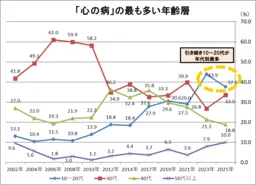
According to the recent results from the 12th survey on corporate initiatives regarding mental health, conducted by the Japan Productivity Center, there is a notable trend in the increase of mental health issues, particularly among employees in their 20s. The survey was completed on November 10, surveying 171 human resource executives from publicly listed companies, marking a continuation from research conducted over the past two decades.
Young Adults at Risk
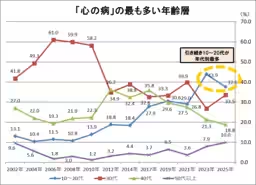
The findings indicate that between the ages of 10 to 20, this demographic is facing the highest rates of mental health problems. In fact, the proportion of companies acknowledging a high prevalence of mental issues in this age group is now double that reported in 2014. This year, 37.6% of responding companies pinpointed 10 to 20-year-olds as the most affected by mental health challenges, consistent with 2023 data reflecting a sharp uptick from the 2014 survey figure of 18.4%.
Stabilizing Yet Worrisome: Three-Year Trends
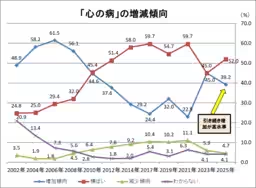
The survey also reveals that approximately 39.2% of participating firms report an increasing trend in mental health issues observed over the last three years. Though this figure marks a decrease from the 45% recorded in the last survey, it remains a cause for concern with nearly four in ten firms still perceiving a troublesome increase. Furthermore, since 2014, there has been a downward trend indicating the companies’ perceptions of growing mental health problems, although the significant rise observed in 2023 has caused a reversal of that trend.
Focusing on Well-being Management
Interestingly, the survey highlights a burgeoning focus on enhancing both employees' mental and physical well-being as a key goal of corporate management strategies. Among surveyed organizations, 65.9% expressed a commitment to promoting health maintenance and enhancement, while 62.9% aimed to boost employee engagement. Challenges like unclear cost-effectiveness and difficulty in establishing evaluative metrics were identified as pressing issues.
The Impact of Corporate Culture
The relationship between effective corporate culture and mental health has also come to light. Companies that feel their corporate philosophy and management strategies fail to resonate with employees reported a striking 50.0% in increasing mental health issues. In contrast, those feeling that these philosophies were well integrated reported only 34.2% acknowledgement of rising mental health problems, indicating a more profound connection between workplace culture and employee health.
Stress Check System Challenges
Moreover, the stress check system, designed to mitigate stress among employees, continues to present challenges. Two-thirds of firms noted difficulties in effectively utilizing collective analysis results from these checks. The second and third most cited challenges include proper follow-up for high-stress individuals and the reluctance of recommended individuals to engage in medical follow-up, showcasing a need for comprehensive strategies to address both organizational and individual responses to mental health.
Conclusion
The results of this ongoing survey highlight a critical area for development in the workplace, particularly in the context of young employees’ mental health. With the nature of work evolving due to trends such as remote work and diversified working conditions, companies are encouraged to expand their approaches beyond mere compliance to foster a thriving work environment that genuinely supports employee well-being. As the need for mental health programs intensifies, it is essential for businesses to prioritize these efforts now more than ever.
Topics People & Culture)
【About Using Articles】
You can freely use the title and article content by linking to the page where the article is posted.
※ Images cannot be used.
【About Links】
Links are free to use.