




Insights from Job Change Awareness Survey for Mid-Seniors with Previous Experience
Understanding the Job Change Landscape for Mid-Seniors
A recent survey conducted by the Industrial Employment Stability Foundation sheds light on the job transition trends among mid-senior professionals, specifically those aged 40 to 59 years who have transitioned within the last decade. The survey, conducted in October 2025, gathered responses from 2,000 individuals and presents a comprehensive analysis of their motivations, concerns, and expectations surrounding career shifts.
Key Findings
1. Reasons for Considering a Job Change
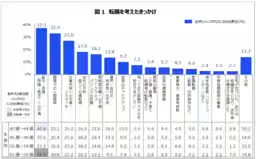
The survey reveals that 37.3% of respondents cited dissatisfaction with their salary and treatment as a primary reason for considering a shift. This was closely followed by workplace relationships at 32.9% and mismatched job roles at 27.0%. Interestingly, younger respondents in their early 40s expressed more dissatisfaction about compensation than those in their late 50s.
2. Concerns During the Job Transition
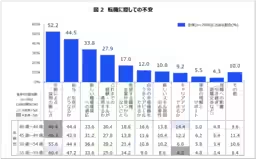
When questioned about their anxieties regarding changing jobs, 52.2% mentioned apprehension about hiring age biases, while 44.5% were concerned about potential changes in salary. Adapting to new work environments was also a notable stressor for 33.8% of participants, with concerns intensifying as individuals aged.
3. Priorities while Changing Jobs
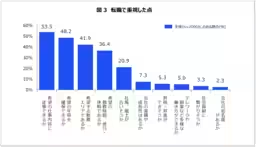
A significant finding was that 53.5% prioritized engaging in desired job roles, and 48.2% focused on securing an acceptable salary. The emphasis on work-life balance, reflected in the concern for preferred working conditions, also emerged as critical among the surveyed individuals.
4. Timing of Job Changes
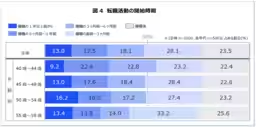
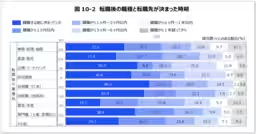
Most respondents (approximately 76.7%) began their job search before leaving their previous positions, although those over 50 tended to start later. While about 32.6% secured new roles before leaving, an additional 39.7% found positions within three months post-resignation.
5. Nature of Job Shifts
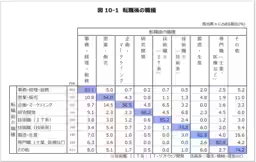
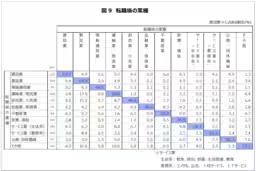
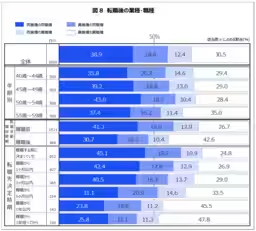
A striking 60% of respondents transitioned to different industries or roles, demonstrating willingness for career changes; notably, among these, 50% ventured into entirely different fields. The trend indicates that those who took longer to secure new roles were more likely to change their career paths significantly.
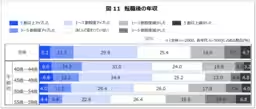
In particular, the survey highlighted that 46.3% of individuals experienced salary increases after transitioning, yet 28.4% faced decreases. The patterns varied significantly with age, as individuals in their early 50s generally experienced improvements in their employment situations, whereas those in their late 50s saw stagnation.
6. Satisfaction and Regrets
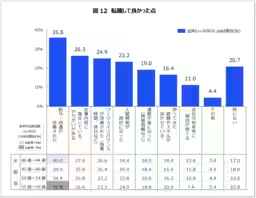
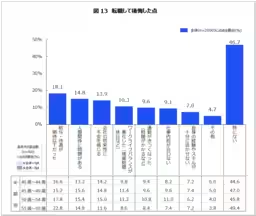
While 35.8% of respondents appreciated improved salary and conditions post-transition, nearly 46.7% expressed having no regrets about their job changes. Those who did regret their decisions often highlighted unmet salary expectations.
7. Recommendations for Job Transitioning
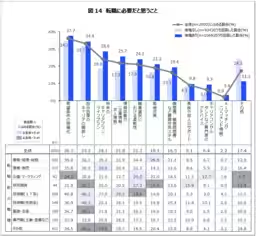
The survey also indicated that successful transitions are often preceded by clearly defined personal expectations (36.3%) and an honest assessment of one's career history (33.2%). Surprisingly, the realization of the importance of future career and life planning (24.1%) was significantly pronounced among individuals who regretted their transitions.
The insights from this survey provide valuable guidance for organizations and individuals alike, emphasizing the need for supporting career transitions among mid-senior professionals. As the workforce continues to evolve, understanding these dynamics becomes crucial in fostering a responsive and adaptable employment environment.



Topics People & Culture)




【About Using Articles】
You can freely use the title and article content by linking to the page where the article is posted.
※ Images cannot be used.
【About Links】
Links are free to use.