



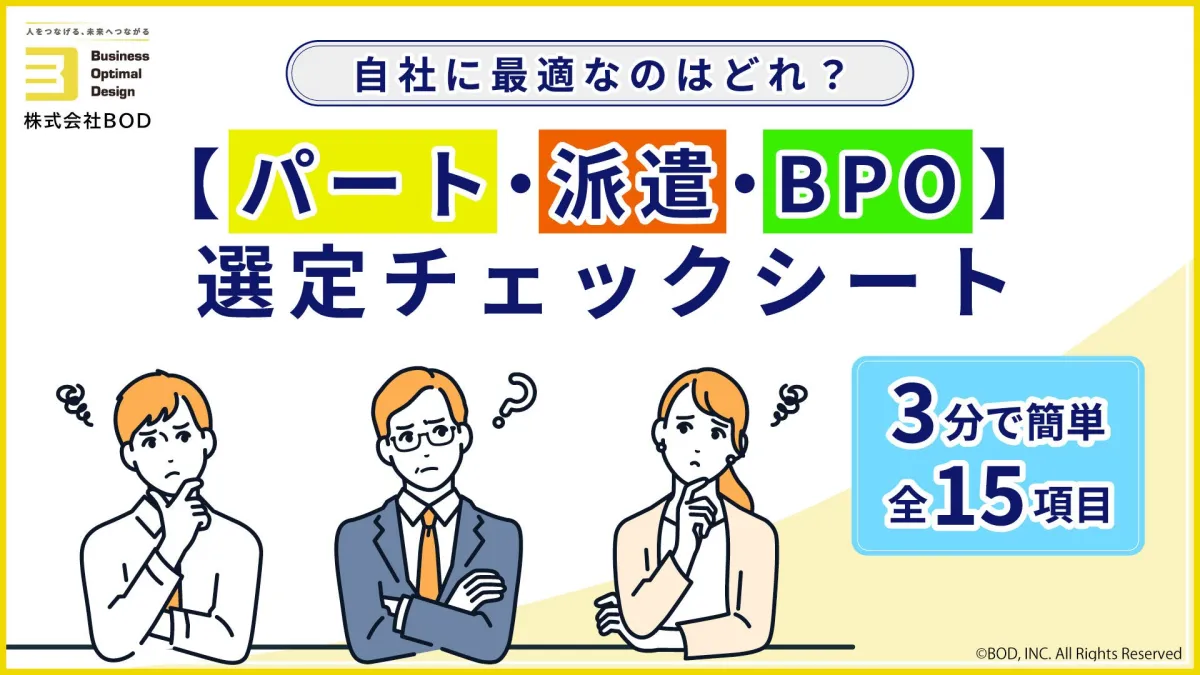
Discover the Free Resource Selection Checklist for Optimal Staffing in Just 5 Minutes
Optimize Your Staffing Solutions with BOD’s Free Checklist
In today’s rapidly changing business landscape, firms face increasing challenges related to workforce management. With a dwindling labor pool and rising demands on back-office services such as accounting and HR, businesses are finding themselves at a crossroads when deciding how best to secure adequate staffing resources. In response to these challenges, BOD Inc. has introduced a valuable resource: a free selection checklist designed to guide companies through the maze of staffing options, including part-time hires, temporary staffing, and Business Process Outsourcing (BPO).
The Importance of Choosing the Right Staffing Method
As companies navigate through staffing needs, they often encounter common dilemmas:
- - Overwhelmed by Temporary Staff: Managers may feel burdened when utilizing temporary workers without the capacity to train or supervise them, leading to workplace fatigue.
- - Concerns Around BPO: Some companies hesitate to move forward with BPO solutions, fearing a lack of established procedures and documentation, which could hinder effective collaboration.
- - Cost-Effectiveness Questions: Many organizations struggle to identify which staffing solution—part-time, temporary, or BPO—offers the best return on their investment.
Failing to thoughtfully choose the appropriate staffing method could lead to increased management costs and mismatched expectations, ultimately resulting in premature contract terminations and inefficiencies.
Introducing BOD’s Selection Checklist
To address these challenges, BOD has created a user-friendly, scoring-based checklist. By answering 15 targeted questions regarding your organization’s management capabilities, the presence of operational manuals, and expected outcomes, businesses can quantitatively determine which staffing approach is most suitable for their unique circumstances.
Features of the Selection Checklist
This checklist, organized into five key areas, provides a clear diagnostic tool:
1. Management and Oversight Capacity: Do you have sufficient resources for oversighting and training?
2. Documentation and Standardization: Are your processes well-documented, or is there heavy reliance on specific individuals?
3. Risk Management for Absences: Is there a contingency plan to ensure work continuity during employee exits?
4. Contract and Volume Flexibility: How do you plan to manage workload fluctuations, especially during peak periods?
5. Compensation Models and Accountability: Are you focusing on

Topics Business Technology)
【About Using Articles】
You can freely use the title and article content by linking to the page where the article is posted.
※ Images cannot be used.
【About Links】
Links are free to use.