



The Shifting Industry Preferences of 2028 Graduating Students in Japan
Examining the Shifting Aspirations of 2028 University Graduates
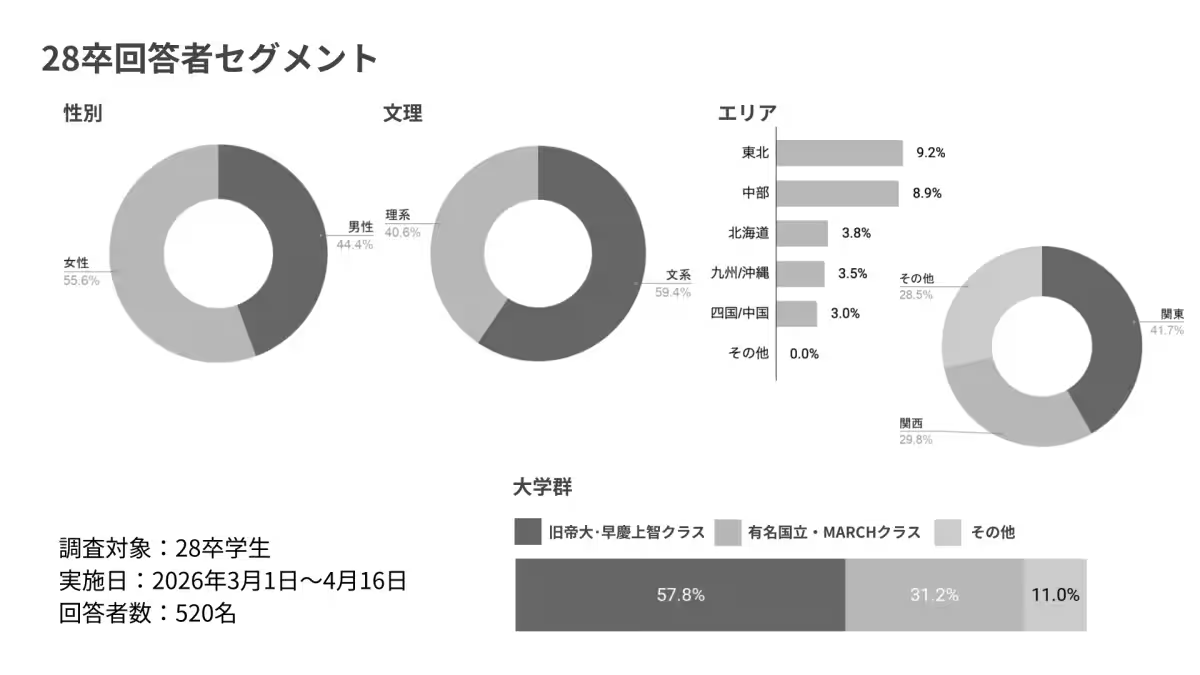
As the job market for new graduates continues to evolve, a recent survey conducted by Deep Growth Partners sheds light on the changing industry preferences among Japan's top-tier university students, particularly those from esteemed institutions like the old imperial universities and Waseda, Keio, and G-MARCH schools. The survey, which included 520 students graduating in 2028, reveals significant trends in their desired industries, challenging traditional recruitment norms and highlighting the importance of adapting to student preferences in a competitive landscape.
Survey Background and Methodology
With the new recruitment landscape moving towards earlier engagement, students from prestigious backgrounds are beginning their job search far in advance, often starting information gathering and applying for internships well before their third year. The rise of Generation Z and their focus on “time performance” (タイパ) has influenced how students approach their job hunts—favoring efficiency over quantity in applications.
This newfound approach has prompted students to carefully select companies based on the information they've gathered, instead of applying haphazardly to numerous positions. In this environment, the brand recognition and image of industries serve as crucial filters for students when honing in on potential employers. However, because student aspirations fluctuate from year to year, companies relying on historical data for recruitment risk ending up with a shortfall in candidate pools.
The objective of this survey was to make visible the shifting preferences within this talented demographic, allowing companies to develop optimal recruitment strategies accordingly.
Key Findings from the Survey
Industry Significance: A Focus on Fields Over Roles
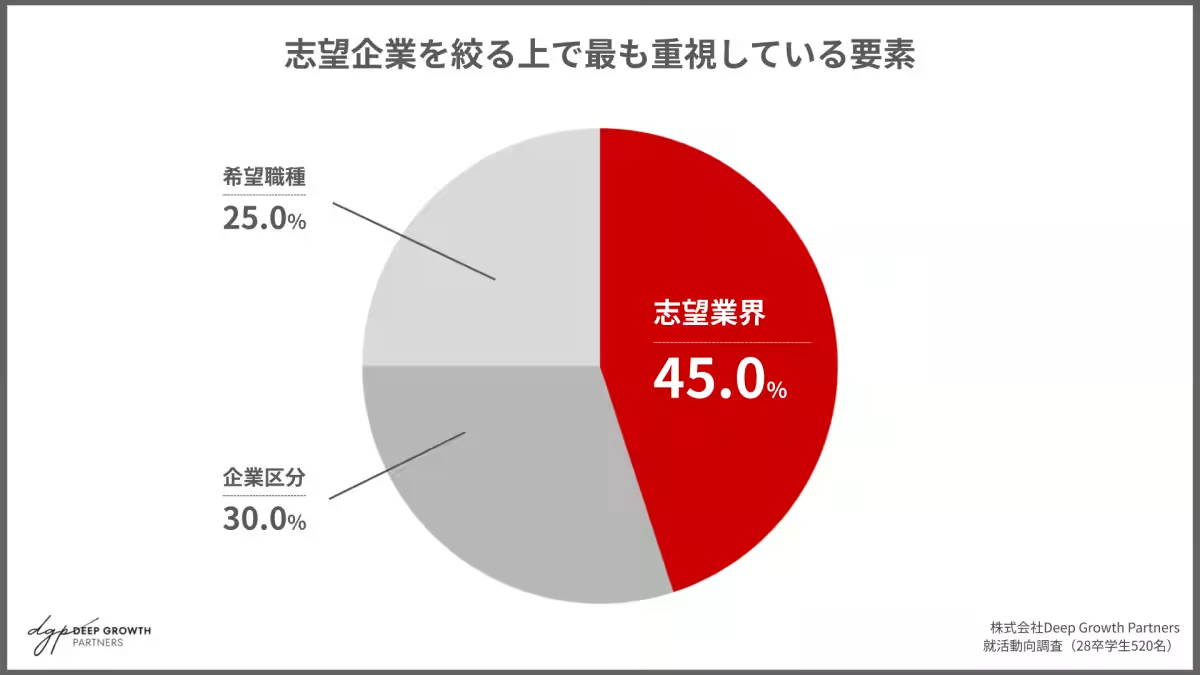
When asked about the most critical factors in narrowing down their job choices, 45% of students indicated that the industry itself holds the most weight, surpassing consideration for specific companies (30%) and desired job positions (25%). The data shows that the prominence and appeal of an industry significantly influence students’ willingness to apply.
Rising Interests and Falling Stars
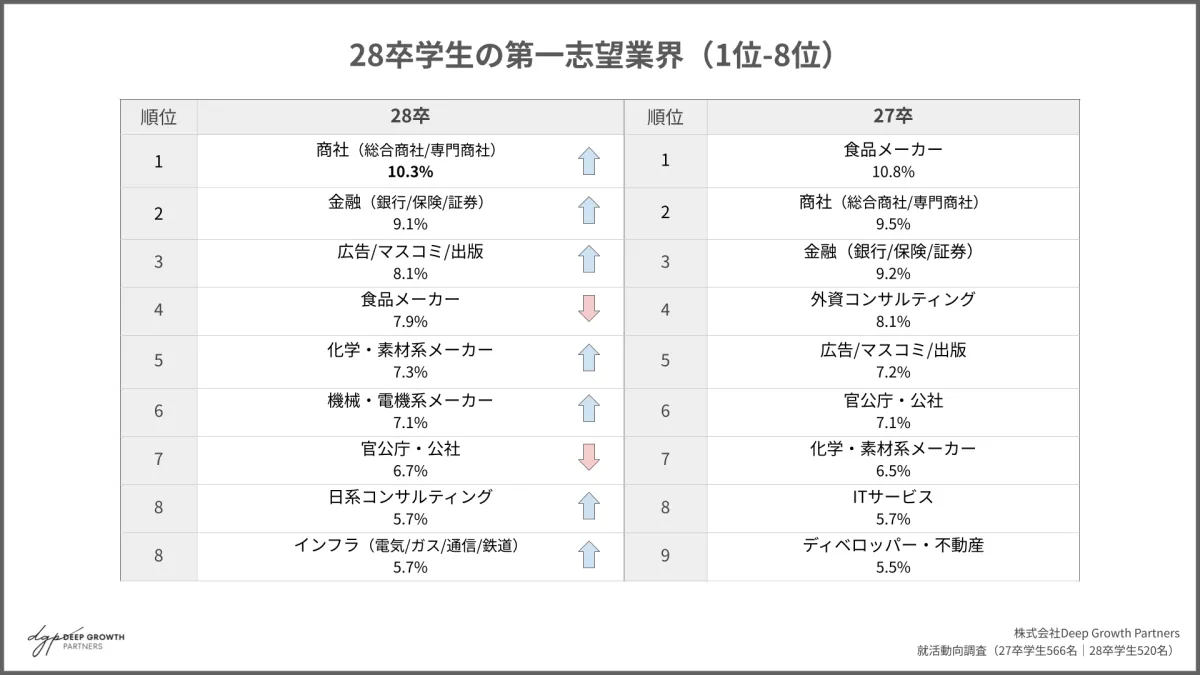
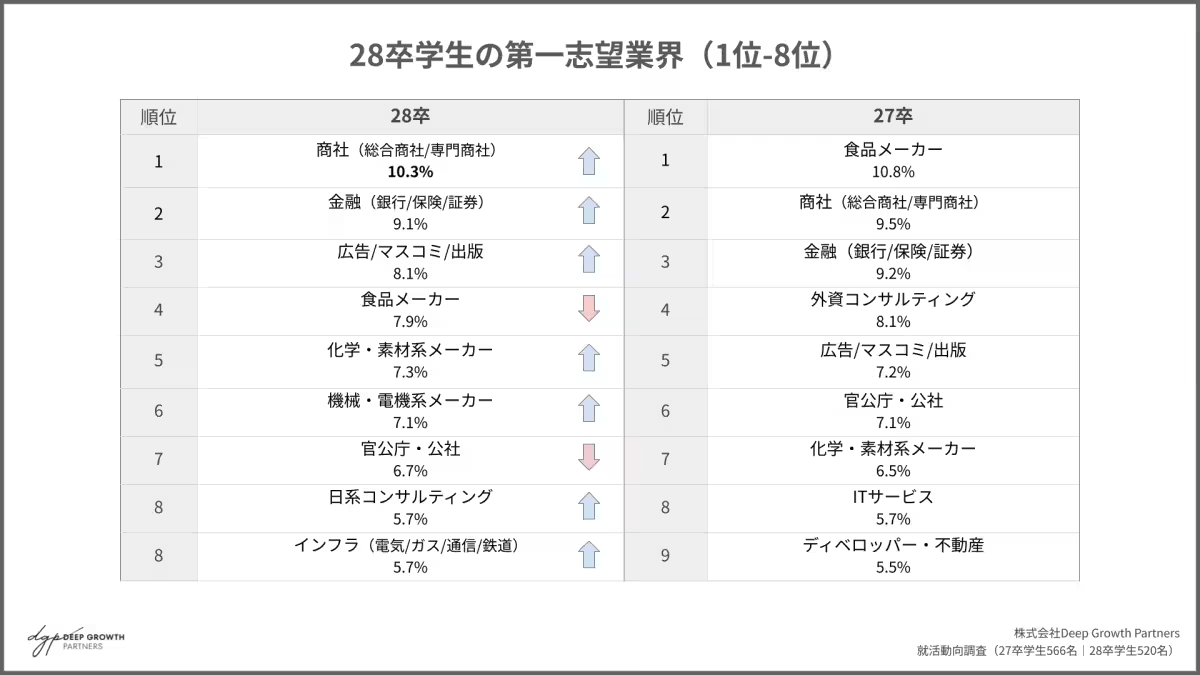
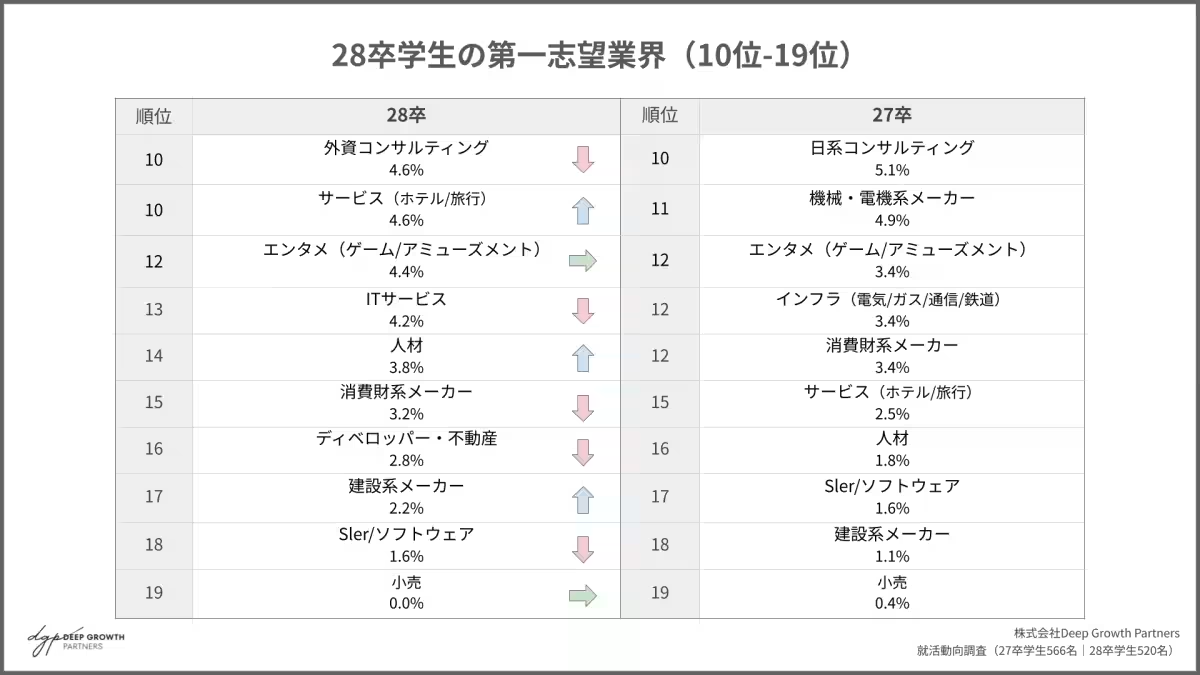
The survey revealed that trading companies took the lead as the top-choice industry for students (10.3%). In stark contrast, the previously dominant food manufacturing sector fell to fourth place (7.9%), while foreign consulting, which had previously ranked first and fourth in prior years, plummeted to tenth (4.6%). The rapid shifts in industry popularity illustrate how fluid trends can be in just one or two years.
Industry Image: Recognizing the Gaps
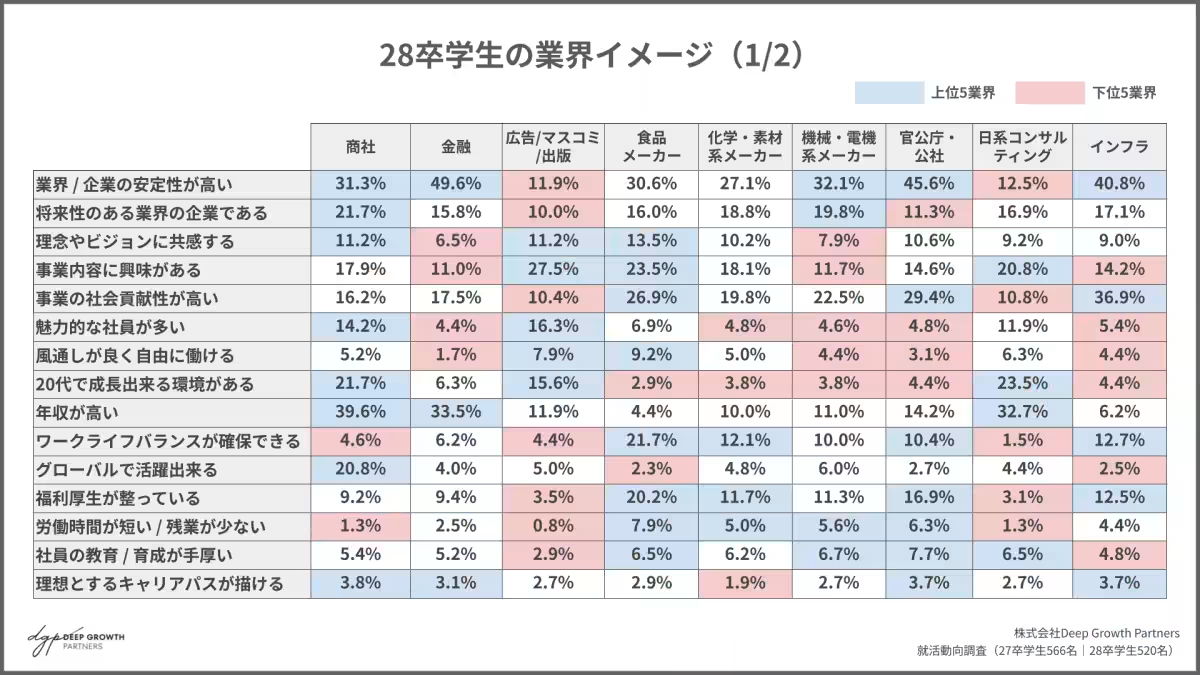
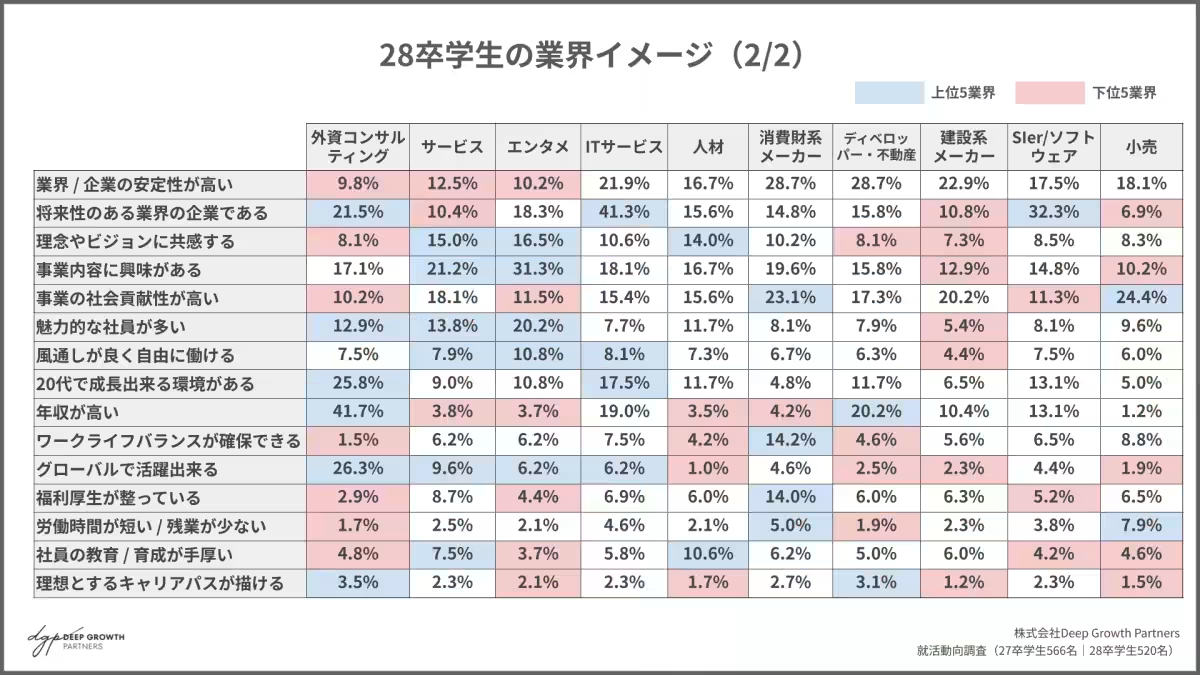
The survey also unveiled considerable discrepancies in how different sectors are perceived. Industries like trading, finance, and food manufacturing garnered high interest from students seeking positions, whereas fields such as infrastructure, system integration, retail, human resources, and services saw many students indicating a lack of interest, despite general awareness. This points to clear challenges and variations in industry perception that companies need to address.
Recommendations from Deep Growth Partners
Taking into account the survey insights, Deep Growth Partners laid out three key actions for companies to enhance their recruitment strategies for 2028 graduates:
1. Shift from Passive to Proactive Recruitment: With students prioritizing time efficiency, it is crucial for businesses to avoid solely waiting for applications. Rather than relying on well-known job boards or traditional job fairs, firms should adopt direct recruiting strategies and host events that focus on content rather than brand names to engage students proactively.
2. Address Negative Image and Develop Consistent Messaging: Engaging students before they make their final choices can aid in reshaping perceptions of an industry or company. Companies should tackle prevalent negative connotations (e.g., a lack of autonomy in roles) through targeted infographics and articles that highlight unique challenges within their corporate culture. Maintaining consistent messaging through recruitment events and subsequent interactions can also help retain time-conscious students who might otherwise lose interest.
3. Optimize Recruitment Systems to Adapt to Trends: The rapidly changing student motivations require companies to abandon outdated operations. To prevent sudden candidate shortages, companies should stay updated on the latest trends in student preferences and streamline their selection processes to improve candidate experiences. Reforming recruiting structures to concentrate on meaningful interactions and conversations can significantly improve engagement with prospective hires.
Deep Growth Partners routinely conducts surveys among students to refine recruitment strategies for companies. For more detailed information on the evolving preferences among 2028 graduates, you can download the comprehensive report titled '2028 Graduate Survey Report'.
Access the report here: 28 Graduating Class 500 Person Survey Report
Conclusion
The transition in industry preferences among university students underscores the importance of staying adaptable and responsive to market demands. By understanding the dynamic landscape of student aspirations, companies can better position themselves to attract top talent in an increasingly competitive recruitment environment.

Topics General Business)
【About Using Articles】
You can freely use the title and article content by linking to the page where the article is posted.
※ Images cannot be used.
【About Links】
Links are free to use.