



Nishinoshima: The Remarkable Return of Plant Life After Volcanic Eruption
Nishinoshima: The Return of Plant Life After Volcanic Eruption
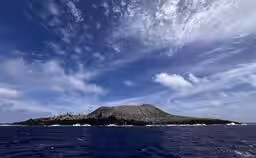
Nishinoshima, a remote volcanic island in Japan's Ogasawara archipelago, is making headlines after scientists confirmed the first instance of plant life returning since a series of massive eruptions between 2013 and 2020. The latest research led by graduate student Shoki Murakami from Tokyo Metropolitan University and his collaborators has unveiled the growth of two types of ferns and a moss in this severely affected ecosystem.
Historical Context
The island, located approximately 130 kilometers away from the nearest island, Chichijima, experienced an extraordinary volcanic activity that erased existing vegetation and dramatically changed its landscape. This unique occurrence creates a rare opportunity for researchers to observe how ecosystems recover from complete devastation. Nishinoshima represents a natural laboratory, illustrating the processes of species colonization and ecosystem development in isolated environments.
Research Discoveries
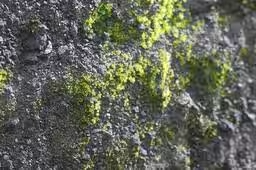
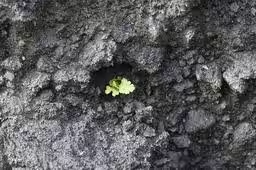
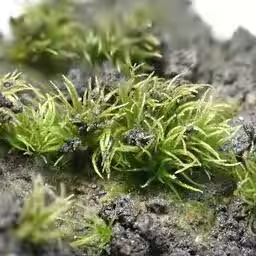
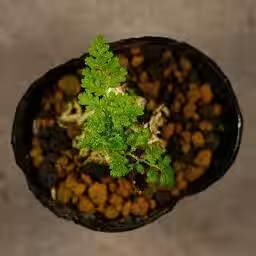
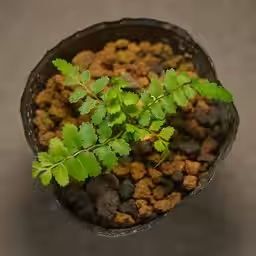
During a landing investigation in July 2025, the research team collected samples from volcanic gravel and ash deposits near the coast. They identified a new species of moss named Trematodon longicollis, alongside two types of ferns belonging to the genera Hymenophyllum and Psilotum. These initial colonizers possess spore-based long-distance dispersal capabilities, enabling them to settle in harsh conditions. Their discovery marks the onset of primary succession on the island.
Implications of the Findings
This research represents a significant milestone, indicating that the ecological recovery process is underway on Nishinoshima. The establishment of these pioneering plants reflects the initial stages of land biota forming a community in a freshly disturbed environment. The findings are particularly noteworthy given the challenges posed by the island's extreme isolation, where the potential for biological invasions is considerably restricted.
Observation Conditions
Despite the limited time available for observation, the team managed to collect multiple samples of these newly discovered plants. Notably, the ferns observed were young sporophytes measuring about 1 centimeter, suggesting that the colonization occurred recently. The growth positions of these plants varied greatly; while the moss thrived in small depressions formed by volcanic ash erosion, the ferns were found growing on surrounding scoria slopes, hinting at the diversity of microhabitats available for potential colonizers.
Further Research Directions
The findings indicate that primary succession is indeed taking its course in this environment. Similar patterns have been recorded in other volcanic regions, such as Surtsey Island in Iceland and Krakatoa in Indonesia, where various species established themselves relatively quickly after eruptions. However, Nishinoshima's geological isolation presents unique challenges, significantly influencing plant establishment and growth rates. The researchers emphasize the importance of ongoing monitoring to understand fully how these plants adapt and further enhance community development.
Significance of Ecological Recovery
The establishment of moss and ferns in Nishinoshima provides vital insights into the dynamics of primary succession. As these species colonize and proliferate, future studies could reveal critical information about biodiversity, restoration processes, and ecological resilience in similar isolated regions affected by natural disasters. By examining these phenomena, we enhance our understanding of how life can begin anew in the harshest of conditions, offering hope for ecosystems recovering from devastation everywhere.
Research Collaboration
This study was conducted by a collaborative group, including:
- - Shoki Murakami (Tokyo Metropolitan University)
- - Hideaki Mori (Japan Wildlife Research Center)
- - Shuntaro Kito (Tokyo Metropolitan University)
- - Kazuto Kawakami (Hokkaido Research Center, Forestry Research Institute)
- - Takashi Kamijo (Tsukuba University)
- - Tomoyuki Nakano (Kyoto University)
The project received support from various funding bodies, underscoring the importance of scientific collaboration in addressing environmental challenges.


Topics Environment)

【About Using Articles】
You can freely use the title and article content by linking to the page where the article is posted.
※ Images cannot be used.
【About Links】
Links are free to use.