



Innovative Carbon Recycling Technology Development to Combat Climate Change
A Major Step in Carbon Recycling Technology
In recent news, a collaboration between several leading organizations, spearheaded by NEDO (National Research and Development Agency for New Energy and Industrial Technology), has announced its plans to advance innovative carbon recycling and next-generation thermal power generation technologies. This initiative focuses on the development of effective CO2 utilization, particularly through the commercialization of ocean water-based carbon recycling technology. This technological leap aims to foster a sustainable future amidst escalating climate change concerns.
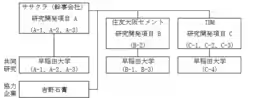
The consortium comprises well-known entities: Sasakura Co., Ltd., Sumitomo Osaka Cement Co., Ltd., TBM Co., Ltd., and Waseda University. The project was officially launched on July 3, 2023, following its selection for funding under NEDO's project grant. Sasakura is the leading firm for the project with Noriyuki Shimada as the primary researcher, while Takao Nakagaki from Waseda University oversees the research governance.
Background of the Project
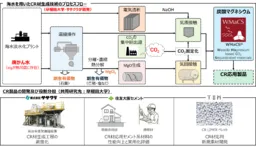
Set in the NEDO Carbon Recycling Demonstration Research Base located on Osakikamijima Island in Hiroshima Prefecture, the project is dedicated to developing technology that effectively utilizes CO2. For the period from fiscal 2022 to fiscal 2025, Waseda University and Sasakura have been conducting preliminary research aimed at verifying the feasibility of carbon recycling technology using seawater.
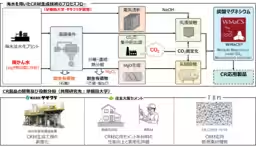
During the preliminary phase, the research team established a plant capable of processing 20 tons of seawater daily. This facility demonstrated success in consistently producing valuable by-products such as magnesium and high-purity gypsum at significant yields. They have successfully immobilized CO2 using various methods, leading to the creation of a new concrete material devoid of traditional Portland cement, boasting comparable compressive strength to conventional concrete. This innovative product, trademarked as WMaCS®, marks a significant milestone in the field and has generated recognition, including an award from the Japan Science and Technology Agency for its contributions toward sustainable development.
Objectives of the New Project
The newly adopted project aims to further enhance the processes of generating carbon recycling materials, looking toward future commercialization. As the main contractor, Sasakura will work on several key research and development areas. Sumitomo Osaka Cement and TBM will focus on the practical use of WMaCS in carbon recycling applications, with Waseda University playing an integral role in the collective research efforts.
Research Development Initiatives
Starting from July 3, the project will engage in various research and development activities:
1. Enhancement of Carbon Recycling Material Production Process (Jointly conducted by Sasakura and Waseda University)
- Aiming to resolve existing challenges in commercializing CO2 fixation techniques to enhance magnesium utilization.
- Improvements to the carbon recycling material generation process through solid-gas contact approaches.
- Focus on operational efficiency and continuous process enhancement to facilitate commercial scalability.
2. Performance Improvement and Practical Evaluation of Carbon Recycling Materials in Cement Products (Jointly conducted by Sumitomo Osaka Cement and Waseda University)
- The research aims to establish methods for utilizing marine-sourced magnesium in construction materials, enhancing the overall effectiveness of carbon recycling applications.
- Evaluating the performance of concrete products utilizing carbon recycling materials to cement alternative materials.
3. Development of Innovative New Materials from Carbon Recycling (Jointly conducted by TBM and Waseda University)
- TBM will develop high-fill techniques for thermoplastic resins utilizing carbon-recycled materials, aiming for widespread commercial viability of these new materials.
- Comprehensive testing of these materials using actual plant equipment will form part of the validation process for these new innovative products.
In summary, this project signifies a pivotal step towards sustainable development and climate change mitigation through the advancement of carbon recycling technologies. Its successful implementation could lead to revolutionary changes in how we perceive and utilize carbon emissions in our society. By leveraging academic and industrial expertise, this collaborative effort sets a precedent for future endeavors in the battle against climate change.
Topics Environment)

【About Using Articles】
You can freely use the title and article content by linking to the page where the article is posted.
※ Images cannot be used.
【About Links】
Links are free to use.