



BioPhenoMA Collaborates with Taiwan Exosome and Waseda University for Global Research in Exosome Biomarkers
BioPhenoMA Expands Research Opportunities Through New Partnership
In an exciting development in the field of biomedical research, BioPhenoMA Inc., based in Shinjuku, Tokyo, has entered into a Memorandum of Understanding (MOU) with Taiwan Exosome Co., Ltd. and Waseda University. This strategic partnership aims to enhance international collaboration focusing on the exploration of novel biomarkers using exosomes, small vesicles released by cells that contain a diverse array of molecules, including proteins and RNA.
What Are Exosomes and Why Are They Important?
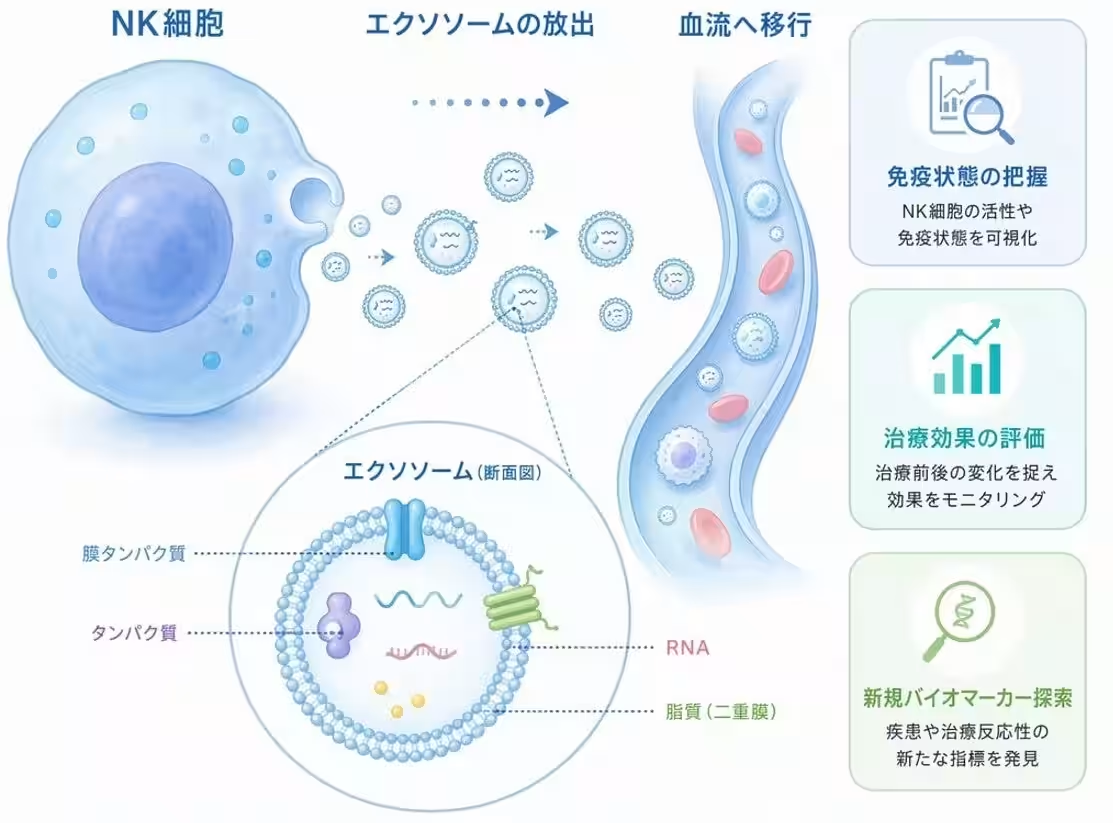
Exosomes have gained significant attention in recent years due to their roles in various medical fields, including cancer, immune disorders, and inflammatory diseases. These tiny particles serve as vehicles for intercellular communication, reflecting changes within the immune system. Notably, exosomes derived from Natural Killer (NK) cells are especially promising as they can provide valuable insights into treatment responses and disease states, making them potential indicators in medical diagnostics.
Taiwan has been at the forefront of researching immune cell-derived exosomes, and the collaboration established by this MOU is positioned to advance the sophistication of analytical techniques through international cooperative efforts.
Unique Strengths within the Partnership
BioPhenoMA, a startup founded by Daisuke Niwa and backed by Professor Etsuro Ito from Waseda University, has developed an innovative protein detection technology known as TN-cyclon™. This technology enables the ultra-sensitive measurement of minute protein quantities found in blood and exosomes using standard laboratory equipment. It reflects the firm’s commitment to creating a revolutionary platform for easily detecting trace levels of proteins globally, thus contributing to advancements in the biomedical arena.
Waseda University bolsters the partnership with its robust research infrastructure in life sciences, providing a solid foundation for collaborative research. By integrating their strengths, the three parties aim to deepen the understanding of the properties of NK cell-derived exosomes, laying essential groundwork for future diagnostic technology development.
Goals and Future Directions
Through this collaborative agreement, BioPhenoMA, Waseda University, and Taiwan Exosome Co. plan to focus on several key areas:
1. Enhancing Exosome Isolation and Analytical Techniques: Improving the methods used to isolate and analyze exosomes will enable more accurate and reliable results in clinical settings.
2. Discovering Molecules Reflecting Immune State Changes: The research will look to identify specific molecules within exosomes that indicate shifts in immune conditions, furthering our understanding of immune responses.
3. Understanding Exosome Dynamics in Disease Models: By studying how exosomes behave in various disease models, the partnership seeks to uncover valuable insights that could lead to breakthroughs in treatment strategies.
This collaboration is aimed at fostering the creation of new biomarkers for immune therapies and inflammatory diseases, strengthening international research alliances and contributing to global health advancements.
Company Overview
BioPhenoMA was established on April 18, 2023, and operates with a mission to facilitate groundbreaking advances in the detection of minute proteins. The startup is committed to ensuring that anyone can easily conduct ultra-sensitive protein detection wherever they may be. This mission emphasizes the importance of making technological innovations accessible, thus driving further progress in the field of biomedical science.
For those interested in learning more about BioPhenoMA and their cutting-edge research, please visit their official website at BioPhenoMA or contact them via email at [email protected].
In conclusion, the signing of this MOU marks a promising step towards enhanced research capabilities and innovations in biomarker discovery, laying the groundwork for improved diagnostic techniques and therapies.
Topics Health)
【About Using Articles】
You can freely use the title and article content by linking to the page where the article is posted.
※ Images cannot be used.
【About Links】
Links are free to use.