



Seizing the Future: The Next Family and Systemic Design Initiatives by Keio University
Exploring the Future: Next Family and Systemic Design Initiatives
Introduction
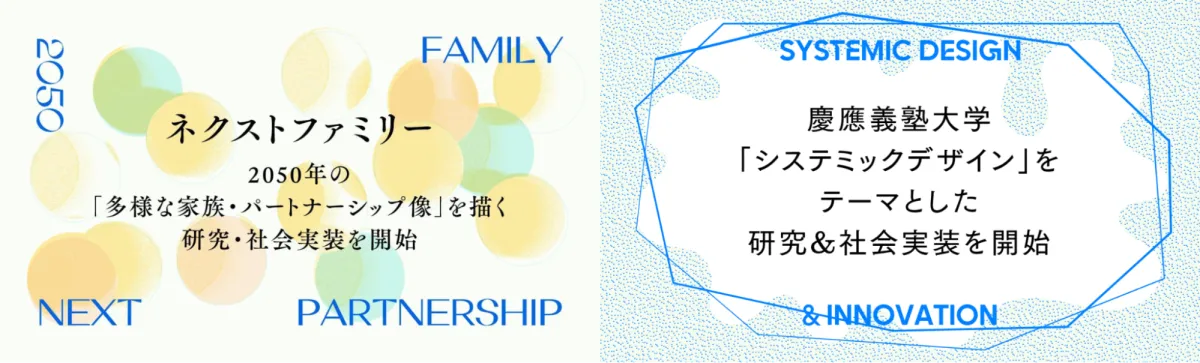
A new chapter begins with the formation of the "Next Family Research Center" and the "Center for Systemic Design & Innovation" at Keio University, both supported by the General Incorporated Association DeSilo. These initiatives aim to address the evolving dynamics of family structures and partnerships by 2050, acknowledging the complex societal challenges and opportunities ahead.
Unpacking Systemic Design
In the face of pressing issues such as climate change and geopolitical instability, the demand for innovative solutions from companies has intensified. By leveraging systemic design, Keio University seeks to cultivate 21st-century enterprises that achieve a balance between social responsibility and economic viability.
Systemic design focuses on transforming complex social systems by emphasizing relationships and fostering significant changes. This approach combines design and systems thinking, which has gained traction in the 2020s, demanding collaboration among various stakeholders to navigate today's multifaceted challenges.
Need for Innovation in Business and Society
As organizations grapple with the dual requirements of social accountability and economic practicality, they often struggle to envision a coherent long-term strategy to tackle social challenges. Common issues faced by companies include:
- - Uncertainty about which social issues to address in the mid to long term.
- - Difficulty in shifting from linear to circular business models.
- - Challenges in integrating social and economic factors into research and development.
- - Inability of traditional design methods to foster innovation due to complex social issues.
- - Complications in developing open innovation models with external partners.
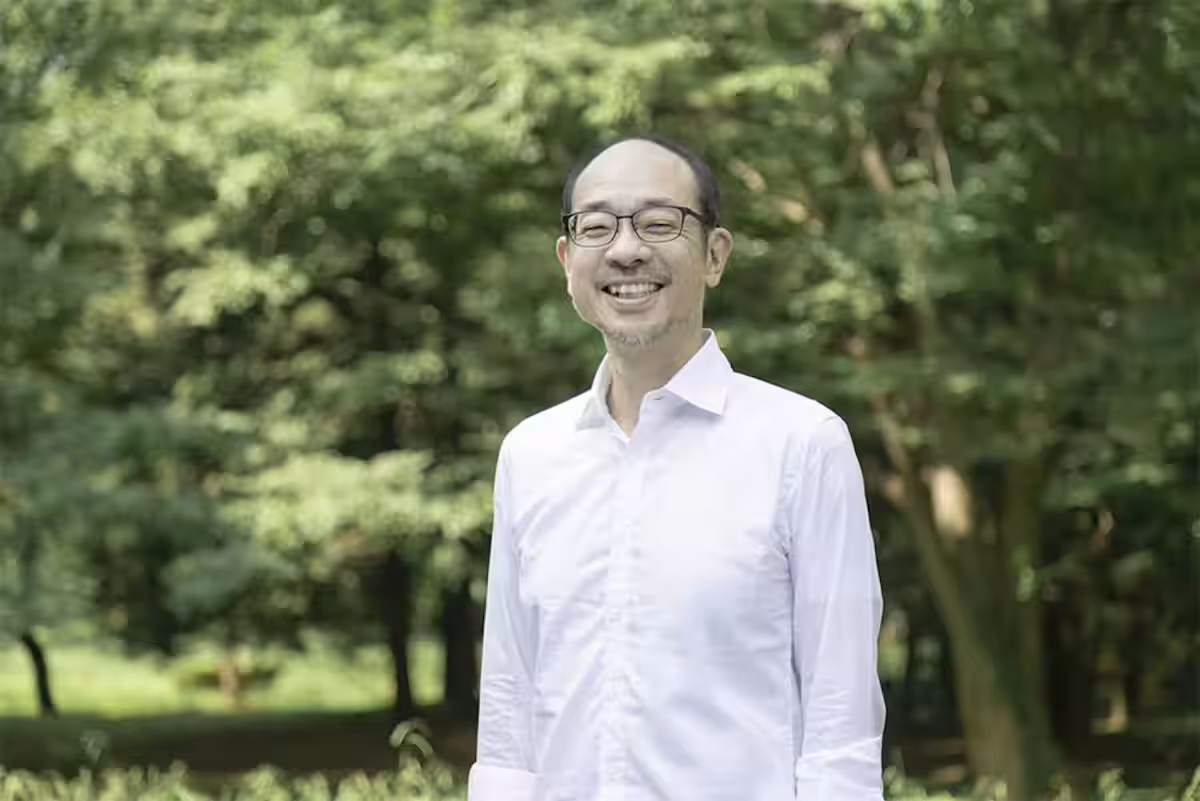
To lead the project, Professor Masanao Takeyama, a pioneer in service design and systemic design, will spearhead these efforts at Keio University.
Addressing the Evolution of Family Structures
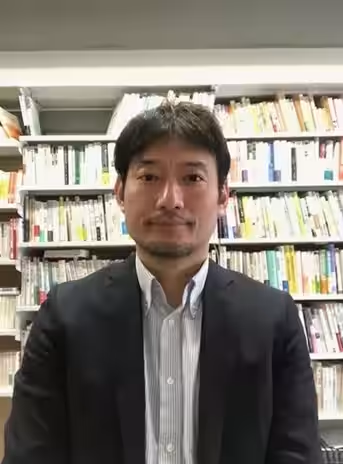
Simultaneously, the project led by Associate Professor Yuichiro Sakai focuses on the diversification of family and partnership shapes in modern society, moving beyond the traditional nuclear family model. The emerging forms of family include cohabitation, step-families, same-sex partnerships, and selective singles, which challenge conventional notions rooted in marriage and blood ties.
The 2020 statistics from the National Institute of Population and Social Security Research reveal startling trends: the unmarried rate at age 50 reached a record high of approximately 28% for men and 18% for women, a tendency expected to persist. With a rising divorce rate and increasing single-person households, the need for organizations to adapt their systems—such as employment benefits, housing, and legal frameworks—has never been more urgent.
The project aims to explore what families could look like in 2050 through an interdisciplinary lens. Future scenarios will guide the redesigning of business and organizational practices to accommodate these evolving dynamics.
Upcoming Events and Workshops
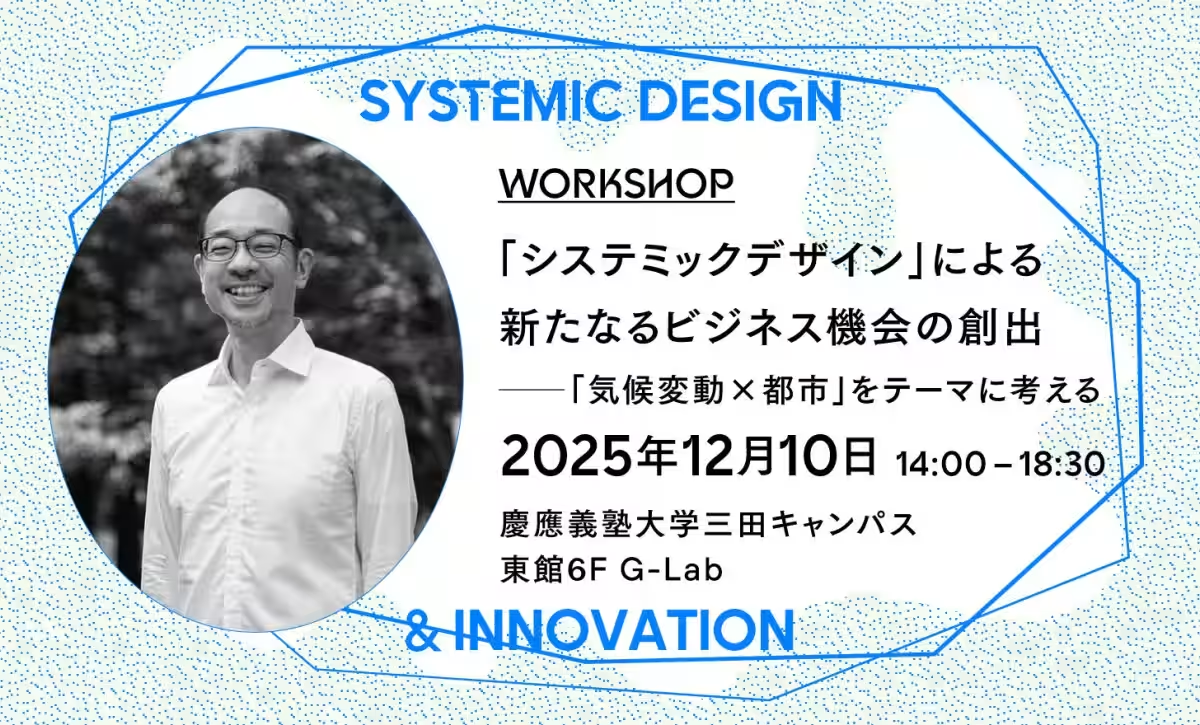
To kick off these groundbreaking initiatives, the first events will be hosted on December 4 and December 10, 2025. Each event will focus on leveraging systemic design to generate new business opportunities related to urban responses to climate change and delve into the socio-economic implications of evolving family structures.
Event Details
- - Workshop on Systemic Design:
- Time: 2:00 PM - 6:30 PM
- Location: Keio University, Mita Campus, East Building 6th Floor, G-Lab
- - Seminar on Next Families:
- Time: 4:00 PM - 7:30 PM
- Location: Keio University, Mita Campus, East Building 6th Floor, G-Lab
Experts will engage in discussions, workshops, and networking sessions aimed at unlocking innovative approaches to address future societal challenges, driven by an understanding of systemic design and the complex landscape of family evolution.
Conclusion
With these initiatives, Keio University and DeSilo are paving the way for a thoughtful exploration of future families and systemic design, encouraging companies and organizations to rethink their strategies and operations towards inclusive and sustainable practices. By bridging academic insights with practical applications, we are taking essential steps toward shaping a resilient, inclusive future for all.
Topics People & Culture)


【About Using Articles】
You can freely use the title and article content by linking to the page where the article is posted.
※ Images cannot be used.
【About Links】
Links are free to use.