



Royal Jelly Shows Promise in Combating Obesity and Sleep Issues Linked to High-Fat Diets
Royal Jelly: A Natural Solution for Modern Diet-Related Issues
Recent studies involving royal jelly (RJ), conducted by Yamada Bee Farm's Health Science Research Institute in collaboration with Professor Akira Terao from Tokai University, reveal promising results in mitigating obesity and enhancing sleep quality. This research particularly addresses the impacts of high-fat diets on both conditions, offering insights into a natural approach for modern health challenges.
Understanding the Problem
In today's fast-paced world, dietary habits are shifting, with traditional Japanese cuisine being replaced by Western-style fast foods and processed meals. As highlighted by the latest results from the Japanese National Health and Nutrition Survey, over one-third of adults exceed recommended fat intake levels, increasing the risk of obesity and cardiovascular diseases.
Moreover, sleep quality is declining. According to the same health survey, 25% of Japanese people report inadequate sleep quality, leading to insufficient rest and associated health risks. The relationship between sleep and obesity is vital—poor sleep can exacerbate weight gain, and cycles of fragmented sleep can further contribute to obesity.
Research Objectives
This study sought to evaluate the effects of royal jelly on diet-induced obesity and sleep quality. RJ has shown potential benefits in weight reduction among individuals with type 2 diabetes, indicating its possible role in addressing high-fat diet-induced conditions.
Methodology
A controlled trial involved four groups of young, healthy subjects fed different diets for 20 weeks: regular diet, regular diet plus RJ (5%), high-fat diet, and high-fat diet plus RJ (5%). Various physiological parameters, including diet intake, body weight, body fat levels (up to 16 weeks), and sleep patterns (non-REM sleep and REM sleep durations and awakenings), were meticulously measured.
Key Findings
1. Improvement in High-Fat Diet-Induced Obesity
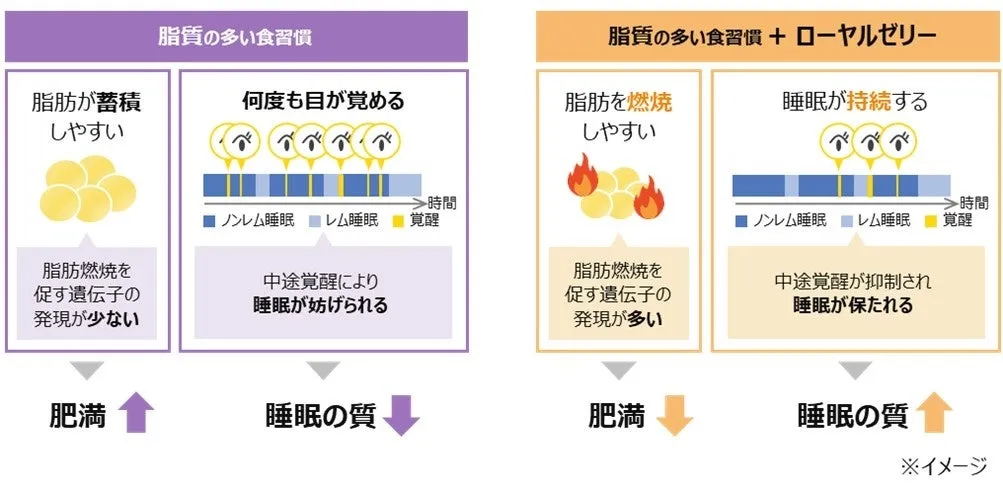
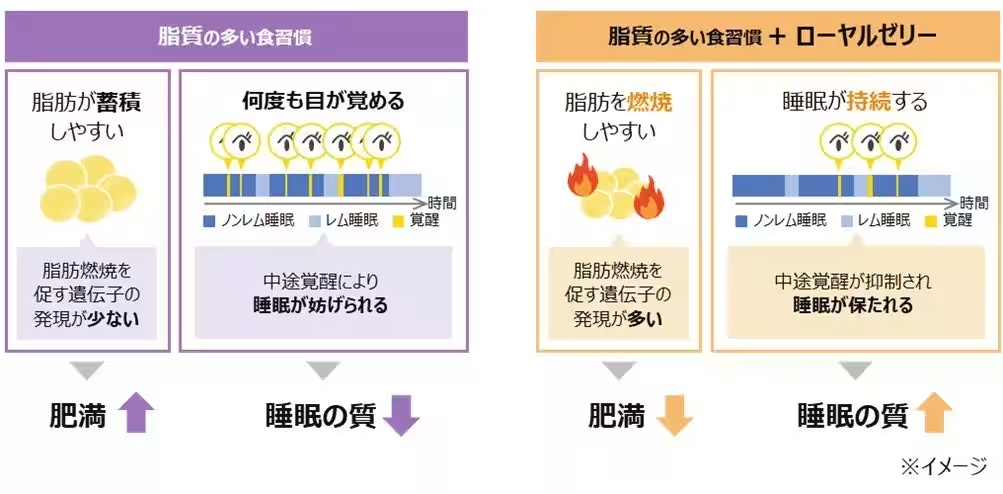
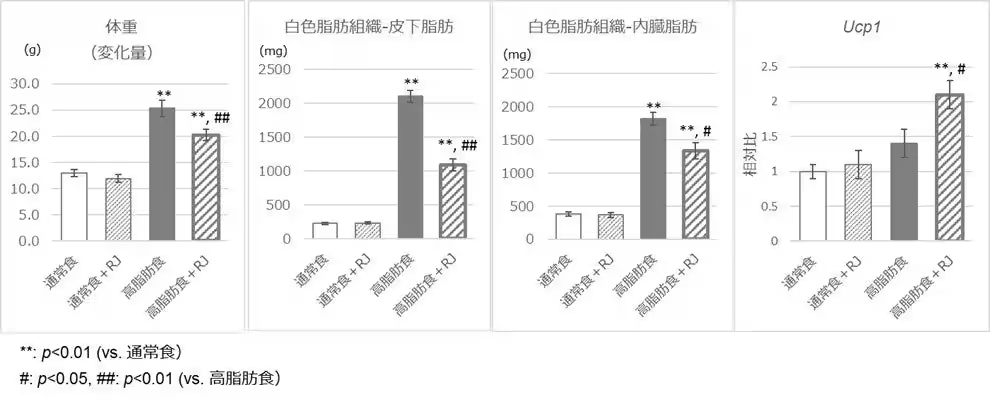
The group consuming a high-fat diet demonstrated significant weight gain and increased white adipose tissue. Conversely, the group that received a high-fat diet supplemented with RJ showed inhibited increase in these areas. Notably, this group exhibited a higher expression of a protein (Ucp1) associated with thermogenesis in brown adipose tissue compared to the regular diet group. This suggests that RJ may enhance energy expenditure, thus counteracting the weight gain typically observed with high-fat diets.
2. Enhanced Sleep Quality
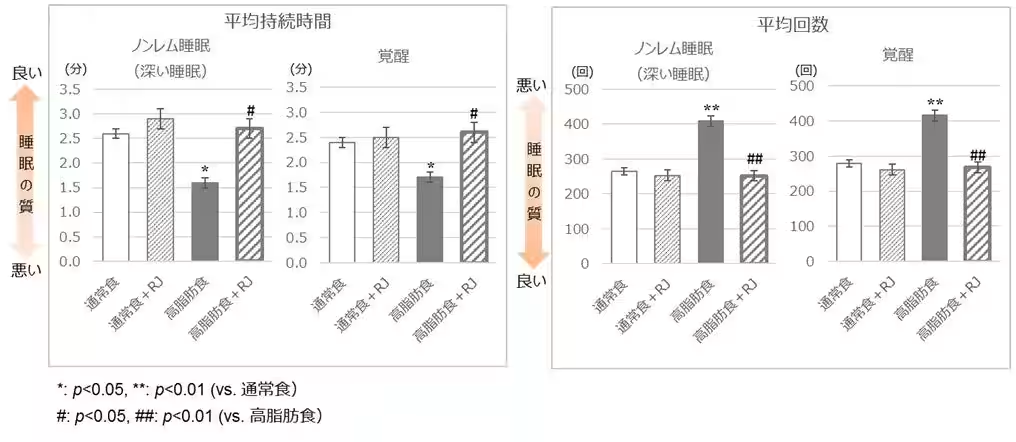
Participants in the high-fat diet group experienced shorter durations and more frequent awakenings during non-REM sleep. In contrast, those supplemented with RJ exhibited improved stability in sleep patterns and overall better sleep quality, illustrating its potential in combating sleep fragmentation caused by high-fat diets.
Conclusion and Future Directions
The outcomes of this study reveal royal jelly as a promising candidate for addressing obesity and sleep quality issues stemming from modern dietary habits. These findings inspire hope for new health strategies targeting the risks associated with obesity and poor sleep, ultimately enhancing overall health and wellness. Yamada Bee Farm remains committed to further research and development of bee products such as RJ, propolis, and bee larvae, focusing on preventive medicine and contributing to the extension of healthy lifespans in society.
Publication Information
- - Paper Title: Royal jelly reduced non-rapid eye movement sleep fragmentation and restored sleep stability in diet-induced obese mice
- - Published In: Experimental Animals, 2025; 74(2): 300-309 (April 2025)

Topics Health)
【About Using Articles】
You can freely use the title and article content by linking to the page where the article is posted.
※ Images cannot be used.
【About Links】
Links are free to use.