



Analysis of Job Market Decline and New Corporations in March 2026
Analysis of Job Market Decline and New Corporations in March 2026
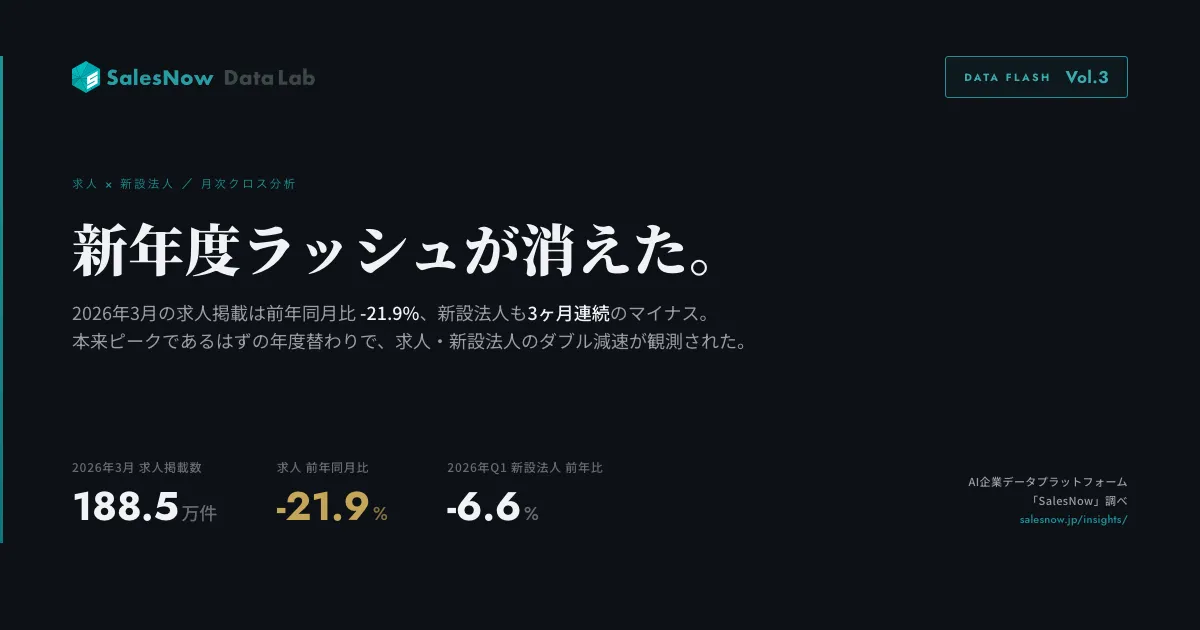
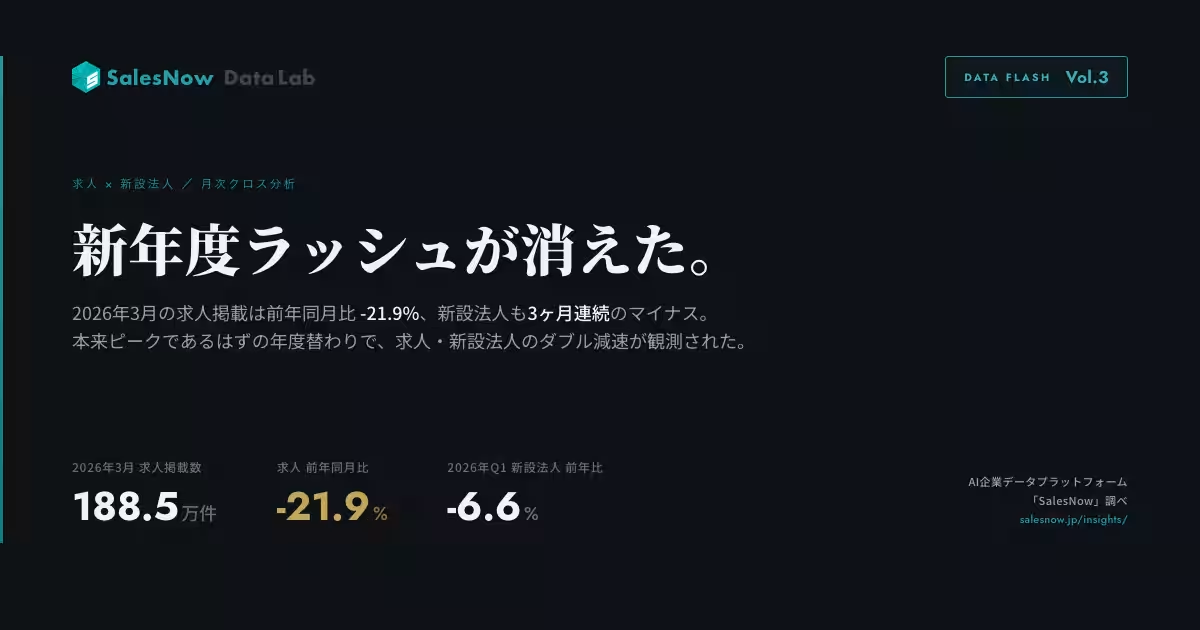
In March 2026, Japan’s job market experienced a notable decline, highlighted by a significant drop in job listings and the formation of new corporations. According to the latest report titled SalesNow Data Flash Vol.3, published by SalesNow, which compiled data from over 14 million company and organizational records, March's job postings fell by 21.9% compared to the previous year, while the number of new corporations formed also witnessed a consecutive decline over three months.
Key Findings:
Decrease in Job Listings:
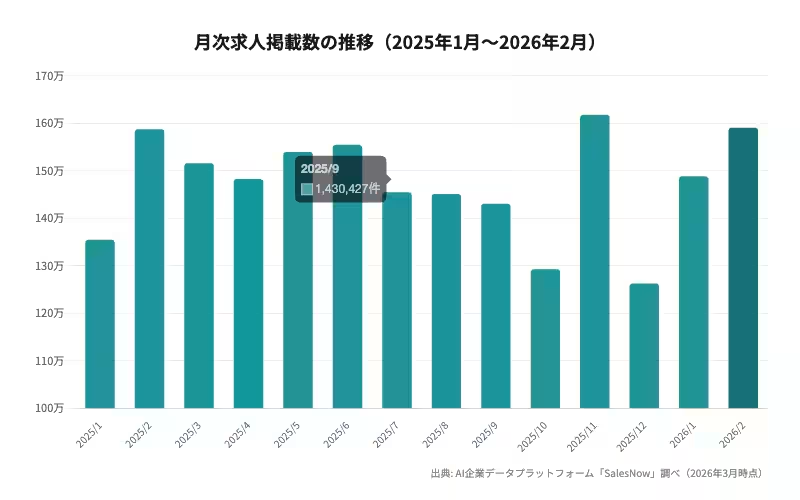
In March 2026, there were 1,885,242 job postings, which is a decrease of approximately 530,000 listings compared to March 2025, marking a decrease of 21.9%. The year previous saw an exceptionally high figure for March 2025 at 2,414,390 listings, raising questions about the substantial drop observed this year. Despite this decline, the March 2026 numbers were still approximately 20% higher than the 14-month average of about 1,573,000 listings, indicating a relatively high demand when viewed in a broader context.
New Corporations Formed in Q1:
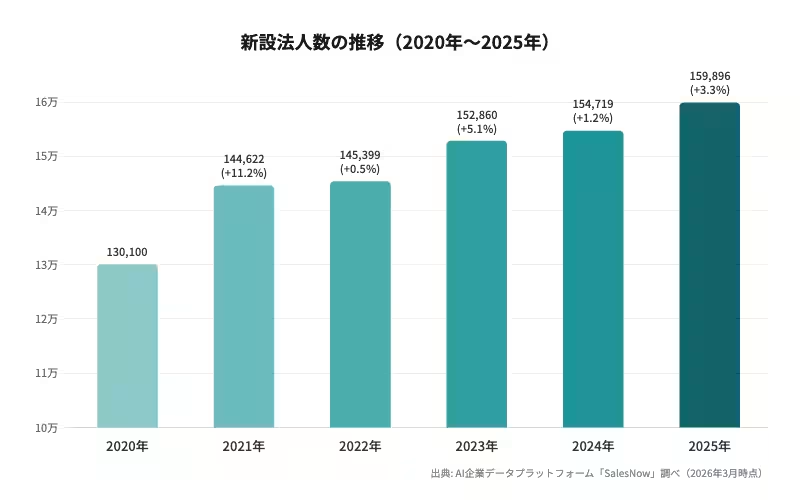
The first quarter of 2026 (January to March) recorded a total of 36,870 newly established corporations, which is down 6.6% from 39,465 in the first quarter of 2025. This downward trend continued through January (-12.5%), February (-5.9%), and March (-1.1%). However, the pace of this decline appears to be slowing, suggesting a potential stabilization in new business formations.
Weak Seasonal Peaks:
Historically, March is a peak month for both job postings and new corporate formations, coinciding with the start of many companies' fiscal year in April. Yet, March 2026 showed weaker performance in these metrics compared to the past two years. April previously saw higher numbers with 14,305 new corporations in April 2024 and 15,305 in April 2025 (a 7% increase year-on-year). The ability of April 2026 to maintain or surpass these figures will play a crucial role in determining whether this year continues a streak of record highs or slips into a downturn not seen in five years.
Analysis Overview:
SalesNow used a comprehensive approach to analyze the data. Job listings were sourced from all major job platforms, while data for new corporations came from the National Tax Agency's public website. The analysis period extended from January 2025 through March 2026 for job postings and from January 2024 to March 2026 for new corporations. With over 14 million organizations in their database, SalesNow's analysis provides crucial insights into labor market dynamics in Japan.
Notes on Data Source:
SalesNow has progressively expanded its data coverage across various job platforms, starting with green in 2011 and including several others over the years. This gradual enhancement of data sources may impact year-on-year comparisons for the months leading into 2026, which should be interpreted with proper context in mind.
Contextual Data Comparison:
The report’s findings resonate with other external statistics. The Ministry of Health, Labor and Welfare indicated a slight drop in the effective job offers ratio to 1.18 in January 2026, while Doda’s reports show a decrease in job offer ratios mainly due to private sector trends. Additionally, rising corporate bankruptcies and previous records for new corporations underlie the urgency of understanding these shifts.
Conclusion:
In conclusion, while March 2026 presents challenges with declining job numbers and new corporations reaching historic lows, the broader economic context illustrates resilience and potential for recovery as observed trends might stabilize. Ongoing monitoring and analysis will be crucial in the coming months to ascertain the true health of the job market as the year progresses.
Topics Consumer Products & Retail)





【About Using Articles】
You can freely use the title and article content by linking to the page where the article is posted.
※ Images cannot be used.
【About Links】
Links are free to use.