



Mitsubishi Research Institute and Hitachi Launch New Power Trading Support Services
Mitsubishi Research Institute (MRI) and Hitachi, Ltd. have taken a significant step in the energy sector by entering into a collaboration to enhance power trading support services specifically aimed at operators in the high-voltage battery business sector. On August 25, both companies signed a memorandum of understanding (MoU) to establish a cooperative framework to provide advanced power trading services, including new market entrants. The initiative combines MRI's Distributed Energy Resource Operation Support Service, known as MERSOL (MRI Energy Resource Solution), with Hitachi's development of a sophisticated power trading system.
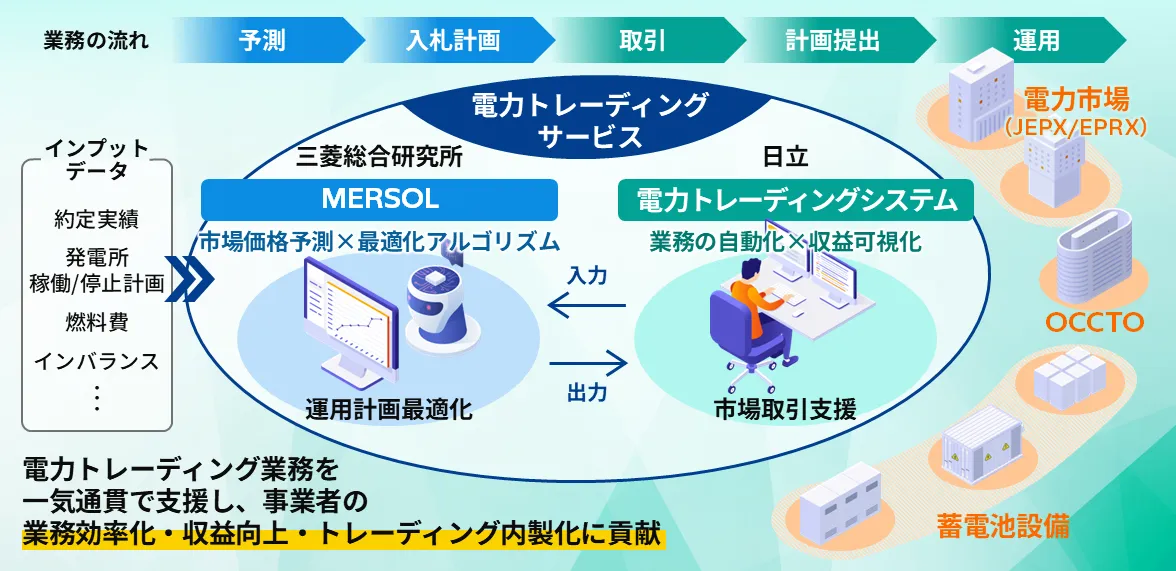
This collaboration aims to facilitate the seamless integration of bid planning optimization from MERSOL with market transaction support provided by Hitachi’s power trading system. By doing so, it offers a comprehensive support structure from the automatic drafting of bid plans for batteries to market transactions, thereby enhancing operational efficiency for battery operators. This strategic partnership is particularly beneficial as it allows operators to take on some of the advanced trading tasks that were previously outsourced to aggregators. Consequently, businesses can improve operational efficiency, expand revenue opportunities, and deploy multiple battery sites more effectively.
Japan's government is pushing towards achieving carbon neutrality by 2050, leading to a significant increase in the adoption of renewable energy sources. However, the fluctuation in power generation capacity has created challenges concerning supply and demand adjustments. In this context, grid-connected battery systems have emerged as crucial resources to support the expansion of renewable energy by charging surplus electricity and discharging it during periods of shortage.
To secure revenue within the grid battery business, it is essential to conduct trading across multiple markets and products, including the Japan Electric Power Exchange (JEPX) and demand-supply adjustment markets. However, trading operations require specialized knowledge to formulate optimal bidding plans that maximize revenue and comply with electricity business laws and market regulations. This has led many newer entrants, especially, to conditionally outsource to aggregators. Nevertheless, there is a growing demand for in-house trading capabilities among businesses aiming to build operational expertise, reduce outsourcing costs, and facilitate quicker decision-making processes.
In this context, MRI has leveraged its extensive experience in electricity market analysis and regulatory design to develop and offer the MERSOL service, which formulates optimal operational plans for battery storage using its unique algorithms. Meanwhile, Hitachi has been developing a sophisticated power trading system under its strategic SIB (Social Innovation Business) unit, focusing on enhancing the efficiency and sophistication of trading operations by integrating its established IT and operational technology expertise within the power sector.
Through the collaboration, MRI's MERSOL will connect with Hitachi’s power trading system to create an efficient process for executing trading operations, including bid planning and market transactions. Specifically, MERSOL will generate bidding plans based on pricing predictions—factoring in the demand-supply adjustment market—and assist the trading system in submitting bids to the market. Furthermore, this collaboration will automatically generate trading reports for submission to the Organization for Cross-regional Coordination of Transmission Operators (OCCTO), facilitating a streamlined workflow for clients.
This comprehensive service offers two main values to businesses:
1. Enhancement of Profitability: By conducting power trading based on optimal bidding plans and market predictions, the service supports stable revenue acquisition and the expansion of trading opportunities. Through systematic operation support, operators can transition to performing their own trading, thus reducing costs associated with outsourcing and retaining operational knowledge within their organization for quicker decision-making, ultimately improving competitive edge.
2. Improvement of Scalability: The standardized system structure allows easy expansion into multiple projects without the need to recreate systems for each case. Especially for new entrants into the grid battery business, many operational tasks can be automated and streamlined through the system, enabling them to conduct their own trading. This structure supports effective management of multiple battery operations by a small team and eliminates reliance on individual personnel or expertise for operations.
Starting in 2027, MRI and Hitachi will establish a robust framework to offer this service from both companies. They will also build a cooperative structure that allows them to propose and provide their services—MERSOL and the power trading system—independently. By doing so, they hope to strongly promote the growth and spread of the grid-connected battery business and contribute to realizing a sustainable carbon-neutral society.
As MRI continues to adapt its MERSOL service to reflect changes in the electricity market and regulatory modifications, it will strive to improve the profitability and foreseeability of battery business operations. Concurrently, Hitachi plans to expand its integration of IT and operational technology in the battery sector and focus on building a seamless energy infrastructure that supports the next generation of Green Transformation (GX).
For more information about the MERSOL service, visit MERSOL.
To learn more about Hitachi's Green Transformation efforts, visit Hitachi Green Transformation.
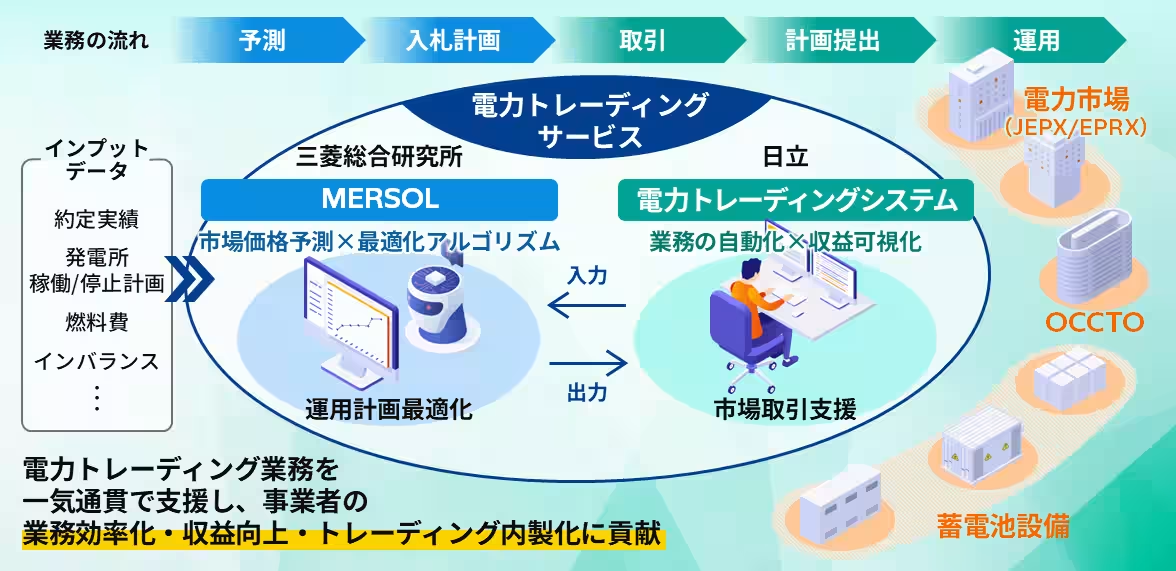
This collaboration aims to facilitate the seamless integration of bid planning optimization from MERSOL with market transaction support provided by Hitachi’s power trading system. By doing so, it offers a comprehensive support structure from the automatic drafting of bid plans for batteries to market transactions, thereby enhancing operational efficiency for battery operators. This strategic partnership is particularly beneficial as it allows operators to take on some of the advanced trading tasks that were previously outsourced to aggregators. Consequently, businesses can improve operational efficiency, expand revenue opportunities, and deploy multiple battery sites more effectively.
Background: Responding to a Changing Energy Landscape
Japan's government is pushing towards achieving carbon neutrality by 2050, leading to a significant increase in the adoption of renewable energy sources. However, the fluctuation in power generation capacity has created challenges concerning supply and demand adjustments. In this context, grid-connected battery systems have emerged as crucial resources to support the expansion of renewable energy by charging surplus electricity and discharging it during periods of shortage.
To secure revenue within the grid battery business, it is essential to conduct trading across multiple markets and products, including the Japan Electric Power Exchange (JEPX) and demand-supply adjustment markets. However, trading operations require specialized knowledge to formulate optimal bidding plans that maximize revenue and comply with electricity business laws and market regulations. This has led many newer entrants, especially, to conditionally outsource to aggregators. Nevertheless, there is a growing demand for in-house trading capabilities among businesses aiming to build operational expertise, reduce outsourcing costs, and facilitate quicker decision-making processes.
In this context, MRI has leveraged its extensive experience in electricity market analysis and regulatory design to develop and offer the MERSOL service, which formulates optimal operational plans for battery storage using its unique algorithms. Meanwhile, Hitachi has been developing a sophisticated power trading system under its strategic SIB (Social Innovation Business) unit, focusing on enhancing the efficiency and sophistication of trading operations by integrating its established IT and operational technology expertise within the power sector.
Partnership Details and Value Proposition
Through the collaboration, MRI's MERSOL will connect with Hitachi’s power trading system to create an efficient process for executing trading operations, including bid planning and market transactions. Specifically, MERSOL will generate bidding plans based on pricing predictions—factoring in the demand-supply adjustment market—and assist the trading system in submitting bids to the market. Furthermore, this collaboration will automatically generate trading reports for submission to the Organization for Cross-regional Coordination of Transmission Operators (OCCTO), facilitating a streamlined workflow for clients.
This comprehensive service offers two main values to businesses:
1. Enhancement of Profitability: By conducting power trading based on optimal bidding plans and market predictions, the service supports stable revenue acquisition and the expansion of trading opportunities. Through systematic operation support, operators can transition to performing their own trading, thus reducing costs associated with outsourcing and retaining operational knowledge within their organization for quicker decision-making, ultimately improving competitive edge.
2. Improvement of Scalability: The standardized system structure allows easy expansion into multiple projects without the need to recreate systems for each case. Especially for new entrants into the grid battery business, many operational tasks can be automated and streamlined through the system, enabling them to conduct their own trading. This structure supports effective management of multiple battery operations by a small team and eliminates reliance on individual personnel or expertise for operations.
Future Developments
Starting in 2027, MRI and Hitachi will establish a robust framework to offer this service from both companies. They will also build a cooperative structure that allows them to propose and provide their services—MERSOL and the power trading system—independently. By doing so, they hope to strongly promote the growth and spread of the grid-connected battery business and contribute to realizing a sustainable carbon-neutral society.
As MRI continues to adapt its MERSOL service to reflect changes in the electricity market and regulatory modifications, it will strive to improve the profitability and foreseeability of battery business operations. Concurrently, Hitachi plans to expand its integration of IT and operational technology in the battery sector and focus on building a seamless energy infrastructure that supports the next generation of Green Transformation (GX).
For more information about the MERSOL service, visit MERSOL.
To learn more about Hitachi's Green Transformation efforts, visit Hitachi Green Transformation.
Topics Energy)
【About Using Articles】
You can freely use the title and article content by linking to the page where the article is posted.
※ Images cannot be used.
【About Links】
Links are free to use.