



Recruit Management Solutions Reveals Key Insights from 2025 Talent Management Survey
Key Insights from 2025 Talent Management Survey
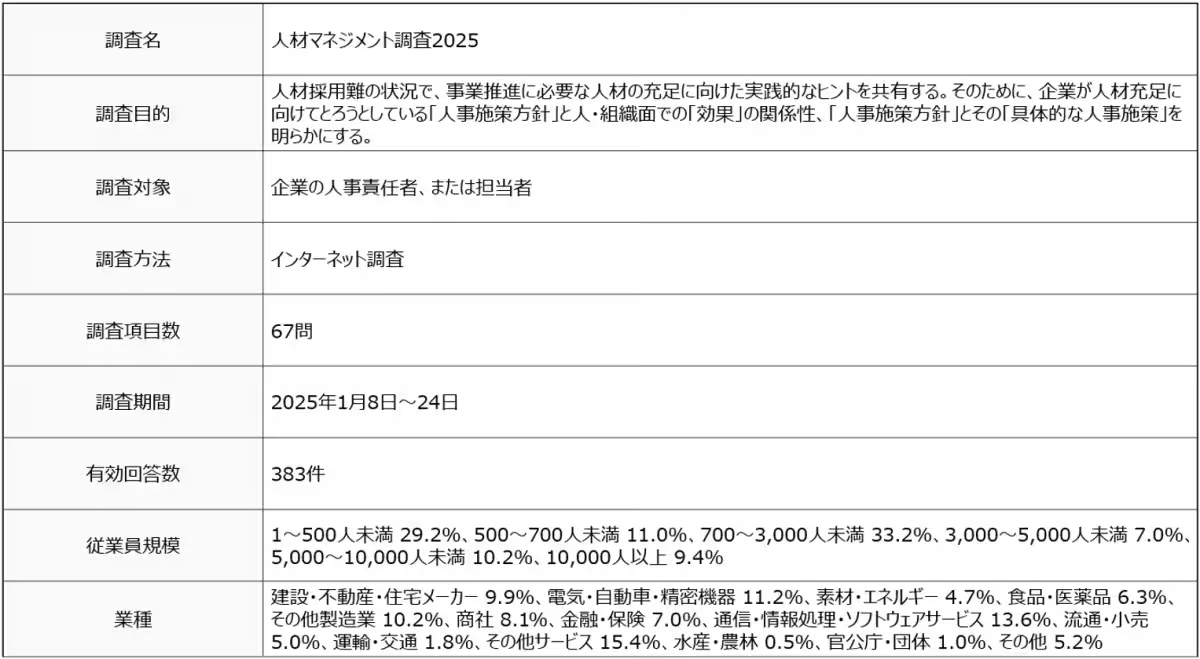
Recruit Management Solutions, headquartered in Minato, Tokyo, has recently conducted the "2025 Talent Management Survey," involving 383 human resources leaders across Japan. This survey is vital as it delves into the current state of workforce management and offers practical insights amid significant labor shortages.
Background of the Survey
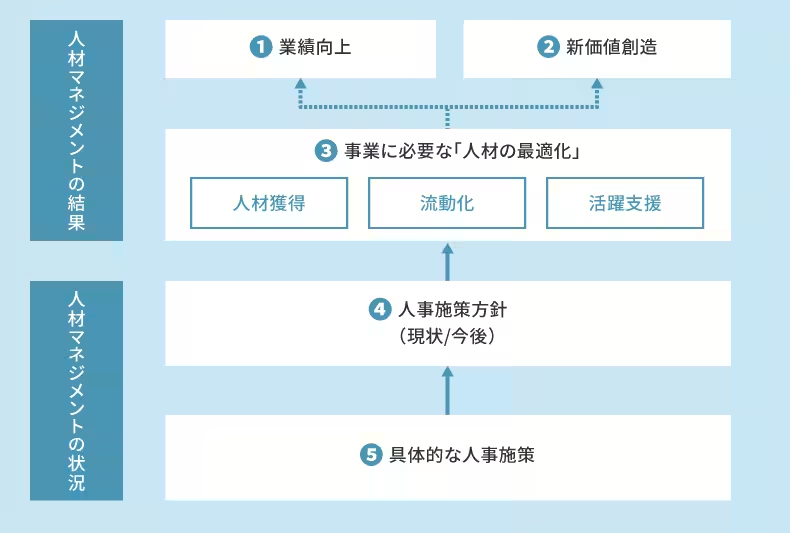
Historically, talent management in organizations has focused on two main axes: the fulfillment of labor "quantity" (recruitment) and the improvement of "quality" (employee development). However, with Japan facing a rapidly declining labor pool, meeting the required "quantity" of skilled workers is becoming increasingly challenging.
Furthermore, with shorter business life cycles, companies are now compelled to simultaneously advance existing operations while creating new ventures. Consequently, the required talent is also changing quickly, necessitating an agile approach to workforce allocation, termed "talent fluidity."
Against this backdrop, the survey seeks to gauge current practices in talent management and derive actionable insights for future initiatives.
Executive Summary
Topic 1: Performance Improvement is Steady, but New Value Creation and Talent Fluidity are Challenging
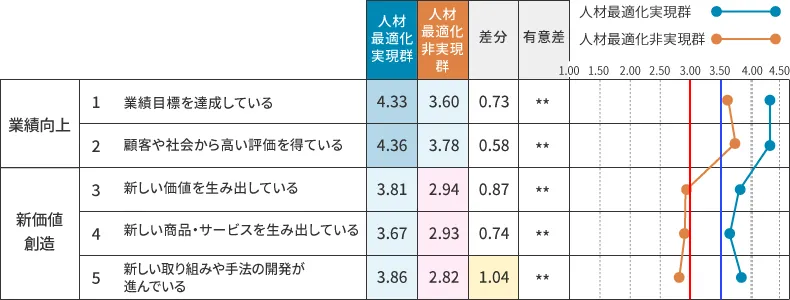
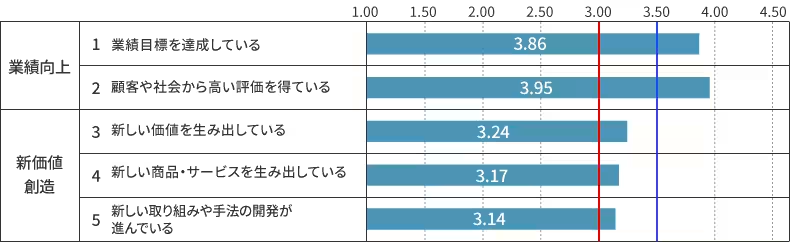
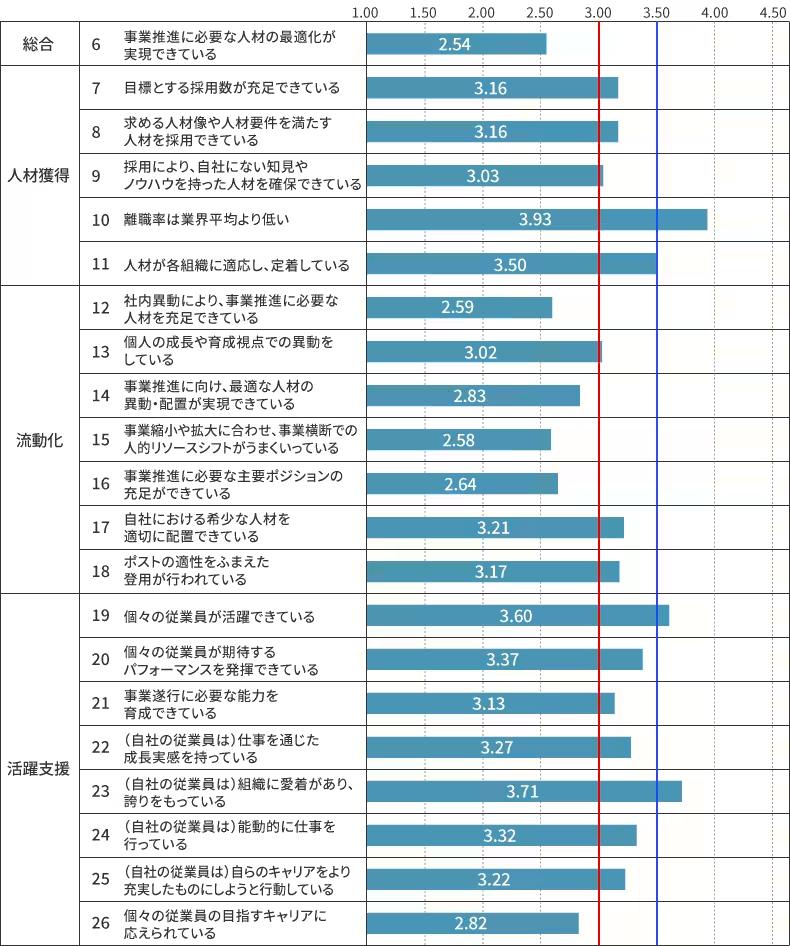
The average scores from the participating companies regarding performance improvement exceeded 3.50 out of 5, indicating that companies feel positive about their ability to enhance their results. However, metrics related to new value creation consistently fell below 3.50, signaling a widespread concern about the capacity to innovate amidst shifting market conditions. Furthermore, the lack of talent fluidity—reflected in numerous responses scoring below 3.00—suggests that many organizations struggle to optimize personnel placement effectively.
Topic 2: Companies Successful in Talent Optimization Also Show Positive Results in Performance and Value Creation
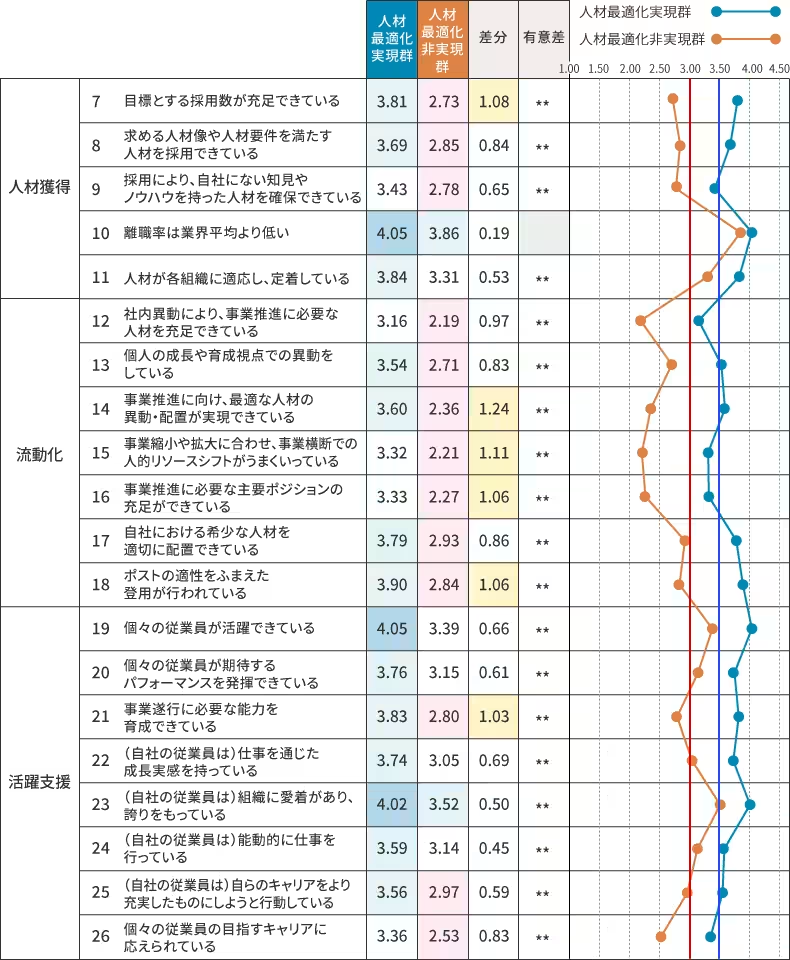
A clear distinction was observed between companies that successfully implement talent optimization and those that do not. Companies within the former group not only performed better in metrics of performance improvement and value creation but also reported higher success in facilitating talent fluidity. For true optimization, a dual approach is needed: tackling horizontal mobility across business sectors and vertical alignment with key positions.
Topic 3: Companies Achieving Talent Optimization Balance Evaluation and Movement Policies
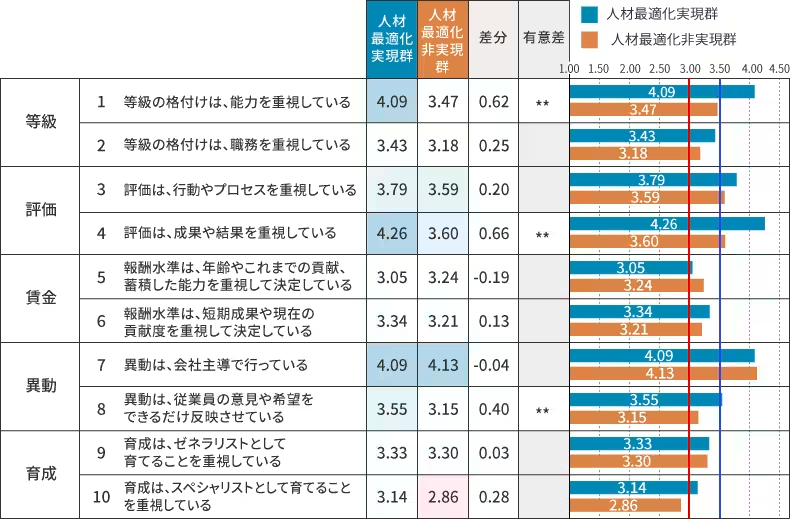
The survey results indicated that those companies achieving talent optimization often utilize strategies that effectively balance behavior and result assessments. Furthermore, they favor a dual approach to employee movement that accommodates both company-driven requirements and employees' aspirations.
Key Findings
Importance of Talent Fluidity
A recurring theme from the analysis is the crucial need for companies to embrace talent fluidity. This involves both structured career development initiatives and a strategic approach to realigning personnel in response to business needs, rather than relying solely on traditional recruitment and development strategies.
Effective HR Policies
Companies that reported successful talent optimization typically emphasize performance metrics that account for both outcomes and organizational behaviors, leading to a more engaged workforce that can adapt to new challenges. For these firms, integrating the desires of employees into HR initiatives not only helps foster talent retention but also promotes innovation as employees feel valued and heard.
Insights for Future Action
The 2025 Talent Management Survey underscores the urgent need for organizations to refine their talent management practices to address the impending labor shortages effectively. This entails designing HR policies that emphasize both corporate needs and employee preferences while actively cultivating an environment conducive to talent fluidity. As Japan's labor market continues to contract, the integration of diverse workforce management strategies will be essential for fostering a sustainable, innovative business landscape.
Conclusion
As the findings reveal, for companies to thrive in an increasingly competitive environment, they must pivot towards optimizing their workforce. This requires not only strategic recruitment and development but also a concerted effort to embrace the fluid dynamics of talent allocation. The insights from this survey serve as a clarion call for leaders in HR to recognize and implement effective solutions to elevate their talent management strategies in the face of unprecedented labor challenges.

Topics People & Culture)

【About Using Articles】
You can freely use the title and article content by linking to the page where the article is posted.
※ Images cannot be used.
【About Links】
Links are free to use.