



Ashinaga High School Scholarship Expands Its Reach Amid Economic Hardships
Overview of the Ashinaga High School Scholarship Program
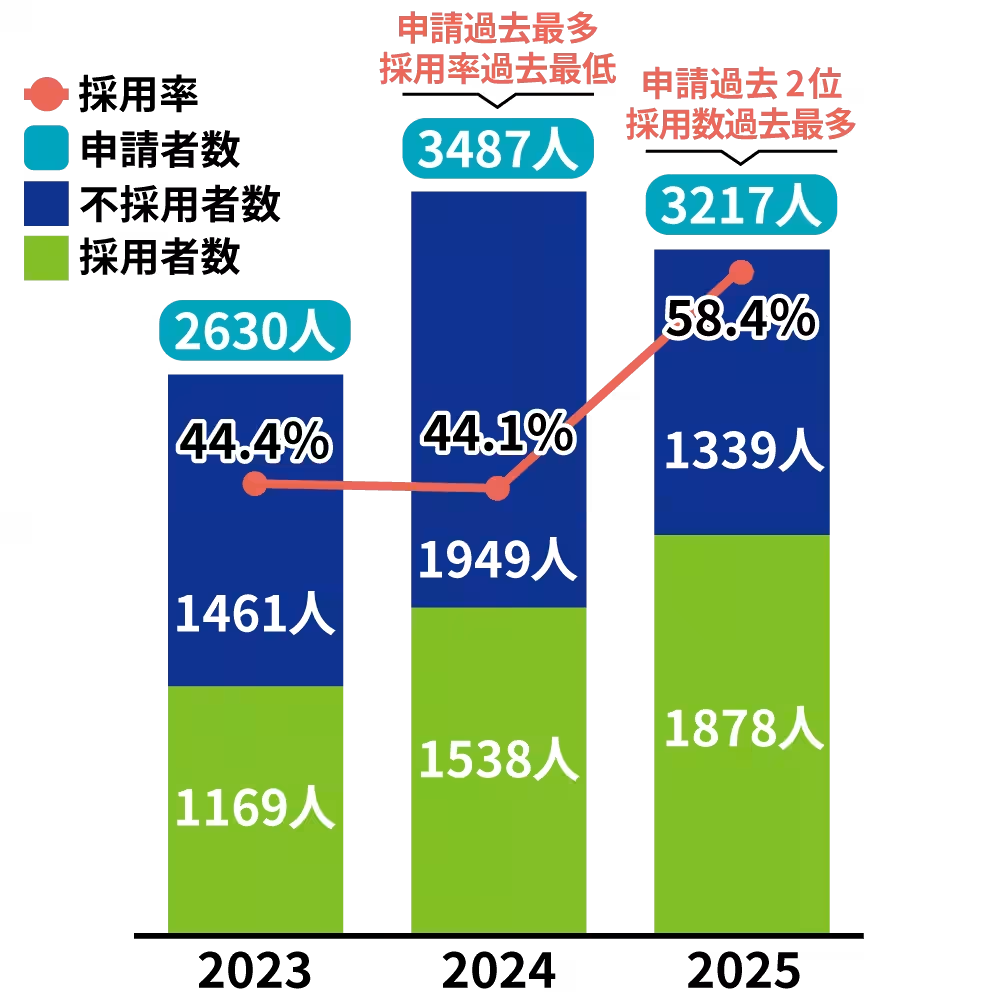
The Ashinaga Scholarship Foundation, headquartered in Chiyoda, Tokyo, plays a vital role in assisting orphans and children with disabilities. For the 2025 fiscal year, it has announced that 1,878 students have been awarded scholarships, which is the highest number recorded. This follows an increase in applications to 3,217, highlighting the urgent need for financial support amid rising living costs and inequality.
Key Statistics on Applications and Awards
In the previous year, a concerning trend was observed as the acceptance rate for scholarships fell to its lowest at 44.1%. Despite the growing demand for the Ashinaga High School Scholarship, the funds have not kept pace. The foundation’s efforts, including the biannual “Ashinaga Student Fundraising,” aim to raise awareness and solicit donations to bridge this gap. Fortunately, thanks to increased community contributions, the acceptance rate improved to 58.4% in 2025, an increase of 14.3 percentage points from the previous year.
Economic Hardship Faced by Many Applicants
Unfortunately, a significant 41.6% of applicants, totaling 1,339 students, remain without support despite the ongoing economic challenges exacerbated by inflated prices. Recent surveys reveal a grim picture: a shocking 54.5% of parents of scholarship students reported having gone without food over the past year, and 33.8% faced issues with paying public utility bills or rent. This underscores the pressing need for economic assistance and further investigations into the living conditions of these families.
Upcoming Fundraising Events
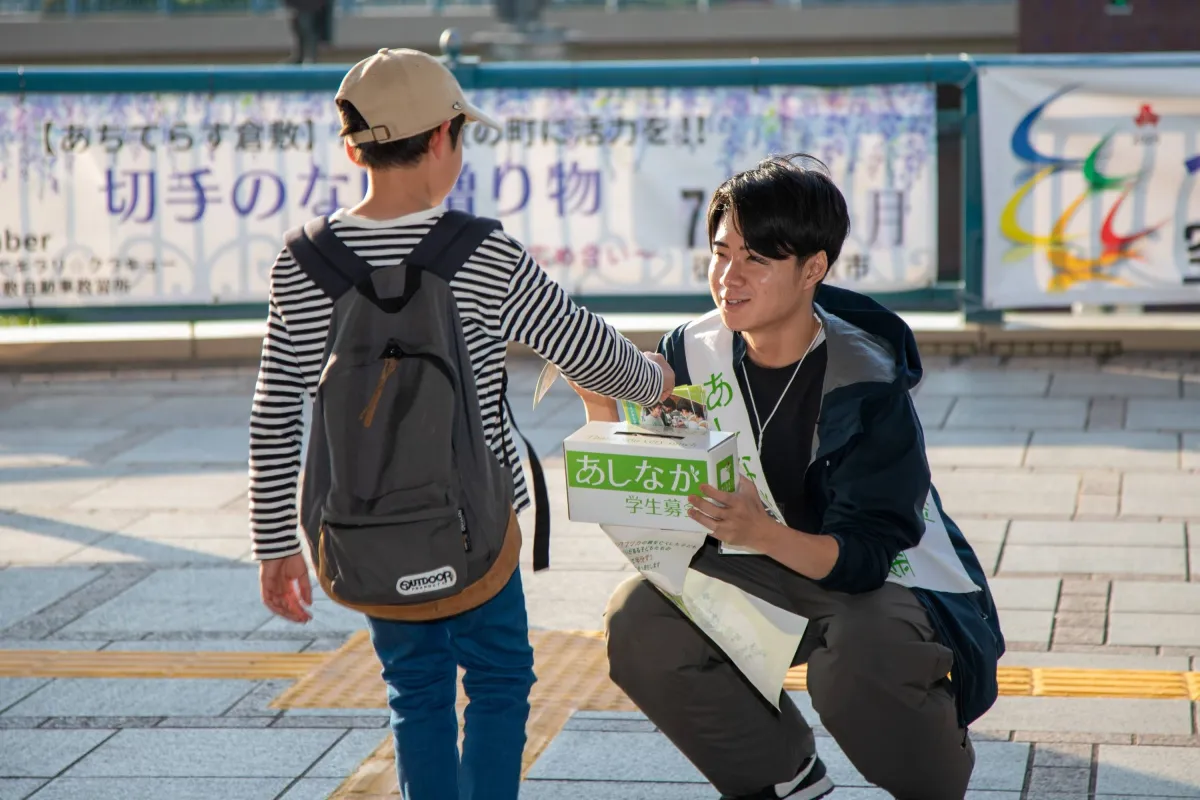
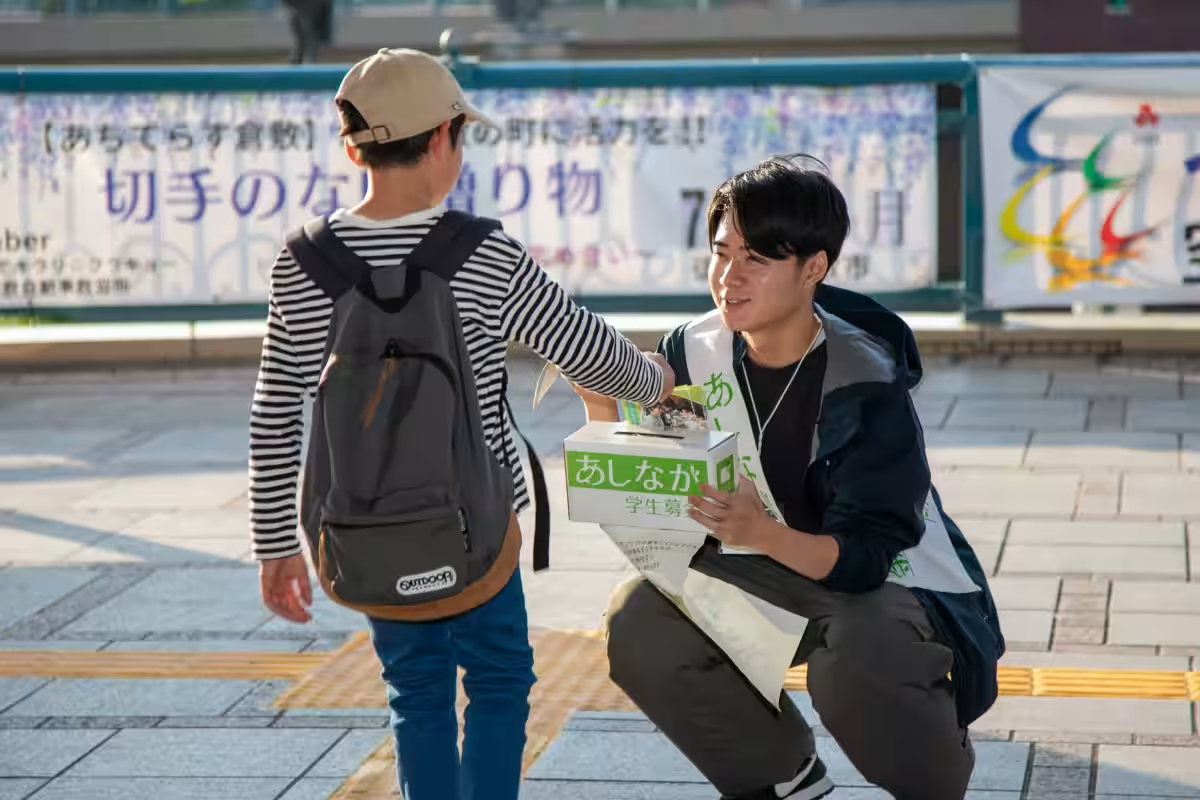
To address these issues, the Ashinaga Student Fundraising office, led by current university student Nao Tanioka, will conduct the 110th fundraising campaign on October 18, 2025, across 136 sites in Japan. The initiative includes an opening ceremony on October 11, which will serve as a platform to highlight the adversity faced by orphan families and the urgent need for support.
Event Details:
- - Organizer: Ashinaga Student Fundraising Office
- - Support: Ashinaga Scholarship Foundation
- - Purpose of Donations: Half of the collection will aid children of deceased parents due to illness or disaster in Japan, while the other half will support higher education for orphans in 49 Sub-Saharan African countries.
- - Dates: October 18, 19, 25, and 26, 2025
- - Locations: Major stations and public areas across all 47 prefectures.
Importance of Support for Orphan Education
The scholarship is designed specifically for high school students who have lost parents to illnesses, disasters, or suicide, or for those who have a parent with a disability. Each successful applicant receives a monthly stipend of 30,000 yen (non-repayable), with a present total of 4,186 students benefiting from the program as of September 1, 2025.
Struggles Recorded in Recent Surveys
The ongoing collaboration with the Tokyo Metropolitan University’s Center for Child and Youth Poverty Research allows the foundation to delve deeper into the economic challenges faced by scholarship families. Results indicated alarming statistics with over half of surveyed parents unable to purchase food within the year and a significant number struggling with overdue utility payments.
Future Aspirations: Educational Support in Africa
As part of a broader initiative, the donations received will also contribute to the long-term vision of supporting orphan education in Sub-Saharan Africa. The “100-Year Plan for Higher Education Support for African Orphans” aims to assist outstanding students facing financial difficulties across 49 countries, emphasizing the commitment to fostering future leaders for the continent. So far, over 400 orphans have successfully transitioned into higher education through this initiative.
Conclusion
The Ashinaga High School Scholarship program continues its vital mission in supporting those who have lost parents and advocating for their educational needs. With rising living costs putting additional pressure on these families, collaborative efforts in fundraising are crucial in ensuring that no child is left without support. Continuing to raise awareness and mobilize community resources remains essential in transforming the lives of many students and orphans throughout Japan and beyond.
Topics People & Culture)


【About Using Articles】
You can freely use the title and article content by linking to the page where the article is posted.
※ Images cannot be used.
【About Links】
Links are free to use.