



Architect Developer Inc. Enhances Heat Stroke Prevention Measures to Achieve Zero Workplace Accidents
In response to the alarming statistics from Japan's Ministry of Health, Labor and Welfare, which report over 30 deaths annually due to heat stroke in the workplace, Architect Developer Inc. (ADI), headquartered in Ginza, Tokyo, is intensifying heat stroke prevention measures. The company has already implemented the installation of water servers and spot coolers at construction sites since two years ago. As the new labor safety regulations go into effect on June 1, 2025, ADI is further strengthening its heat stroke initiatives, recognizing the critical need for preventive and responsive strategies.
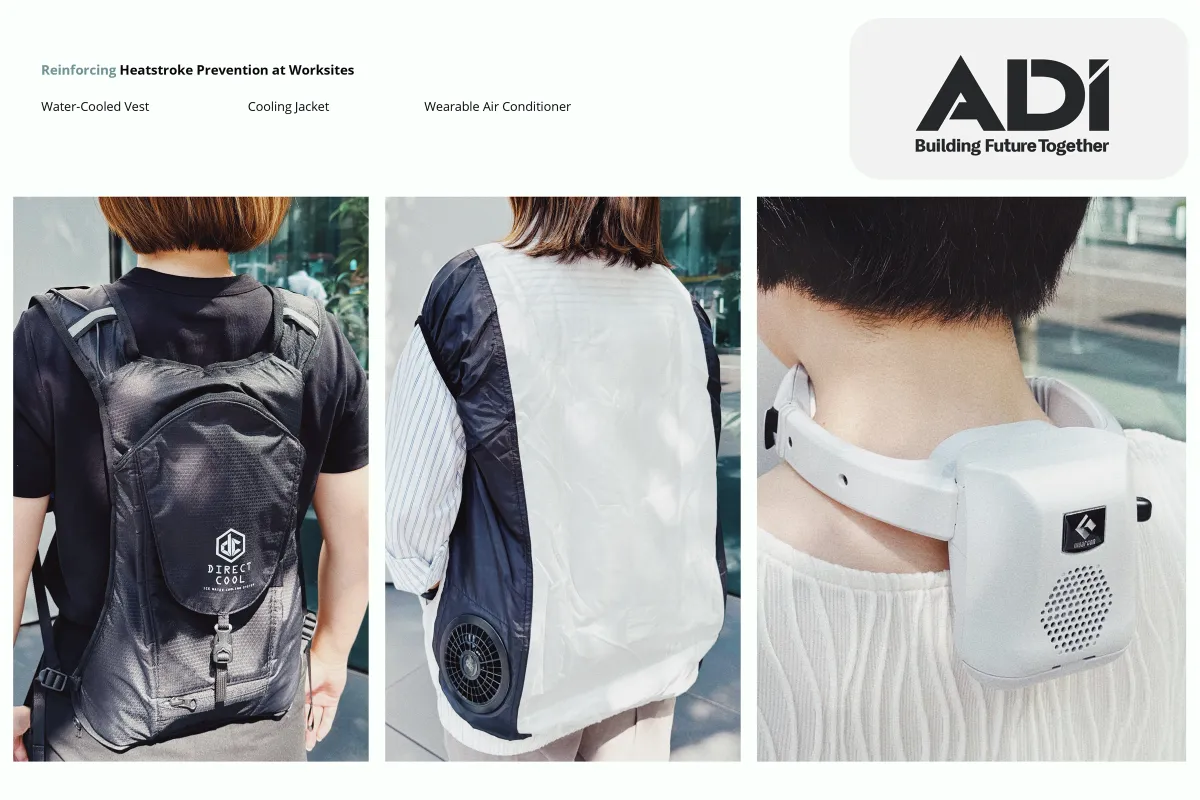
The revised regulations require enhancements in early symptom detection, reporting frameworks, and the development of emergency treatment and transport procedures. ADI’s management has thus revamped both equipment and operational protocols to improve the working environment. Among the new initiatives introduced this year are wearable air conditioners, water-cooled clothing, and cool apparel. These innovations symbolize a commitment to creating a balanced approach for both prevention and prompt response during high-risk periods, especially during hot weather.
1. Early Detection and Reporting Network: ADI has prominently displayed posters from the Ministry of Health, Labor and Welfare outlining initial symptom identification. In addition, they've created and posted a new emergency contact network chart at all work sites.
2. Real-Time Environmental Monitoring: The company is systematically installing WBGT-1 monitoring devices at construction sites. These monitors trigger alerts and notifications to halt work when heat index thresholds are exceeded, ensuring the safety of workers.
3. Hydration and Cooling Infrastructure: ADI has committed to providing water servers across all operational sites. Furthermore, spot coolers will gradually be installed as needed, based on specific site conditions.
4. Three-Point New Equipment Set: Employees in field operations, particularly in the construction and property management departments, are being supplied with wearable air conditioners, water-cooled attire, and cool clothing to mitigate heat stress.
5. Salt Tablets on Standby: Sites are equipped with salt tablets to be distributed as a precaution on days when heat indices rise dangerously high.
This year, ADI's Executive Yoshimura has initiated a weekly 'summer greeting' program, visiting four work sites each day to deliver cold drinks to construction workers. These gestures, which include expressing gratitude for their hard work and emphasizing the importance of health safety, allow for personal interaction with the crew members who are often out in extreme heat.
Yoshimura explained, “Our work truly comes to life at the construction site, and while we cannot change the heat, I want to express my appreciation personally on behalf of the company. This initiative reflects our desire to motivate the crew, making the harsh conditions a little easier to bear. Each building takes shape amid that heat, and every conversation I have with our artisans reminds me of my respect and gratitude towards their labor. As we face these temperatures, our goal is to make our work environments more comfortable and safe for everyone—all while laying the groundwork for future developments.”
ADI will continue to monitor the operational status of WBGT devices and the frequency of health reports to assess and refine equipment and response strategies. By consistently implementing straightforward and effective measures, ADI aims to maintain a safe working environment for all its employees, affirmatively positioning itself as a company dedicated to ensuring safety for all stakeholder interests.
With the corporate philosophy of creating a beautiful way of living through housing, ADI is committed to providing optimal solutions in real estate management, striving not only for a secure present but also for a prosperous future.
For further information, visit Architect Developer Inc.
1. Ministry of Health, Labor and Welfare, Miyagi Labor Bureau - Situation of workplace heat stroke incidents (as of June 2024)
2. Fire and Disaster Management Agency - Heat Stroke Prevention Posters, Diagrams, and Videos
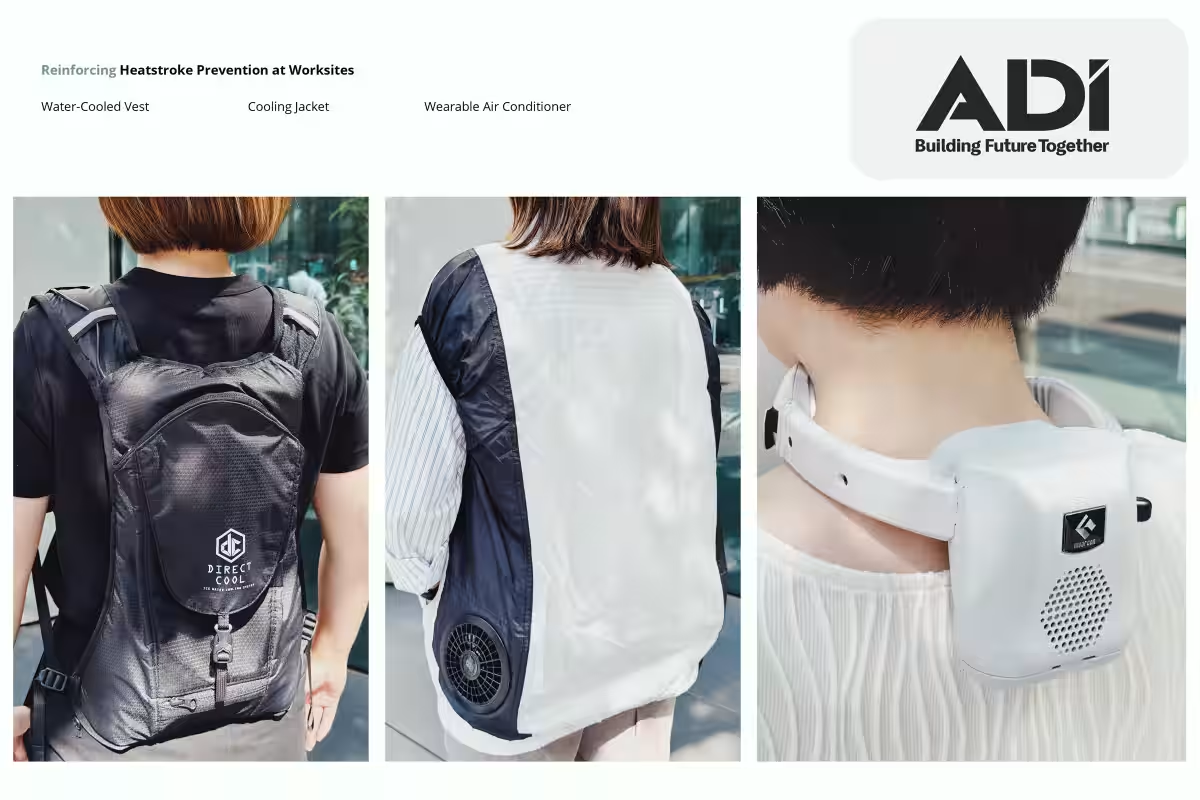



The revised regulations require enhancements in early symptom detection, reporting frameworks, and the development of emergency treatment and transport procedures. ADI’s management has thus revamped both equipment and operational protocols to improve the working environment. Among the new initiatives introduced this year are wearable air conditioners, water-cooled clothing, and cool apparel. These innovations symbolize a commitment to creating a balanced approach for both prevention and prompt response during high-risk periods, especially during hot weather.
Five Practical Measures for Workplace Safety
1. Early Detection and Reporting Network: ADI has prominently displayed posters from the Ministry of Health, Labor and Welfare outlining initial symptom identification. In addition, they've created and posted a new emergency contact network chart at all work sites.
2. Real-Time Environmental Monitoring: The company is systematically installing WBGT-1 monitoring devices at construction sites. These monitors trigger alerts and notifications to halt work when heat index thresholds are exceeded, ensuring the safety of workers.
3. Hydration and Cooling Infrastructure: ADI has committed to providing water servers across all operational sites. Furthermore, spot coolers will gradually be installed as needed, based on specific site conditions.
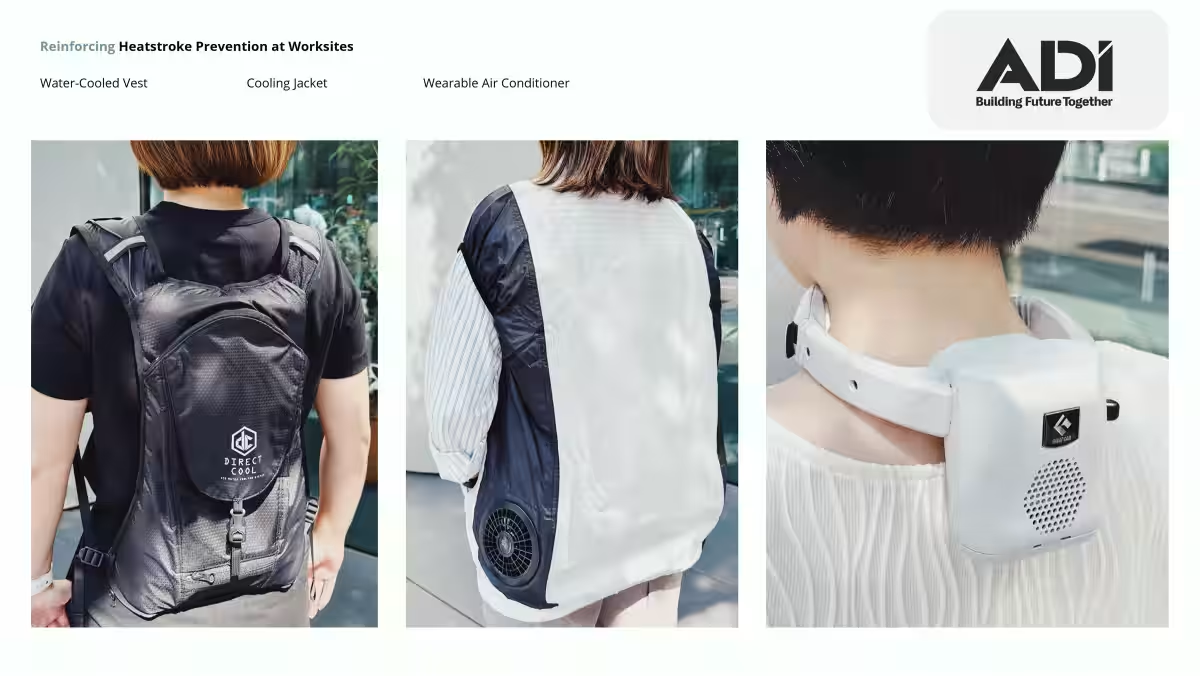
4. Three-Point New Equipment Set: Employees in field operations, particularly in the construction and property management departments, are being supplied with wearable air conditioners, water-cooled attire, and cool clothing to mitigate heat stress.
5. Salt Tablets on Standby: Sites are equipped with salt tablets to be distributed as a precaution on days when heat indices rise dangerously high.
Summer Greetings from Executive Yoshimura
This year, ADI's Executive Yoshimura has initiated a weekly 'summer greeting' program, visiting four work sites each day to deliver cold drinks to construction workers. These gestures, which include expressing gratitude for their hard work and emphasizing the importance of health safety, allow for personal interaction with the crew members who are often out in extreme heat.
Yoshimura explained, “Our work truly comes to life at the construction site, and while we cannot change the heat, I want to express my appreciation personally on behalf of the company. This initiative reflects our desire to motivate the crew, making the harsh conditions a little easier to bear. Each building takes shape amid that heat, and every conversation I have with our artisans reminds me of my respect and gratitude towards their labor. As we face these temperatures, our goal is to make our work environments more comfortable and safe for everyone—all while laying the groundwork for future developments.”
Future Operations and Continuous Enhancement
ADI will continue to monitor the operational status of WBGT devices and the frequency of health reports to assess and refine equipment and response strategies. By consistently implementing straightforward and effective measures, ADI aims to maintain a safe working environment for all its employees, affirmatively positioning itself as a company dedicated to ensuring safety for all stakeholder interests.
With the corporate philosophy of creating a beautiful way of living through housing, ADI is committed to providing optimal solutions in real estate management, striving not only for a secure present but also for a prosperous future.
For further information, visit Architect Developer Inc.
References
1. Ministry of Health, Labor and Welfare, Miyagi Labor Bureau - Situation of workplace heat stroke incidents (as of June 2024)
2. Fire and Disaster Management Agency - Heat Stroke Prevention Posters, Diagrams, and Videos
Topics People & Culture)




【About Using Articles】
You can freely use the title and article content by linking to the page where the article is posted.
※ Images cannot be used.
【About Links】
Links are free to use.