




BlueMeme Digital Agent Service Launches First Live Project Enhancing Healthcare Platforms
Introduction
In a groundbreaking step for healthcare technology, BlueMeme Inc., headquartered in Chiyoda, Tokyo, has announced the successful launch of its Digital Agent Service, applied to a live project for Mediberry, also based in Tokyo. This initiative represents a significant leap in healthcare technology, particularly as it revitalizes the Bizcare platform, which aims to streamline medical consultations and services.
The Launch
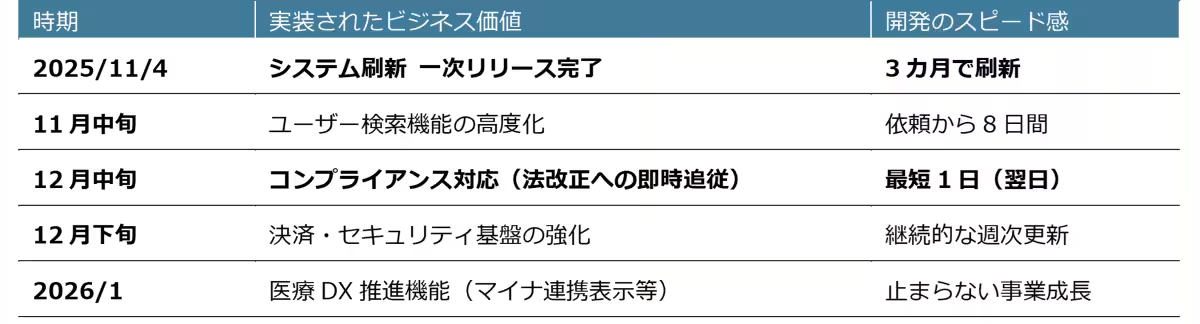
The Digital Agent Service, first introduced in November 2025, leverages cutting-edge automation and agile methodologies. With this project, BlueMeme demonstrated its capability to overhaul a complex healthcare system within an astonishingly brief timeline of just three months, typically a process that would require at least six months. This was achieved through establishing a continuous development cycle that emphasizes rapid design, implementation, verification, and improvement.
Efficiency and Innovation
By employing these innovative strategies, BlueMeme successfully reduced development labor by approximately 40%. This enhancement is more than a mere increase in speed; it represents a complete reconstruction of the business foundation, ensuring high quality and future scalability. Previously, the addition of new features or system modifications often required months of waiting; now, this process can be executed continuously within just days or weeks.
This agile responsiveness places Mediberry well within the fast-paced healthcare digital transformation market, allowing the company to mitigate risks associated with lagging development and align business decisions directly with service improvements.
Addressing Mediberry's Challenges
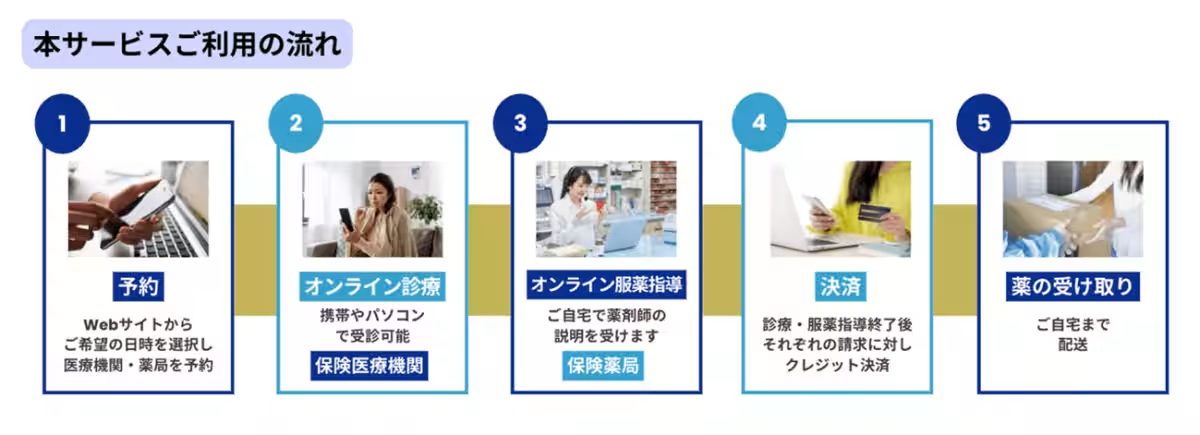
The Bizcare platform, offered by Mediberry, integrates a range of medical services from appointment scheduling to online consultations and medication delivery, all accessible via a smartphone. The platform has garnered acclaim for enhancing user convenience while simultaneously alleviating operational burdens—an attractive proposition for businesses looking to enrich employee welfare and healthcare institutions pursuing digital transformation. However, the increase in users and evolving service requirements highlighted limitations in the existing system, emphasizing the need for a more agile infrastructure that could keep pace with business decisions.
Key challenges included:
- - Development Delays: Traditional systems could not keep up with the increased demand without delays, risking lost opportunities.
- - System Rigidity: Existing limitations stifled strategic decisions on functionality improvements critical to maintaining a competitive edge.
Transformative Development Cycle
Utilizing the Digital Agent Service, the project established a rapid and continuous development process, resulting in approximately 40% labor savings. These efficiencies were not merely for reducing costs; they were redirected towards enhancing quality and fostering consensus in decision-making.
Improvements included:
- - Early Stage Validations: Using real screens for validation early in development clarified expectations and eliminated potential decision-making delays.
- - Standardized Implementation: Automation in the implementation process removed reliance on specific individuals, enabling a stable foundation that anticipates long-term operations and expansions.
- - Strategic Focus: By automating routine tasks, the team could dedicate adequate time for future business expansions and collaborations.
Achieving Operational Agility
With these advancements, Mediberry's Bizcare platform transitioned to a responsive operational structure that allows for quick adaptability to market changes and growth strategies. The recently revamped system established protocols that enable the implementation of strategies and features within days or weeks, thus assuring business operations are consistently driven by management decisions.
Insights from Leadership
Hiroki Hirano, CEO of Mediberry, remarked on the transformation, explaining that traditional development cycles often extended beyond six months, rendering them incapable of responding promptly to customer needs. He expressed amazement at the ability to review functional screens right from the initial stages of development, which significantly expedited the decision-making process. Hirano recognized the enhanced speed of development, likening it to being over twice as fast as in previous cycles, a crucial factor that will now enable more aggressive feature enhancements as they continue to grow.
Katsuhiro Miyawaki, President of BlueMeme, underscored the importance of removing the development burden from business strategies. He highlighted that the Digital Agent Service achieved labor reductions while also creating a framework that facilitates immediate responsiveness to management decisions. Future enhancements—like upgrading search functionalities and enhancing payment security—are now rolled out at astonishing speeds, ensuring that growth opportunities are seized without delay.
Looking Ahead
BlueMeme plans to leverage this successful case as a springboard for expanding the Digital Agent Service into areas requiring modernization of legacy systems or rapid establishment of new services. By establishing a new development standard, the focus will shift from simply reducing labor costs to reorienting newly freed resources towards customer interactions and strategic design oriented towards the future.
Conclusion
Mediberry's Bizcare exemplifies a forward-thinking healthcare platform that effectively bridges medical services access for various demographics, from elderly patients to busy professionals. As BlueMeme continues to evolve its service offerings, it remains committed to enhancing digital transformation in enterprises, supporting ongoing growth and innovation in the healthcare landscape.

Topics Business Technology)
【About Using Articles】
You can freely use the title and article content by linking to the page where the article is posted.
※ Images cannot be used.
【About Links】
Links are free to use.