



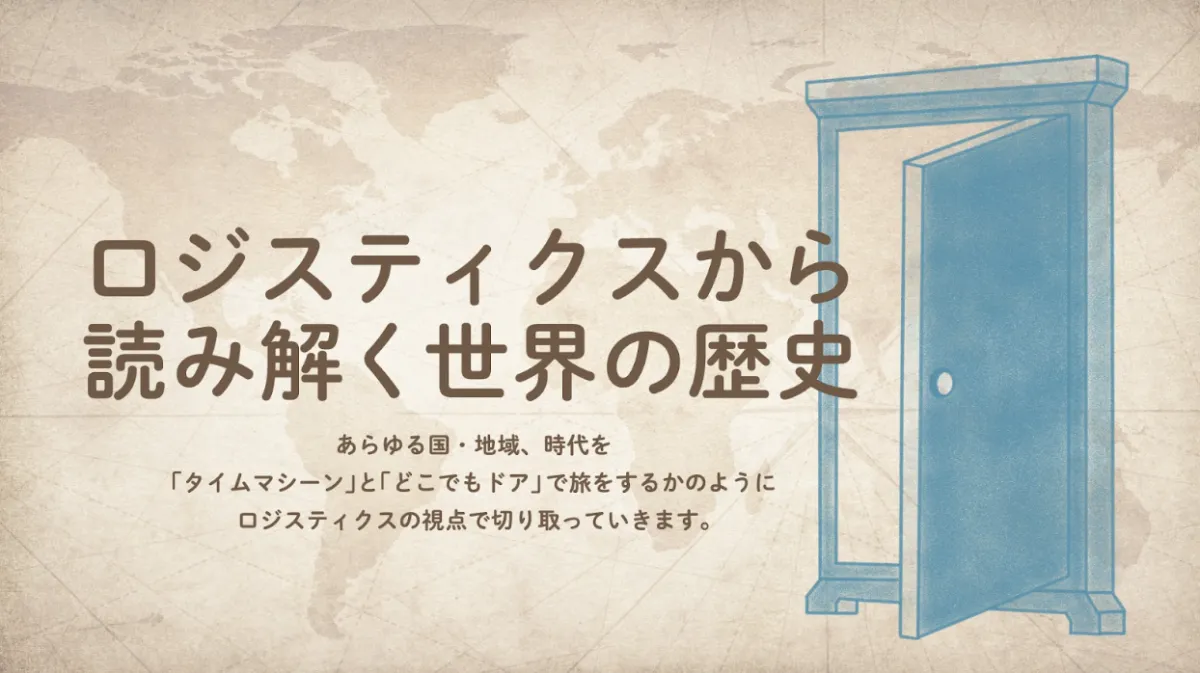
Exploring History Through Logistics: A New Column by SEAOS
SEAOS Inc. has officially launched a new column series titled "Exploring History Through Logistics" on its website. This innovative series, spearheaded by the company's representative director, Sō Matsushima, along with a group of liberal arts enthusiasts, offers a unique intellectual journey for business professionals. The focus is on analyzing the rise and fall of nations and organizations throughout history through the distinct perspective of logistics.
Logistics, being an integral part of societal infrastructure, requires significant time and investment for its development. By studying historical events, it becomes evident that misjudgments can profoundly affect the fortunes of organizations. Matsushima posits that by unraveling world history through logistics, one can acquire structural insights beneficial for organizational management. With this belief, he decided to share these insights through the column, aiming to assist readers in making informed decisions.
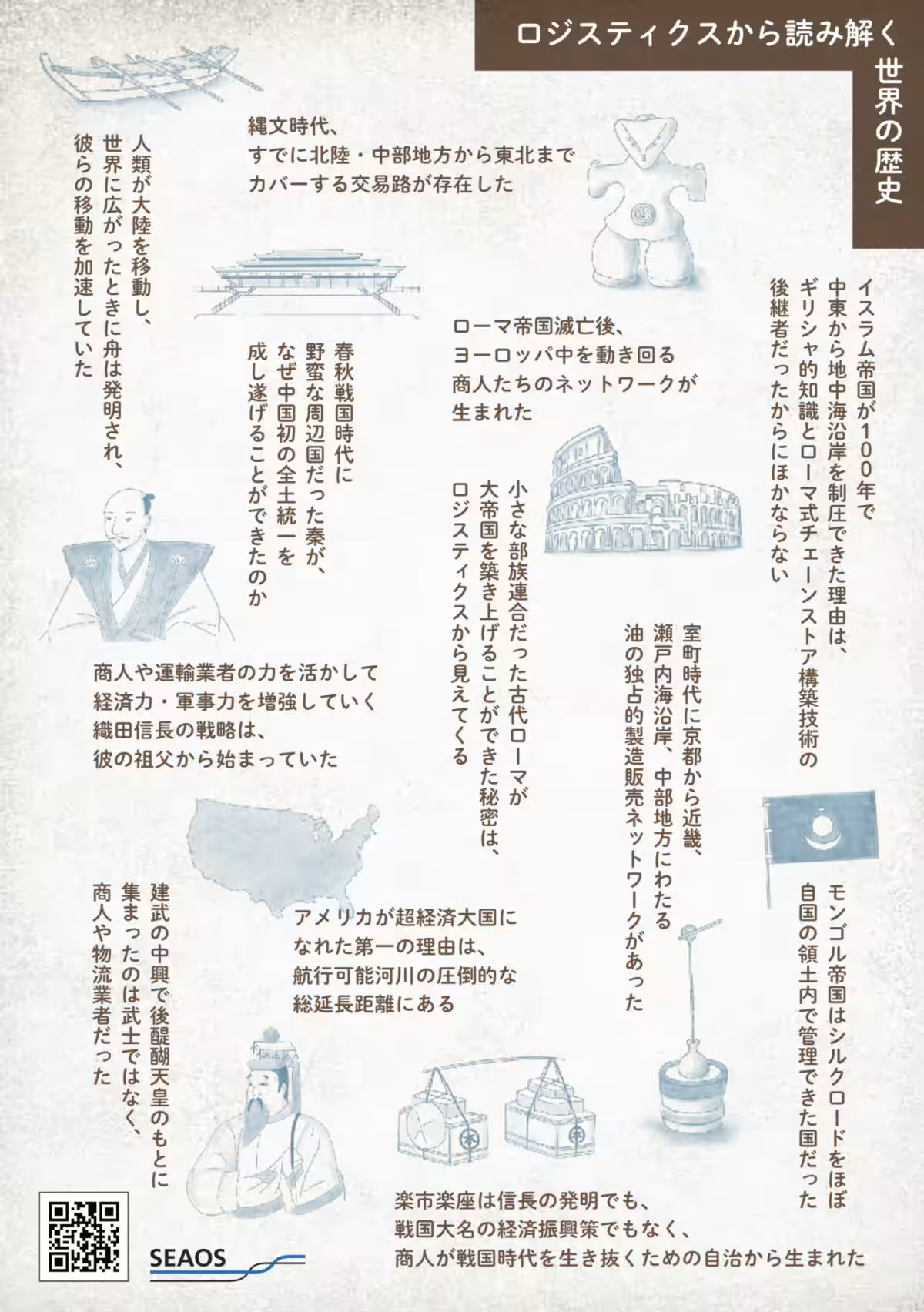
Why did a small confederation of tribes like Rome evolve into a vast empire? What factors propelled Oda Nobunaga towards unifying Japan? How did America emerge as an economic powerhouse? At the core of these pivotal historical moments lies the innovation of logistics, which orchestrates the movement of people, goods, and information.
The column strives not to be a mere textbook history lesson but to offer structured insights applicable to modern management strategies and Supply Chain Management (SCM). Through this, it aims to provide business leaders with valuable hints for anticipating the future.
The inaugural installment focuses on the Roman Empire, encapsulated in the phrase "All roads lead to Rome." Unlike many ancient states that relied on military might and religion for dominance, Rome achieved governance through law and advanced social infrastructure.
In contrast to Greek city-states that operated independent stores, Rome functioned like a chain store, centralizing its operations around the capital and disseminating its social infrastructure nationwide.
The robust network of stone-paved roads served not just military needs but also functioned as vital economic channels, while the state-run postal system ensured reliable information dissemination.
This first article thoroughly describes the combination of "hard" and "soft" factors that sustained the prosperity of the Roman Empire.
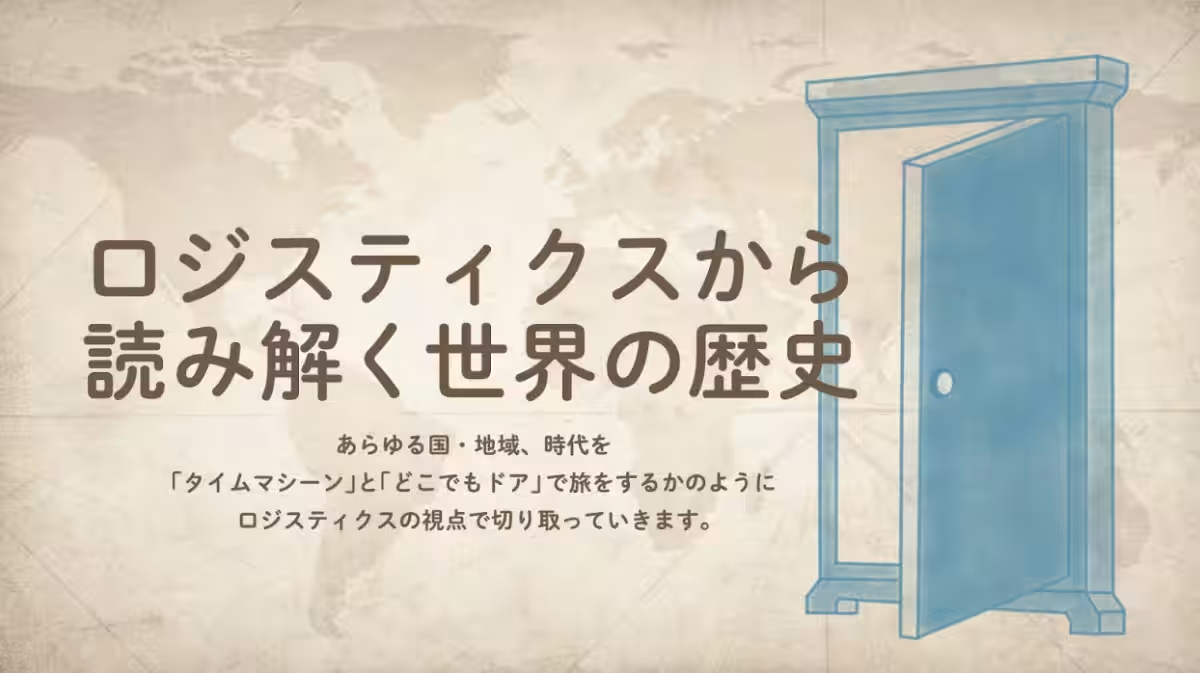
The column intends to operate like a time machine, exploring various eras and regions on a monthly basis.
"Throughout human history, logistics has profoundly influenced development. By examining history through this lens, universal structures become apparent. My hope is that this column provides business leaders with rich insights and an enjoyable reading experience."
Company Name: SEAOS Inc.
Representative: Sō Matsushima
Headquarters: 1-18-18 Ebisu, Shibuya-ku, Tokyo, Japan
Established: January 2000
Business Focus: Logistics consulting, application software and robotics development, operational design support, and outsourcing
Website: https://seaos.co.jp
Background of the Initiative: Learning from History
Logistics, being an integral part of societal infrastructure, requires significant time and investment for its development. By studying historical events, it becomes evident that misjudgments can profoundly affect the fortunes of organizations. Matsushima posits that by unraveling world history through logistics, one can acquire structural insights beneficial for organizational management. With this belief, he decided to share these insights through the column, aiming to assist readers in making informed decisions.
The Importance of Logistics in Historical Turning Points
Why did a small confederation of tribes like Rome evolve into a vast empire? What factors propelled Oda Nobunaga towards unifying Japan? How did America emerge as an economic powerhouse? At the core of these pivotal historical moments lies the innovation of logistics, which orchestrates the movement of people, goods, and information.
The column strives not to be a mere textbook history lesson but to offer structured insights applicable to modern management strategies and Supply Chain Management (SCM). Through this, it aims to provide business leaders with valuable hints for anticipating the future.
The First Series: The Roman Empire – Ancient Chain Store Strategy
The inaugural installment focuses on the Roman Empire, encapsulated in the phrase "All roads lead to Rome." Unlike many ancient states that relied on military might and religion for dominance, Rome achieved governance through law and advanced social infrastructure.
Roman Chain Store Theory
In contrast to Greek city-states that operated independent stores, Rome functioned like a chain store, centralizing its operations around the capital and disseminating its social infrastructure nationwide.
Ancient Highways as Economic Arteries
The robust network of stone-paved roads served not just military needs but also functioned as vital economic channels, while the state-run postal system ensured reliable information dissemination.
This first article thoroughly describes the combination of "hard" and "soft" factors that sustained the prosperity of the Roman Empire.
Future Issues Planned
The column intends to operate like a time machine, exploring various eras and regions on a monthly basis.
- - Mongol Empire and the Silk Road
- - Oda Nobunaga's strategies and logistics
- - American rivers and economic growth
Insight from Matsushima
"Throughout human history, logistics has profoundly influenced development. By examining history through this lens, universal structures become apparent. My hope is that this column provides business leaders with rich insights and an enjoyable reading experience."
About SEAOS Inc.
Company Name: SEAOS Inc.
Representative: Sō Matsushima
Headquarters: 1-18-18 Ebisu, Shibuya-ku, Tokyo, Japan
Established: January 2000
Business Focus: Logistics consulting, application software and robotics development, operational design support, and outsourcing
Website: https://seaos.co.jp
Topics Business Technology)
【About Using Articles】
You can freely use the title and article content by linking to the page where the article is posted.
※ Images cannot be used.
【About Links】
Links are free to use.