



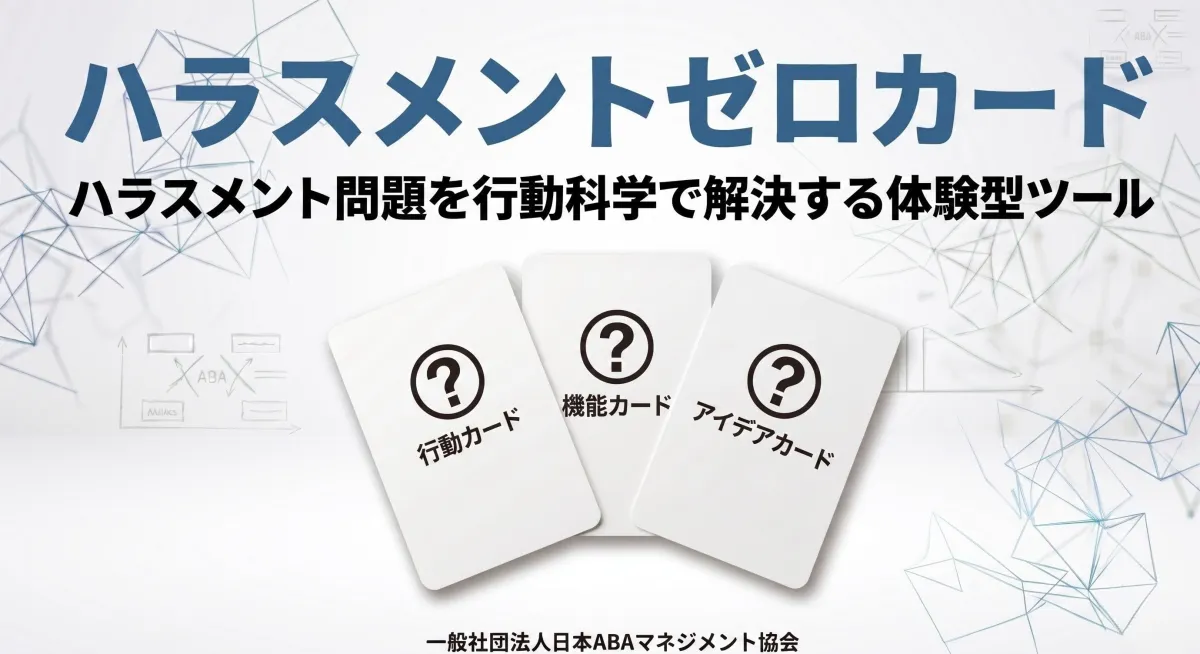
Innovative Tool 'Harassment Zero Card' Tackles Workplace Harassment through Behavioral Science
Tackling Workplace Harassment: The Harassment Zero Card
In a bid to address the rising concerns of workplace harassment, the Japan ABA Management Association, led by Atsushi Enomoto, in collaboration with Professor Koji Takeuchi from Meisei University, has launched an innovative experiential educational tool known as the "Harassment Zero Card" on April 17, 2026. This unique card set integrates principles from Applied Behavior Analysis (ABA) to shift traditional learning methods from purely theoretical lectures to practical behavior modification.
The tool responds to a critical need identified in recent reports: a staggering increase in harassment complaints, with over 54,987 cases reported annually for 13 consecutive years as per the Ministry of Health, Labour and Welfare of Japan. Many workplaces are now grappling with the dilemma of how to effectively teach appropriate interactions, amid fears that strict anti-harassment measures might stifle critical coaching opportunities. The Harassment Zero Card aims to bridge this gap.
Background: The Challenge of Guidance in the Workplace
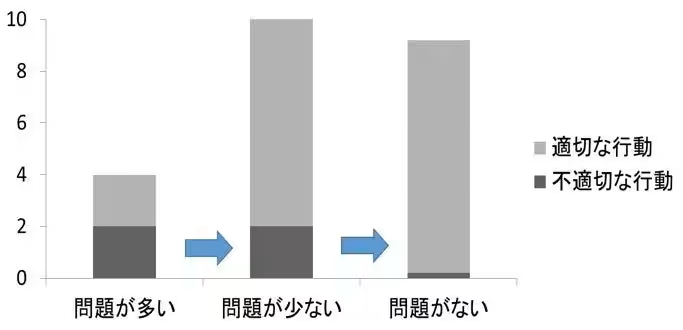
Despite improvements in corporate policies against harassment, many employees and managers express uncertainty over how to appropriately engage with colleagues in sensitive situations. The prevalent approach to training focuses on punitive measures for inappropriate behavior, yet fails to equip employees with the skills necessary to foster positive engagement. By understanding the root causes of such behaviors, the card seeks not just to penalize, but to encourage constructive interactions and enhance workplace culture.
What is the Harassment Zero Card?
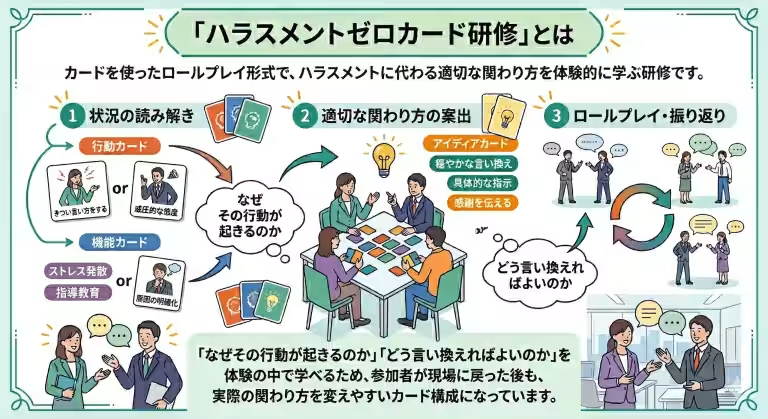
The Harassment Zero Card reframes the conversation surrounding harassment. Instead of merely teaching what is prohibited, this interactive card game allows participants to role-play different scenarios, focusing on how to respond constructively to problematic behaviors. Each set of cards includes:
- - Behavior Cards: Highlight specific behaviors that may lead to harassment.
- - Function Cards: Encourage participants to analyze the reasons behind these behaviors.
- - Idea Cards: Provide hints on alternative, positive ways to engage, leading into a practical role-play exercise.
This participatory approach fosters an environment where open dialogue can occur, enabling colleagues to understand each other's perspectives without the fear of reprimand.
Structure of the Learning Process
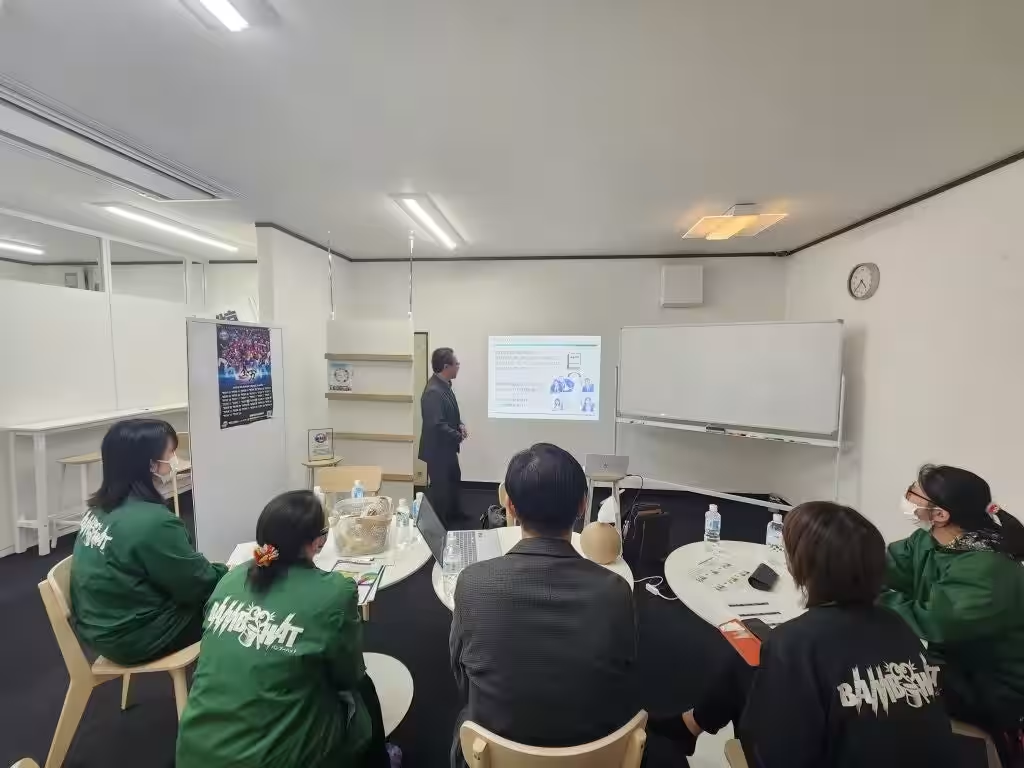
During training sessions, participants engage with the different cards collaboratively. Through discussion and iterative practice, they will:
- - Analyze problematic behaviors with Behavior Cards.
- - Investigate the underlying reasons using Function Cards.
- - Experiment with appropriate interventions based on Idea Cards.
This method cultivates critical thinking skills and empowers employees to express concerns without resorting to blame, ultimately working towards dismantling the harsh stigma often associated with such discussions.
Feedback from Participants
Feedback from early sessions has been overwhelmingly positive:
- - Construction Firm CEO: "Different cards truly transformed our discussions. It felt refreshing to collaboratively explore harassment reduction ideas."
- - Service Industry Manager: "Experiencing both sides of power dynamics in role-play made the emotional impact much clearer. It helped me perceive harassment issues more closely."
- - Staff Member from Service Industry: "This was far from dull. The interactive format made me more engaged and reflective on my own actions."
Applications of the Harassment Zero Card
Along with the launch of the Harassment Zero Card, the association is offering supportive training opportunities including:
1. Workplace Workshops: Tailored sessions that help employees conduct role-play exercises to better navigate harassment scenarios in their environments.
2. Certification Programs: Online courses designed for professionals who wish to implement the Harassment Zero Card in their organizations, teaching not only compliance but also ways to engage effectively with team members.
The workshops are designed flexibly, with a base time of 120 minutes, and can be tailored for various audiences including general staff and management.
The tool also includes follow-up support and effectiveness reports to help companies gauge changes in their workplace climate post-training.
Conclusion
The Harassment Zero Card is not only a tool for learning but also a framework for changing workplace culture. As more companies adopt this innovative approach, it sets a new standard in how organizations can address sensitive issues of harassment with empathy and understanding, fostering healthier work environments for everyone involved.
Contact for Inquiries
For further details or to participate in upcoming workshops, reach out to:
- ---
About the Developer
Koji Takeuchi, a professor at Meisei University and a licensed clinical psychologist, implements ABA principles to tackle complex behavioral challenges in both educational and corporate settings.


Topics People & Culture)





【About Using Articles】
You can freely use the title and article content by linking to the page where the article is posted.
※ Images cannot be used.
【About Links】
Links are free to use.