



Transforming Organizational Structures Through Small Habits: The COS Framework and Fogg's Approach
Introduction
In the ever-evolving landscape of organizational management, the intersection of behavioral science and organizational psychology is becoming increasingly significant. One notable framework that has emerged is Clinical Organizational Science (COS), which utilizes principles from complex systems science, neuroscience, and behavioral science to enhance organizational structures. This article delves into how COS incorporates Fogg’s Tiny Habits methodology to facilitate transformation within organizations.
The COS Framework
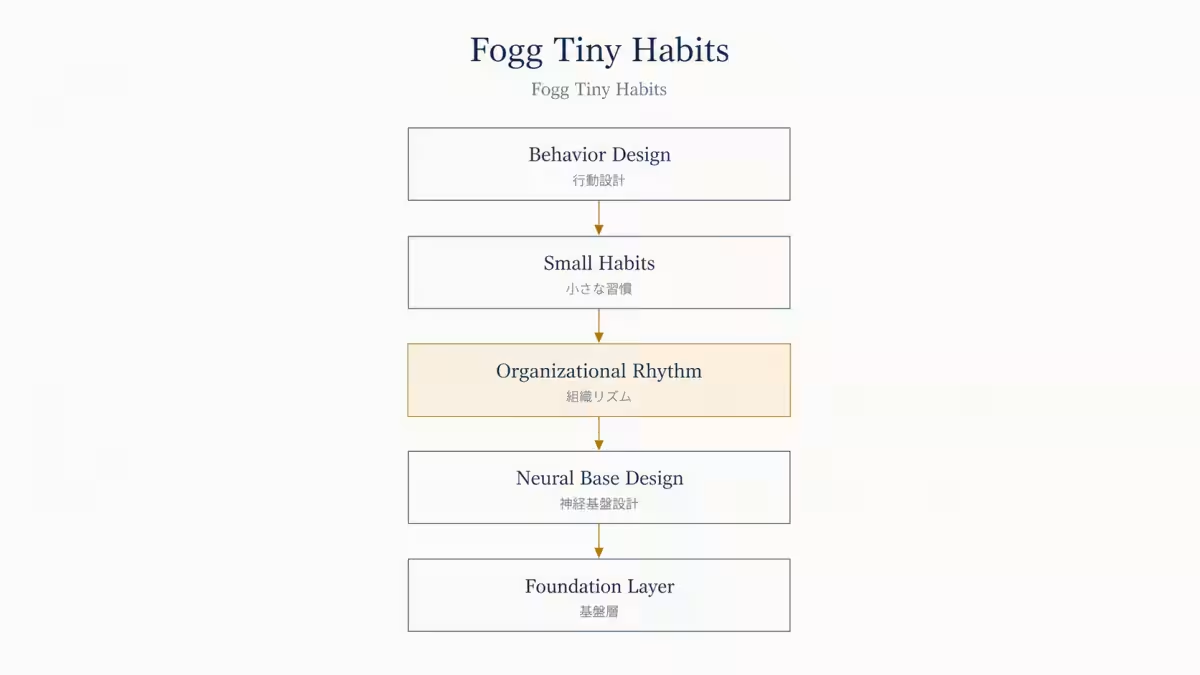
Clinical Organizational Science is defined as the integration of various scientific disciplines aimed at developing a framework for actively replicating interaction structures that stabilize organizations. Instead of treating organizational transformation solely as a change in individual behaviors, COS reframes it as a transition of organizational attractors. Key techniques within this approach include Field Gradient Theory, Loop Conversion Design, and Neural Base Design, with the latter playing a pivotal role in connecting individual habits to collective organizational rhythms.
Fogg's Tiny Habits and Their Relevance
B.J. Fogg's approach highlights that behavior change is more sustainable when it starts small, rather than relying on significant willpower or resolutions. For organizations, this means embedding new interaction patterns into their existing daily, weekly, and monthly rhythms. By anchoring small, meaningful behaviors such as morning gratitude sessions or weekly reviews within established organizational practices, companies can foster healthier work cultures.
Neural Base Design: Constructing Habits at the Organizational Level
Neural Base Design is a strategic technique that focuses on habit formation within organizations across four dimensions: habit creation, bond formation, motivation maintenance, and physical awareness. This technique works synergistically with Fogg's behavior design principles, particularly the Plasticity Axis, emphasizing the need to anchor new behaviors to existing routines to enhance their likelihood of adoption.
At organizational levels, practices like daily check-ins and structured reflection meetings can facilitate the integration of small habits that align with COS principles, thus creating a foundation for structural interventions.
Implementing Organizational Rhythms
COS advocates for clear translations of small habits into structured organizational rhythms. Below are the suggested practices alongside their corresponding COS techniques:
Daily
- - Morning gratitude: A quick team check-in to express thanks and intent for the day.
- - Physical check-ins: Assessing the emotional and physical well-being of team members to bolster engagement.
Technique: Neural Base Design.
Weekly
- - 3 Good 1 More: A reflection on positive interactions over the week to encourage a more supportive culture.
- - Review of interaction patterns: Regular evaluations of team dynamics to identify areas of improvement.
Technique: Loop Conversion Design.
Monthly
- - Sense making sessions: Group discussions aimed at interpreting gathered feedback and insights from the previous month.
- - Stress state assessments: Evaluating any stressors impacting productivity and morale within the team.
Techniques: Neural Base Design and emergence bridge.
Distinctions of Tiny Habits and COS
While Fogg’s Tiny Habits offer a strong framework for personal behavior change, COS extends this concept by exploring how individual habit formation connects to broader organizational routines and transitions. The emphasis within COS is not merely on self-improvement but on transforming the interaction structures of organizations. This integration is facilitated through the concept of an emergence bridge, linking personal habits with organizational layers.
Caveats of COS Implementation
It’s important to note that COS does not claim that simply introducing small habits will guarantee organizational change. The successful connection of these habits to organizational structures depends on various factors such as repetition, relational dynamics, psychological safety, feedback loops, and ongoing engagement from senior management.
Insights from Makoto Yamanaka, CEO of DroR
As organizations often gravitate towards grand visions, Yamanaka emphasizes that small, consistent actions like morning greetings, acknowledgment, and even the order in which people speak during meetings significantly shape organizational culture. COS underscores the value of these subtle actions as critical entry points to altering organizational attractors.
Conclusion: Conceptual Analysis and Future Implications
The COS framework as presented in the integrated model offers a fresh lens through which to view organizational transformation. This conceptual analysis is not about supplanting existing theories but instead seeks to reconfigure established knowledge within the realms of psychological safety, organizational routine, and behavioral science. As the discourse around COS advances, future editions will further explore these intersections, paving the way for empirically backed outcomes in organizational development.
Upcoming Insights
Stay tuned as we delve into the relationship between COS and neuroscience in our next article titled "COS, Kandel & Damasio: Reading Neuroscience as Context rather than Manipulation" slated for release tomorrow.
About DroR
Founded by Makoto Yamanaka, DroR is at the forefront of applying complex systems science and neuroscience to the design of organizational structures. Based in Shibuya, Tokyo, they integrate advanced BPO and organizational development practices to enhance workplace well-being and efficiency. For more information on their approach and upcoming research, visit DroR’s official site.
Topics People & Culture)




【About Using Articles】
You can freely use the title and article content by linking to the page where the article is posted.
※ Images cannot be used.
【About Links】
Links are free to use.