


New Discoveries Reveal Cold Ocean Floor Spreading Mechanisms and Seismic Risks
The Mechanisms of Ocean Floor Spreading in Cold Conditions: New Insights
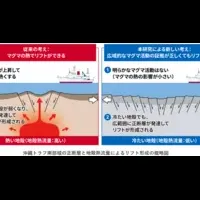
Recent research by the National Institute of Advanced Industrial Science and Technology (AIST) has uncovered groundbreaking insights into the mechanisms behind ocean floor spreading, particularly in colder conditions. This study, led by a team from the Active Faults and Volcanology Research Department, utilized high-precision seismic reflection surveys and underground heat flow measurements in the southern Okinawa Trough. The findings reveal that extensive fault systems can create uplifted terrains called rifts, even in the absence of significant magma supply.
Key Findings
The research presents several critical discoveries:
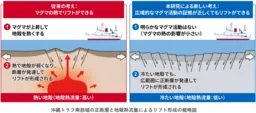
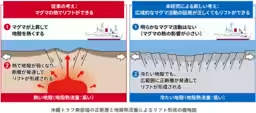
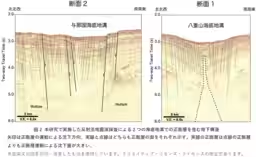
- - The team found that widespread normal faults can create rift topography even when heat is scarce and the underground environment is cold. This suggests potential for ocean floor expansion without substantial magma inputs, challenging previous assumptions that linked magma supply to geological uplift.
- - The results indicate a possibility of ocean floor spreading occurring under conditions previously thought insufficient for such geological processes.
- - These findings can significantly impact seismic risk assessments and disaster prevention strategies in the East China Sea region.
Background on the Okinawa Trough
The Okinawa Trough, located in the East China Sea, represents one of the few locations globally where ocean floor expansion is in its infancy. Characterized by a narrow, elongated basin, it stretches approximately 1,500 kilometers in length and 200 kilometers in width, with depths reaching about 2,000 meters. Here, the tectonic plates are being pulled apart, leading to the formation of rifts at a rate of several centimeters per year. The study site is essential for understanding how the Earth's crust thins and expands under specific geological conditions.
Research Methodology
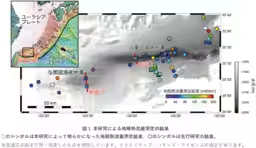
To delve deeper into these dynamics, the research team conducted multiple oceanographic surveys in late 2023 and early 2024. Utilizing the research vessel Hakuho Maru, they carried out topographical surveys, high-resolution seismic reflection surveys, heat flow measurements, and geomagnetic observations. These investigations allowed for a comprehensive analysis of the ocean floor's geological features.
The results indicated a remarkably low heat flow, approximately 50 mW/m², suggesting a 'cold crust' in the investigated regions. While extensive normal faults were identified, there were minimal signs of magma heating, indicating that crustal thinning and rift formation could occur without significant magma activity.
Implications for Earth Sciences
This research advances our understanding of rift formation under cold conditions, providing fresh perspectives on previous theories that linked magma activity to uplift mechanisms. The observations challenge conventional insights into how ocean basins evolve and highlight the need for further exploration and consideration of alternative geological processes.
Relevance to Seismic Activity
Previous studies have shown a correlation between seismicity and geothermal conditions in subduction zones. Generally, softer, heated crust can accommodate smaller earthquakes due to reduced friction along faults. In contrast, cooler, rigid crust, like that identified in the Okinawa Trough, can accumulate strain over larger fault surfaces. This raises concerns over the potential for significant seismic events in the area.
Indeed, research indicates that regions with similar geothermal profiles to the Okinawa Trough have experienced magnitude 7+ earthquakes. Thus, the possibility of high-magnitude seismic events occurring in this region cannot be discounted. Such knowledge is crucial for earthquake risk assessment and disaster preparedness in the East China Sea.
Future Research Directions
Looking ahead, the research team plans to utilize the deep-sea exploration vessel ‘Chikyu’ for more in-depth heat flow measurements in the Okinawa Trough. The objective is to obtain a clearer understanding of the subsurface heat dynamics and their relation to earthquake magnitudes and seismic hazards.
Additionally, future international scientific drilling initiatives may further elucidate magma activities and underlying geological structures in this region, paving the way for advanced geological understanding and preparedness for seismic events.
Conclusion
The results of this research, which will be published in Progress in Earth and Planetary Science on October 21, 2026, broaden our understanding of geological processes and have significant implications for seismic risk management. As ongoing studies continue, we anticipate further contributions to our knowledge of tectonic dynamics and their impact on our planet’s geology.
Topics Environment)

【About Using Articles】
You can freely use the title and article content by linking to the page where the article is posted.
※ Images cannot be used.
【About Links】
Links are free to use.