


JTB Launches Second Phase of Furupo CoLABO to Foster Sustainable Local Products
JTB Launches Second Phase of Furupo CoLABO
JTB Corporation has kicked off the second phase of its regional product development service, Furupo CoLABO, in collaboration with Hiroshima Jogakuin Junior and Senior High School. This initiative aims to support the entire process from concept development to commercialization and sales of local products. The project, which partners local governments, educational institutions, and regional businesses, intends to incorporate students’ perspectives and creativity into product planning, utilizing local resources effectively to create innovative products.
Background of the Initiative
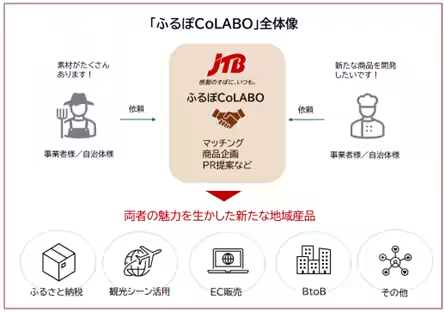
Since 2014, JTB has been engaged in a hometown tax initiative, assisting local governments and businesses in promoting and developing products that leverage regional resources. However, many areas face challenges, including a lack of new ideas, insufficient workforce, and opportunities for young people to engage with local industries. Furupo CoLABO connects diverse local businesses, facilitating the development of new regional products, commercializing them as hometown tax return items, and providing comprehensive promotional support. The first phase successfully supported product development in Yufu City, Oita Prefecture.
In this new phase, JTB will collaborate closely with educational institutions. Drawing on years of experience connecting schools and communities through various initiatives like educational travel, JTB aims to enable students at Hiroshima Jogakuin to actively participate in the development of local products, thus fostering a sense of ownership and contributing to the establishment of a sustainable regional economic model.
About Hiroshima Jogakuin Junior and Senior High School
Hiroshima Jogakuin Junior and Senior High School promotes education that cultivates each student's ability to think, act, and communicate while connecting with society through active and exploratory learning. This initiative aligns with the school's philosophy of deepening learning through engagement with the community.
Key Features of the Initiative (Public-Private-Academic Collaboration Model)
1. Student Involvement in Product Planning and Story Development
Students will research and learn about the characteristics of local companies, using this knowledge to propose new product ideas. Over five classes, they will engage in numerous activities, leveraging their unique perspectives to create compelling product concepts.
2. Connecting Local Governments, Businesses, and Educational Institutions
As an intermediary coordinator for Hiroshima City’s hometown tax initiative, JTB will clarify the roles and responsibilities of the city, local businesses, and educational institutions, creating a practical learning environment that links real-world applications with education. This approach embodies JTB Group’s core values of connecting, creating, and linking to tackle societal issues and pave the way for future solutions.
3. Implementing Social Projects through Hometown Tax Initiative
Ideas generated by students will be presented to local businesses, and the selected concepts will go through a product development process. Ultimately, these products will be marketed as regional items and distributed nationwide as part of Hiroshima City's hometown tax return offerings. This tangible contribution ensures that students’ ideas become recognized products, enhancing local awareness and encouraging donations.
JTB's Role in Furupo CoLABO
JTB is responsible for the overall design, management, and facilitation of the public-private-academic collaboration project, matching local businesses with educational institutions and providing support for new product planning and development registered as hometown tax return items.
Future Developments
Through Furupo CoLABO, JTB aims to promote collaboration among local businesses, develop human resources through public-private-academic partnerships, and create regional value originating from the hometown tax system. Using this project as a model, JTB plans to expand similar initiatives to other regions and educational institutions, contributing to sustainable community development alongside the next generation.
Topics Consumer Products & Retail)



【About Using Articles】
You can freely use the title and article content by linking to the page where the article is posted.
※ Images cannot be used.
【About Links】
Links are free to use.