



Analyzing Infant Vaccination Fever Based on Ten Years of Caregiver Data
Vaccination Insights from Caregiver Data
In a groundbreaking study, a collaboration between First Ascent Inc. and Keio University School of Medicine has examined substantial amounts of vaccination data to analyze incidences of fever in infants post-vaccination. Utilizing the childcare app, `Papa to Ikusei @ Baby Diary`, researchers analyzed vaccination records from April 2014 to November 2023, capturing the experiences of 2,563 children across 5,690 vaccination events.
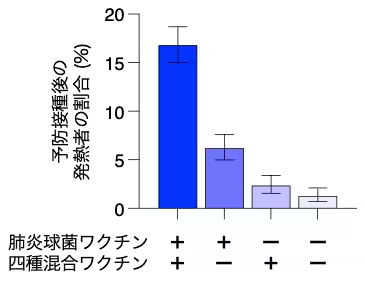
Vaccines given most often at this age include pneumococcal vaccines and the quadrivalent combined vaccines. The findings indicate that approximately 17% of infants experienced a fever of 38°C or higher within a day of their vaccination, particularly when vaccinated with the pneumococcal and quadrivalent combined vaccines on the same day. Notably, the occurrence of fever was higher among infants aged three to four months, during summer vaccinations, and among male infants, indicating a variety of factors that contribute to post-vaccination responses.
Study Background and Purpose
Many parents worry about potential side effects following vaccination, particularly fevers that may deter them from proceeding with necessary immunizations. Understanding how common such reactions may be can alleviate unnecessary anxieties and encourage adherence to vaccination schedules. Existing data primarily reports adverse reactions from isolated vaccine administration, creating a gap in knowledge concerning multiple vaccinations administered simultaneously.
This analysis leveraged real-world data collected through a smartphone application that allows caregivers to log daily childcare activities including sleep, feeding, and vaccination records. This project, termed the Keio Digital Pediatrics Project, aims to harness this big data for enhanced pediatric healthcare and caregiving support, aligning with the realities of modern parenting.
The study focused on ensuring the accuracy of fever occurrence data by restricting analysis to those caregivers who logged daily temperatures for four days preceding the vaccinations. As a result, a clearer picture emerged regarding when post-vaccination fevers were most likely to occur.
Key Findings and Implications
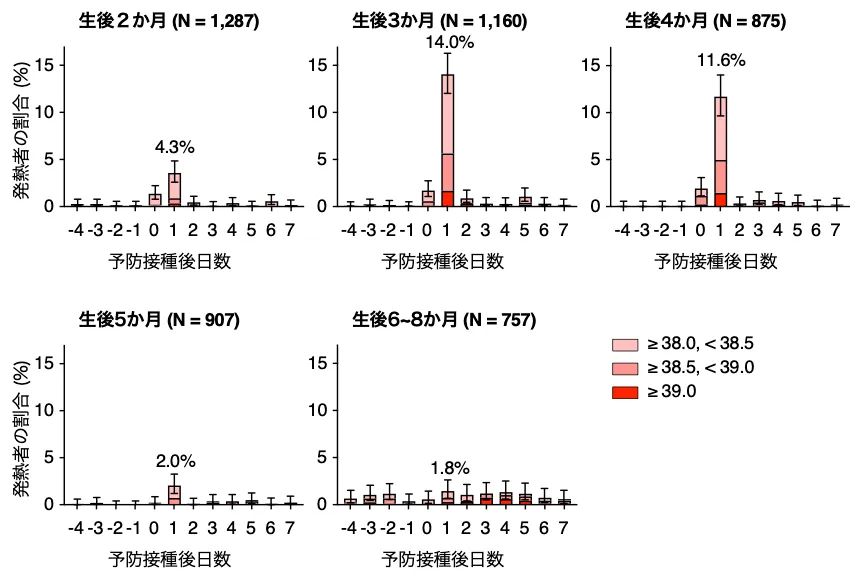
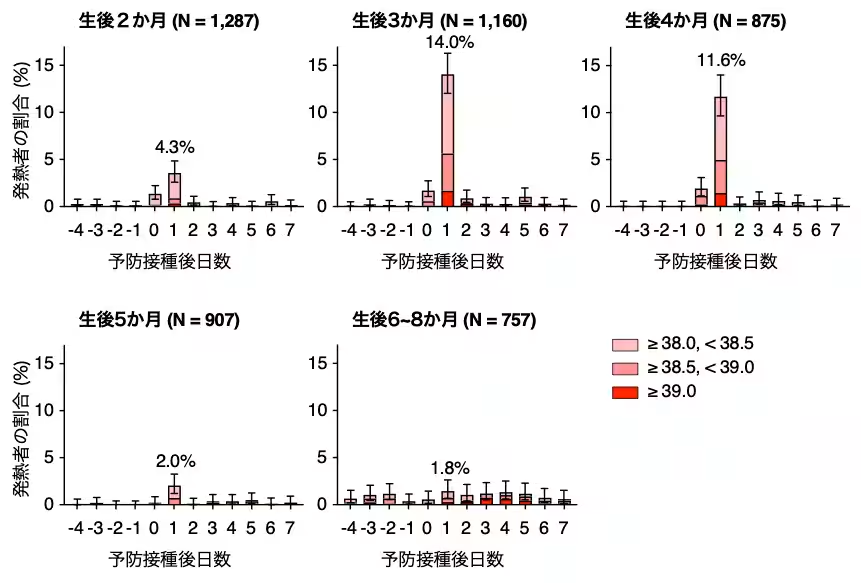
The investigation revealed that the highest frequency of fevers occurred on the day following vaccination. Infants aged three months exhibited the highest rate of fever at 14.0%, while those at four months had 11.6%. This trend likely correlates with the type of vaccines administered at various ages, suggesting that the frequency of febrile reactions is indeed age-dependent. For infants, immune responses are still maturing, providing an explanation for the heightened reactions observed in this age group.
In analyzing the specific vaccines administered, the combination of pneumococcal vaccines and quadrivalent combined vaccines stood out as eliciting a significantly higher rate of fever, reaching an alarming 16.8%. Moreover, seasonal vaccination showed interesting patterns, with summer doses correlating with higher instances of fever compared to those given in winter months.
Despite these findings, it is imperative to note that most infants experiencing a fever after simultaneous vaccinations typically returned to normal within a day. Fever post-vaccination is a natural physiological response indicating that the immune system is activating to build protection against pathogens. Therefore, adjusting vaccination schedules or avoiding simultaneous vaccinations is unnecessary. Instead, strategies should be in place to facilitate timely vaccinations within existing frameworks.
Up-to-date vaccination protocols now incorporate new formulations to increase efficacy, further ensuring that these findings remain relevant for ongoing and future vaccination campaigns. Understanding these real-world data insights aims to empower parents, encouraging them to proceed with necessary vaccinations without excessive worry about fevers that signify positive immune responses in their infants.
This research underscores both the importance of vaccination in combatting various diseases and the importance of collective understanding of normal post-vaccination responses. Recognizing the conditions under which fevers occur empowers parents to make informed choices regarding their children's health strategies.
This study is set to be published in the online edition of the journal Vaccine on July 29, 2025.
Conclusion
For caregivers, having data-backed information can reduce anxiety and foster informed decisions regarding the vaccination process. Continuous research like this leads to a greater understanding of infant health and wellness, shaping better health policies and parenting practices. Misinformation can lead to hesitancy, limiting children's protection against diseases; thus, education on the nuances and importance of vaccination cannot be overstated. This research was funded by the Public Interest Foundation for Pediatric Medicine and aims to enhance future policies and practices in child vaccinations.


Topics Health)
【About Using Articles】
You can freely use the title and article content by linking to the page where the article is posted.
※ Images cannot be used.
【About Links】
Links are free to use.