



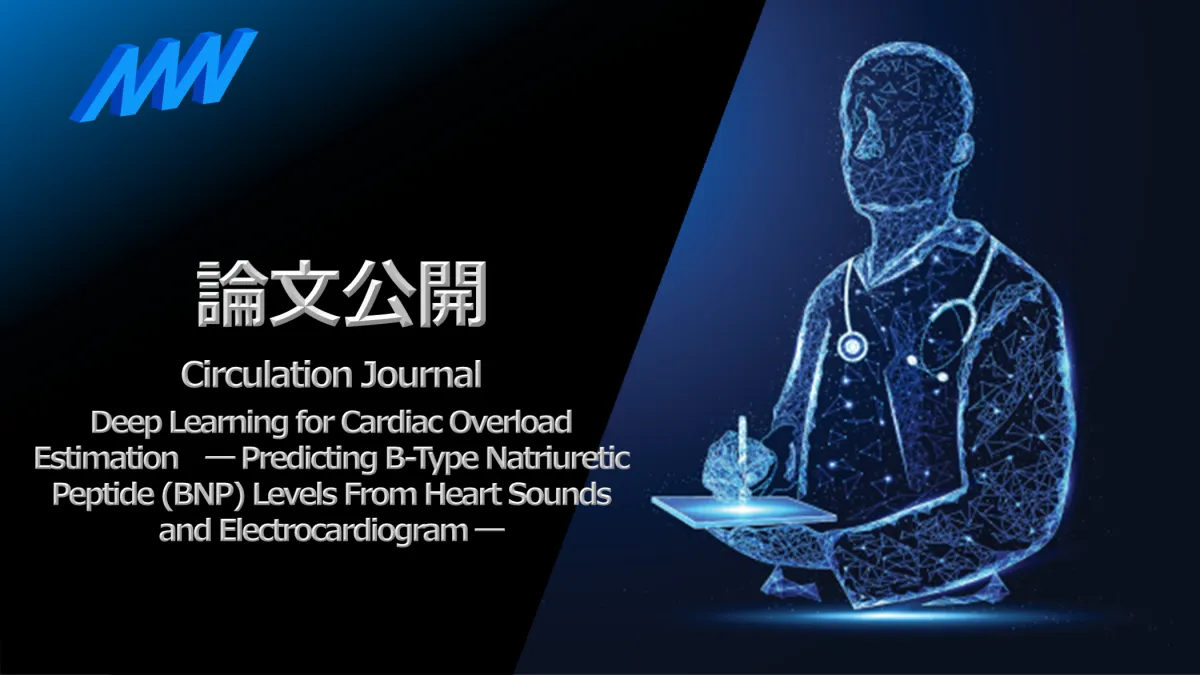
Groundbreaking AI Technology Revolutionizes Heart Failure Diagnosis Using Deep Learning
Groundbreaking AI Technology Revolutionizes Heart Failure Diagnosis
A collaborative research team from AMI Inc., led by CEO Shimpei Ogawa, and the Department of Cardiovascular Medicine at Kumamoto University, under the direction of Professor Kenichi Tsujita, has made significant strides in cardiology. Their latest research, published in the esteemed "Circulation Journal," introduces a novel technology leveraging deep learning to evaluate cardiac strain non-invasively.
Understanding Heart Failure
Heart failure is becoming increasingly prevalent, especially as populations age, leading to a rise in both readmission rates and mortality. While early detection and prompt treatment are crucial, traditional diagnostic methods present several challenges. The most common procedure involves blood tests to measure levels of a substance called BNP (B-type natriuretic peptide). However, these tests can be time-consuming and burdensome for patients, highlighting the need for an innovative solution.
The Role of Deep Learning
The research group harnesses the power of AI through deep learning to analyze heart sounds and electrocardiogram (ECG) data. This advancement facilitates the estimation of BNP levels without necessitating a blood test, significantly streamlining the diagnostic process. The newly developed technology allows for the inference of BNP values within just eight seconds of data collection, promising to alleviate patient stress while expediting diagnosis.
In a rigorous validation study involving data collected from multiple healthcare facilities, the AI model demonstrated impressive accuracy in estimating BNP levels, establishing its reliability as a groundbreaking diagnostic tool in cardiology.
Future Implications and Applications
Looking forward, the researchers aim to utilize this technology for early detection of heart failure and continuous monitoring of patients' conditions. Given that BNP levels can be influenced by various factors such as body composition, kidney function, and atrial fibrillation, future studies will also address the impact of these variables on the accuracy of the AI estimates.
For further details and research findings, interested parties are encouraged to explore the following links:
- - Research Article: Circulation Journal
- - PubMed: PubMed Article
- - Kumamoto University News: Heart Sounds AI Project
About AMI Inc.
Founded in November 2015, AMI Inc. is a pioneering startup focused on developing remote medical technologies, particularly the "Super Stethoscope," which is equipped with diagnostic assistance features for heart diseases. By integrating acoustic engineering, electronics, and AI, AMI aims to revolutionize the healthcare landscape by ensuring that high-quality medical services are accessible to everyone, regardless of location.
To learn more about AMI's offerings or to consult about demos and rentals (restricted to medical professionals), visit AMI Inc..
Conclusion
As the landscape of cardiovascular diagnostics continues to evolve, the integration of AI and deep learning technologies heralds a new era of patient care that promises efficiency and improved outcomes for individuals affected by heart failure. This innovative approach not only facilitates faster diagnosis but also opens up numerous avenues for ongoing research and application in medical practice.
Topics Health)
【About Using Articles】
You can freely use the title and article content by linking to the page where the article is posted.
※ Images cannot be used.
【About Links】
Links are free to use.