




Classroom Adventure Launches Game-Based ICT Literacy Program 'Lite Pro' with the Ministry of Internal Affairs
Classroom Adventure Unveils 'Lite Pro' for ICT Literacy Enhancement
In a significant step towards improving ICT literacy, Classroom Adventure has unveiled a game-based educational program called 'Lite Pro,' in collaboration with Japan's Ministry of Internal Affairs. This program aims not only to educate users about the risks associated with the internet and social media but also to develop their critical thinking and decision-making skills in real-life scenarios.
The new educational materials cover three key themes: misinformation, social media investment scams, and sextortion. Each topic is relevant and accessible to individuals regardless of their age in today's digital society. The structure focuses on engaging users in narratives where they confront risks directly, encouraging them to consider their feelings, identify inconsistencies, and determine appropriate actions based on the situation.
Themes of the Program
1. Misinformation: 'Regarded Information about Kuradoto Town'
This segment teaches how to pause, verify, and evaluate information when encountering seemingly credible yet potentially misleading content. In an era where fragmented images and bold statements proliferate online without a fact-checking process, this module emphasizes the importance of confirming sources and contexts before believing or spreading information.
2. Social Media Investment & Romance Scams: 'The Traps in Identity Deception'
Here, users learn how interactions on social media and messaging platforms can evolve into trust-building, which may eventually lead to scams involving investment schemes or romantic deceptions. Online scammers increasingly use time to build rapport and trick users into sending money or investing. This module educates users on recognizing red flags and maintaining a healthy distance from suspicious offers.
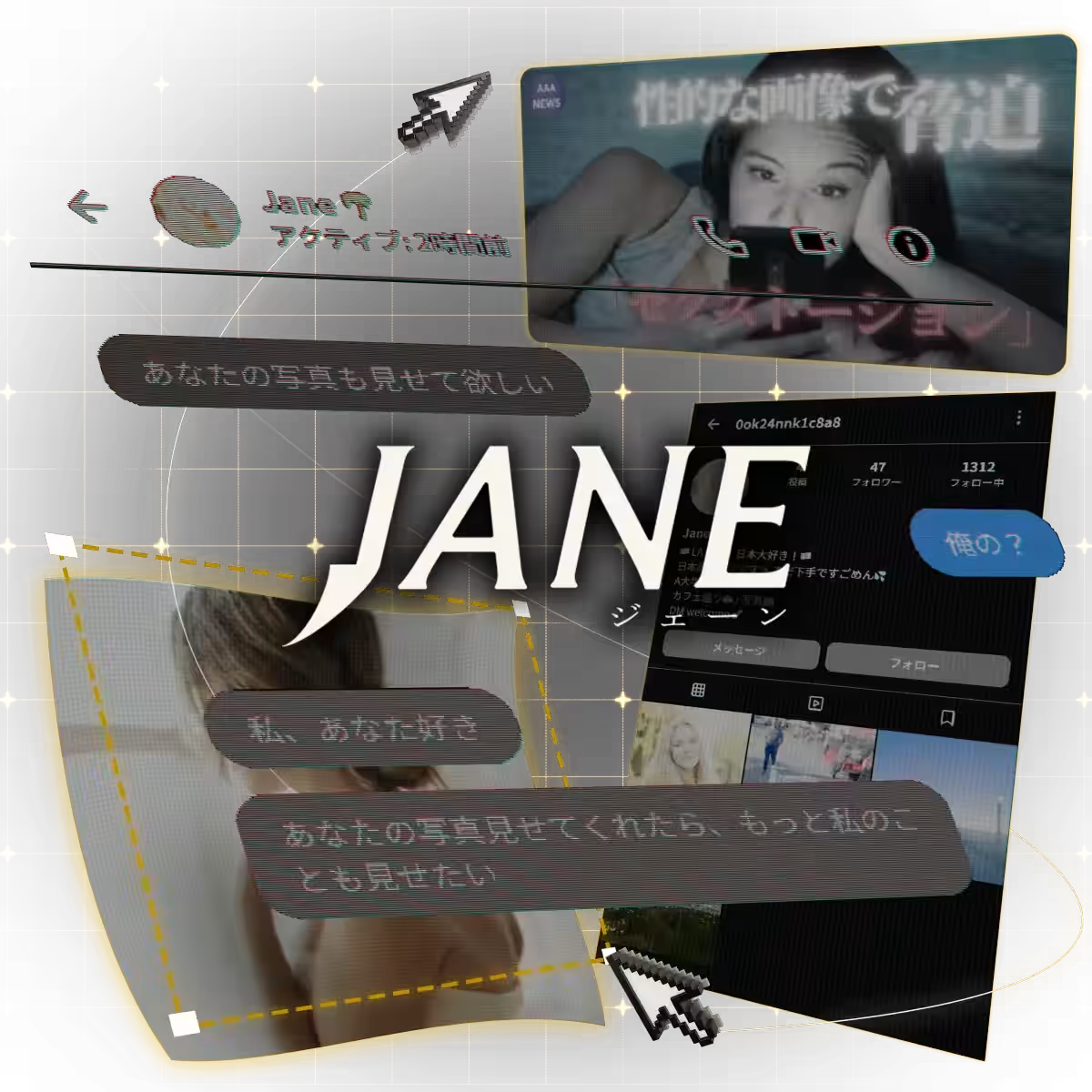
3. Sextortion: 'Jane'
This section addresses the risks of personal images or private communications being manipulated for coercion or exploitation. It acknowledges the complex nature of online relationships where trust can lead to victimization. The material guides users through identifying warning signs and emphasizes the importance of seeking help rather than enduring such intimidation alone.
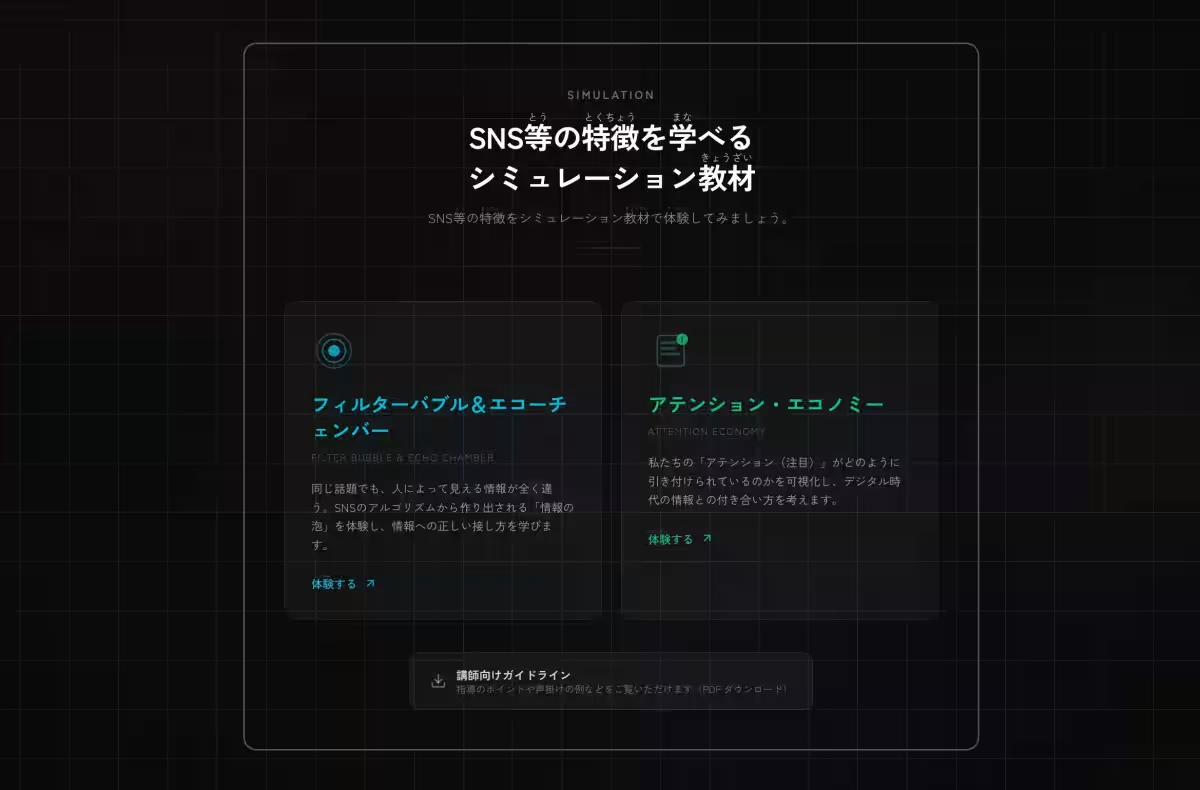
Additionally, the program introduces simulation materials that explore the characteristics of social media, including concepts such as the 'Attention Economy,' 'Filter Bubble,' and 'Echo Chamber.' These tools are designed to enlighten users on why certain information garners more attention and how individuals often find themselves surrounded by similar viewpoints. The aim is to clarify the structures of today's information encounters and promote diverse engagements with varied opinions.
The 'Attention Economy' module explains how attention in digital spaces has become a commodity. It also discusses why sensationalist content tends to attract engagement more than subdued expressions. Understanding this component enables people to reassess their informational interactions critically.
In the 'Filter Bubble' and 'Echo Chamber' segments, users explore how personalized information environments favor similar information and the reinforcement of prevailing opinions among like-minded groups. By continually consuming familiar content, users risk becoming disconnected from contrasting perspectives, which eventually distorts their understanding of reality.
The Ministry of Internal Affairs has made these educational materials available via the online guide titled 'Let's Use the Internet Wisely! A Safe and Secure Internet Utilization Guide.'
Experience the Program
To experience this innovative program firsthand, visit the official site.
Classroom Adventure has a history of developing engaging educational programs that encourage learners to investigate, think, and make decisions actively. The launch of 'Lite Pro' represents a commitment to deliver critical ICT literacy education in an engaging format that appeals to a broader audience. Given the growing complexity of the digital landscape, characterized by misinformation, scams, coercion, and divisive narratives, the necessity of fostering proactive learning becomes increasingly paramount.
As Classroom Adventure continues to cultivate experiential learning approaches, it aspires to connect societal issues with practical education, enabling students to understand and tackle these challenges effectively.
About Classroom Adventure
Founded by active students from Keio University, Classroom Adventure is an EdTech startup dedicated to information literacy programs focusing on misinformation. Its program 'Ray's Blog' has reached over 50,000 participants across ten countries, while 'Ray's Disappearance,' simulating the risks of part-time jobs, has partnered with various municipalities to enhance education nationwide. Looking forward, Classroom Adventure plans to host the Youth Verification Challenge, previously led by Google, starting in 2024. Their emphasis on gamification delivers an educational experience that is both compelling and enriching. In 2024, they aspire to win prestigious awards for their impactful initiatives.
With their ongoing efforts, Classroom Adventure aims to foster a culture of active engagement and thoughtful interactions in the increasingly nuanced digital environment.





Topics Consumer Products & Retail)
【About Using Articles】
You can freely use the title and article content by linking to the page where the article is posted.
※ Images cannot be used.
【About Links】
Links are free to use.