




PathAhead Develops Revolutionary Artificial Aggregate 'Rising Sand' Utilizing Desert Sand in Joint Research with KEK
Introduction
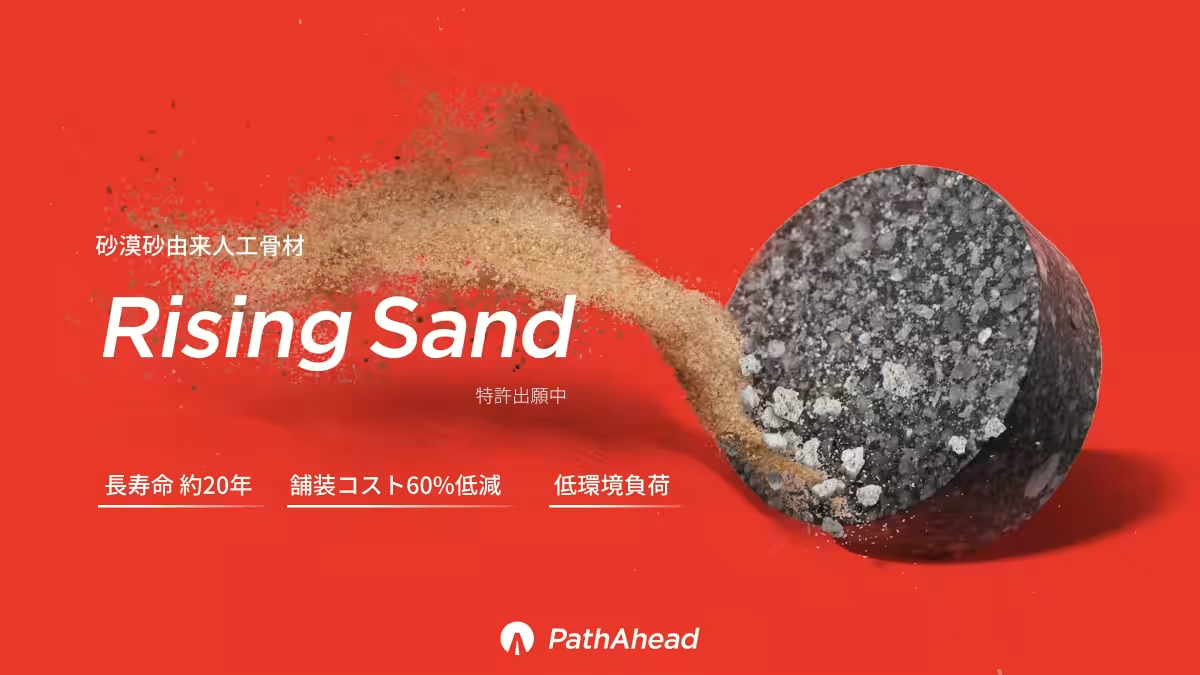
PathAhead Inc., a startup born from Honda's new business creation program "IGNITION," is making headlines with its innovative approach to building materials. The Tokyo-based company has recently partnered with Takashi Honda, an assistant professor at the High Energy Accelerator Research Organization (KEK), to develop a new type of artificial aggregate called "Rising Sand" derived from desert sand. This collaboration has been recognized and supported by the Ministry of Land, Infrastructure, Transport, and Tourism under the SBIR Construction Technology Research and Development Grant Program for 2026.
Background of the Initiative
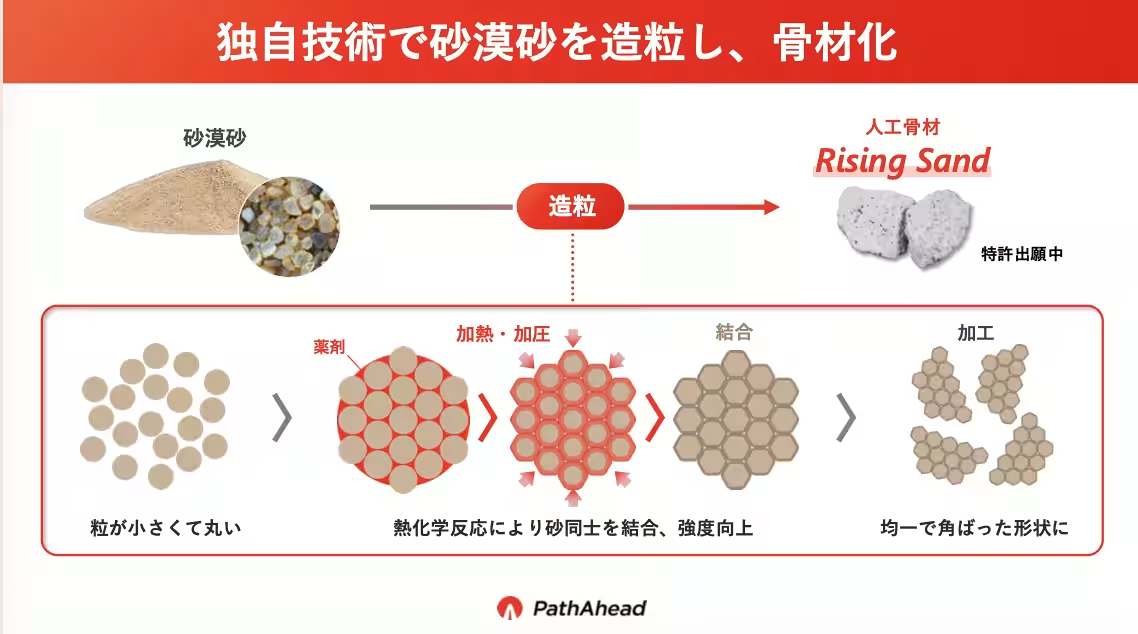
The global demand for infrastructure has been steadily increasing, leading to critical shortages of natural aggregates for construction. Rising material costs and the need to minimize environmental impact have further complicated the situation. Particularly in regions such as Africa and the Middle East, abundant desert sand is largely underutilized, presenting a significant opportunity for innovation. PathAhead has focused on this untapped resource, utilizing specialized granulation and solidification technologies to develop high-quality artificial aggregates.
Objective of the Joint Research
This groundbreaking joint research aims to establish advanced manufacturing techniques for next-generation construction aggregates and structures. The collaboration will explore several key areas:
1. Material Design of Artificial Aggregates Using Untapped Sand Resources: Research will assess the optimal compositions and structural properties of artificial aggregates derived from desert sand.
2. Development of Advanced Manufacturing Techniques: PathAhead and KEK aim to innovate how artificial aggregates are produced, enhancing consistency and performance in construction applications.
3. Understanding Performance Mechanisms through Microstructural Analysis: By conducting thorough investigations into the microstructural characteristics, the research aims to clarify how the material properties emerge from its physical structure.
4. Establishing Mass Production Techniques for Industry Utilization: The teams will work to streamline the production process, ensuring that these new materials can be efficiently integrated into the construction market.
This initiative strives not only to reduce reliance on natural aggregates but also to create durable, environmentally friendly construction materials that can withstand the test of time.
Insights from KEK and PathAhead Leaders
Professor Takashi Honda shared his thoughts on this collaboration:
“I have dedicated my career to researching new material synthesis and property evaluation. As the leader of an international joint research effort at J-PARC, I am honored to partner with PathAhead to translate our knowledge of material properties into impactful innovations for society.”
In a similar vein, Masayuki Iga, CEO of PathAhead, noted:
“Harnessing untapped sand resources as construction materials offers a fresh perspective on resource constraints and infrastructure challenges. Collaborating with the esteemed Dr. Honda is a valuable opportunity that I believe will lead to significant breakthroughs in artificial aggregate production and its global deployment.”
Future Prospects
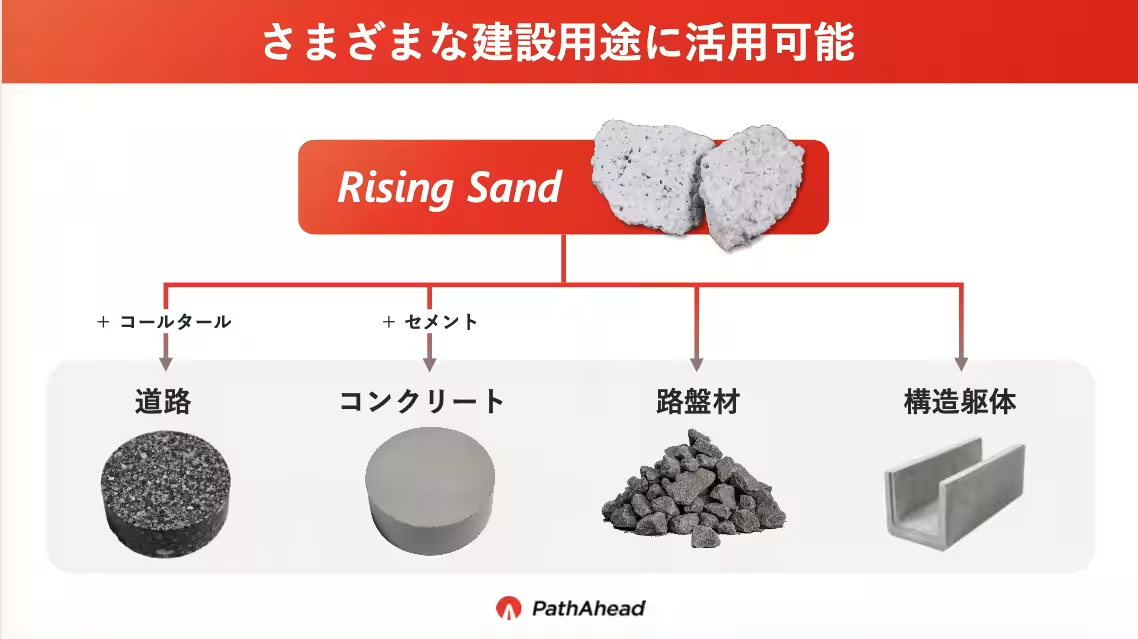
PathAhead is committed to fostering collaborations with research institutions and businesses to continue advancing sustainable construction technologies. The goal is to contribute to ongoing road, building, and infrastructure developments by establishing robust production methods for artificial aggregates.
Conclusion
The creation of "Rising Sand" marks an important step forward in addressing global construction material shortages. By leveraging desert sand—a resource often overlooked—PathAhead not only aims to revolutionize the construction industry but also to play a crucial role in promoting sustainability and environmental responsibility in building practices. With the support of institutions like KEK, the future for artificial aggregates looks promising and filled with potential for innovation.



Topics Consumer Products & Retail)
【About Using Articles】
You can freely use the title and article content by linking to the page where the article is posted.
※ Images cannot be used.
【About Links】
Links are free to use.