



Tokyo Gas Partners with Tokyo to Develop Green Methane from Local Resources
Tokyo Gas' Green Methane Production Initiative
Tokyo Gas Co., led by President Shinichi Sasayama, has recently reached a significant milestone by signing an agreement with the Tokyo Metropolitan Government for the innovative "Green Methane Production Project". This initiative is part of Tokyo's commitment to utilize locally produced green hydrogen alongside CO2 derived from sewage sludge, thus paving the way towards a greener future.
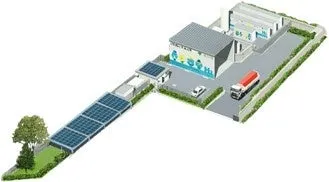
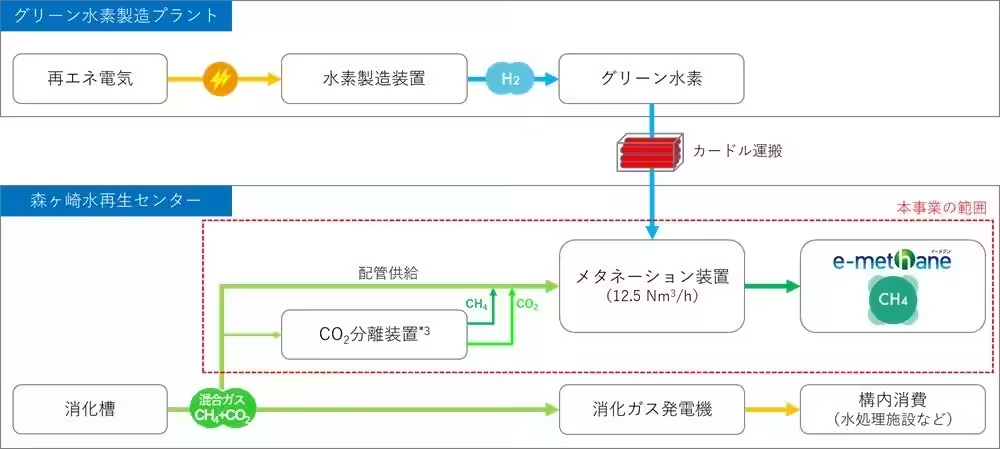
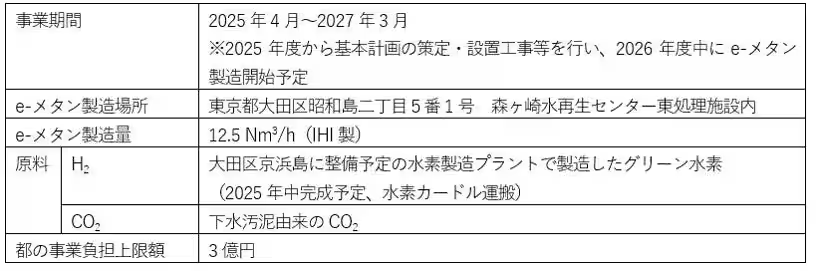
The project aims to create e-methane in Ota Ward, leveraging green hydrogen produced at the Keihin Island facility and CO2 sourced from the sewage sludge at the Morigasaki Wastewater Reclamation Center in Ota. Notably, the process involves integrating the mixed gas generated from sewage sludge—as a continuous feed into the methanation apparatus—without separating the CH4 and CO2 components, a pioneering approach in Japan.
A Step Towards Carbon Neutrality
This initiative aligns seamlessly with Tokyo Gas's broader management vision known as "Compass2030," which emphasizes a commitment to achieving net-zero CO2 emissions. Since March 2022, the company has been conducting experimental operations to manufacture e-methane, utilizing insights gained from these trials to further enhance local production capabilities.
By implementing this project, Tokyo Gas aims not only to facilitate the adoption of e-methane but also to identify and address challenges in its practical application. This aligns with the Japanese government's goal of reaching carbon neutrality by 2050, reinforcing the crucial role of innovative technologies in combating climate change.
Project Overview
The Green Methane Production Project consists of several key components:
- - Green Hydrogen Manufacturing Plant: Where green hydrogen is produced sustainably to be used further in the process.
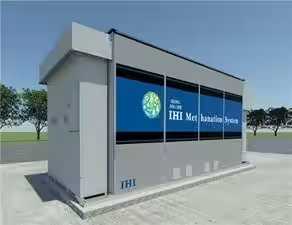
- - Small-scale Methanation Unit: This equipment is designed to convert the raw materials into e-methane efficiently.
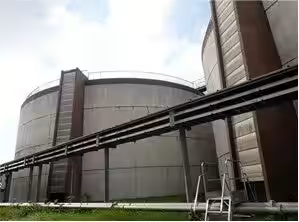
- - Digester for CO2 from Sewage Sludge: A facility that processes sewage sludge to generate the necessary mixed gas, which includes the CO2 required for e-methane production.
The mixed gas includes methane (CH4) and carbon dioxide (CO2) produced as by-products during wastewater treatment.
Since March 2022, Tokyo Gas has initiated a series of tests focused on the practical implementation of methanation in achieving a decarbonized society.
* Specific tests also aimed at separating CO2 from mixed gas are included within this broader initiative.
Conclusion
In summary, the partnership between Tokyo Gas and the Tokyo Metropolitan Government will serve as a transformative step in leveraging local resources for cleaner energy production. The commitment not only showcases an innovative approach but also reinforces the collective effort needed to achieve national climate goals. Through groundbreaking projects such as these, industries can contribute to a sustainable future, moving us closer to realization of a carbon-neutral society. Together, they set an example for other regions and corporations to follow suit in addressing the pressing global issue of climate change.
Topics Energy)
【About Using Articles】
You can freely use the title and article content by linking to the page where the article is posted.
※ Images cannot be used.
【About Links】
Links are free to use.