



Understanding Pancreatic Cancer's Fibrosis Barrier for Improved Drug Delivery Strategies
Research Overview
A groundbreaking study conducted by researchers from Okayama University and Tohoku University has shed new light on the mechanisms underlying the formation of fibrosis barriers in pancreatic cancer. This type of cancer, known for its notoriously poor prognosis, features a fibrous scar tissue that surrounds cancer cells, complicating treatment and reducing the effectiveness of chemotherapy. In fact, the five-year survival rate for pancreatic cancer remains alarmingly low, at around 10%.
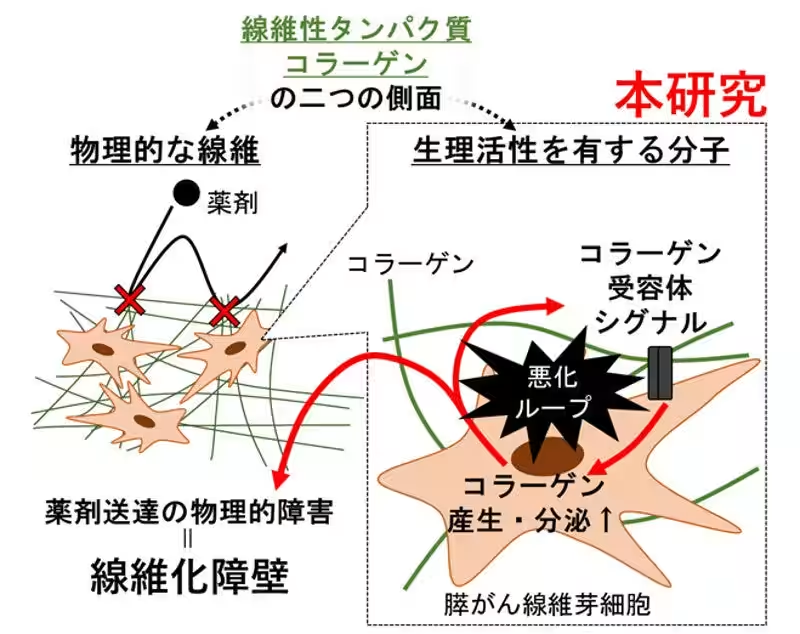
Significantly, the research team, led by Assistant Professor Hiroyo Tanaka from the Graduate School of Medicine, Dentistry, and Pharmaceutical Sciences at Okayama University, has discovered that beyond just acting as a physical barrier, collagen—a key protein in the formation of fibrotic tissue—also plays a critical role as a biologically active signaling molecule. This revelation marks a paradigm shift in understanding how collagen contributes to the outer protective layer surrounding pancreatic tumors, blocking therapeutic agents from effectively reaching their target.
Key Findings
The study utilized innovative three-dimensional culture techniques to explore the formation of fibrosis barriers in-depth. The researchers demonstrated that collagen’s contributions are multifaceted; it creates structural obstacles while also engaging in molecular signaling that exacerbates the challenges related to drug delivery. Traditionally, it was believed that the physical strands of collagen simply impeded the passage of medication, but this study illustrates that the biological activities associated with collagen could be equally influential.
By targeting the signaling pathways activated by collagen, the researchers aim to develop new therapeutic strategies to dismantle these barriers. The groundbreaking insight suggests the potential for designing drugs that can bypass or even counteract the fibrotic encapsulation that characterizes pancreatic tumors.
Significance of the Research
The implications of this research are enormous, as they hold promise for dramatically improving treatment outcomes for individuals battling pancreatic cancer. The collaborative efforts of the research group underscore the importance of interdisciplinary approaches in tackling the complexities of cancer treatment. Recent advancements in other cancer types have highlighted the potential for improved survival rates, yet pancreatic cancer continues to lag behind.
Professor Mitsunobu Kano and others involved in this study anticipate that these findings might open new avenues in treatment approaches, by either enhancing existing therapies or spearheading the development of novel interventions.
Future Directions
Looking ahead, the study sets the stage for further exploration into therapeutic options that specifically target collagen's signaling mechanisms. The aim is to create a more accessible pathway for chemotherapeutic agents to penetrate the tumor environment effectively. Moreover, ongoing collaboration between leading institutions like Okayama University and Tohoku University is expected to propel this research into practical applications in clinical settings within the next few years.
Conclusion
As researchers continue to decode the biology of pancreatic cancer and its fibrotic barriers, the discovery of collagen's dual role offers new hope for therapy. With the combined efforts of academic institutions, medical practitioners, and funding organizations, there is encouragement for innovative solutions that promise to change the landscape of treatment for one of the deadliest forms of cancer.
The complete findings of this research were recently published in the journal Small, and further details can be accessed at their official website. This study not only represents a significant scientific advancement but also resonates with the ongoing global fight against cancer, highlighting the need for continuous innovation in drug delivery systems.
Topics Health)
【About Using Articles】
You can freely use the title and article content by linking to the page where the article is posted.
※ Images cannot be used.
【About Links】
Links are free to use.