



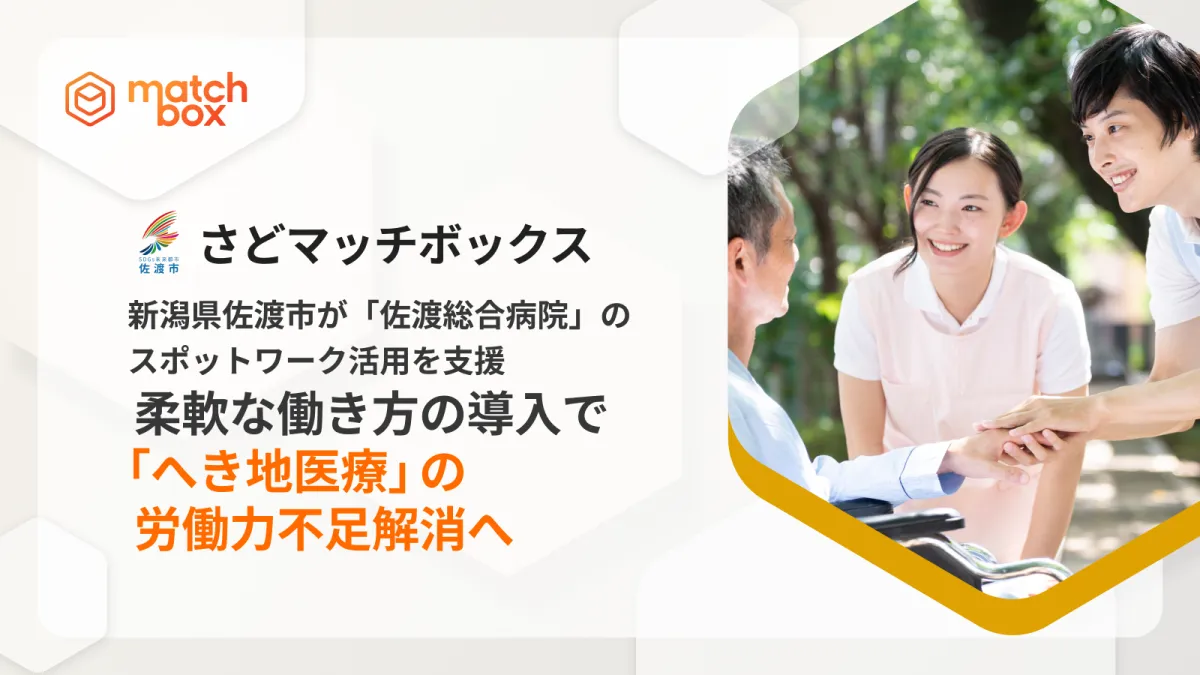
Niigata's Sado City Enhances Healthcare with Innovative Job Matching Support
Innovative Support for Healthcare in Sado City
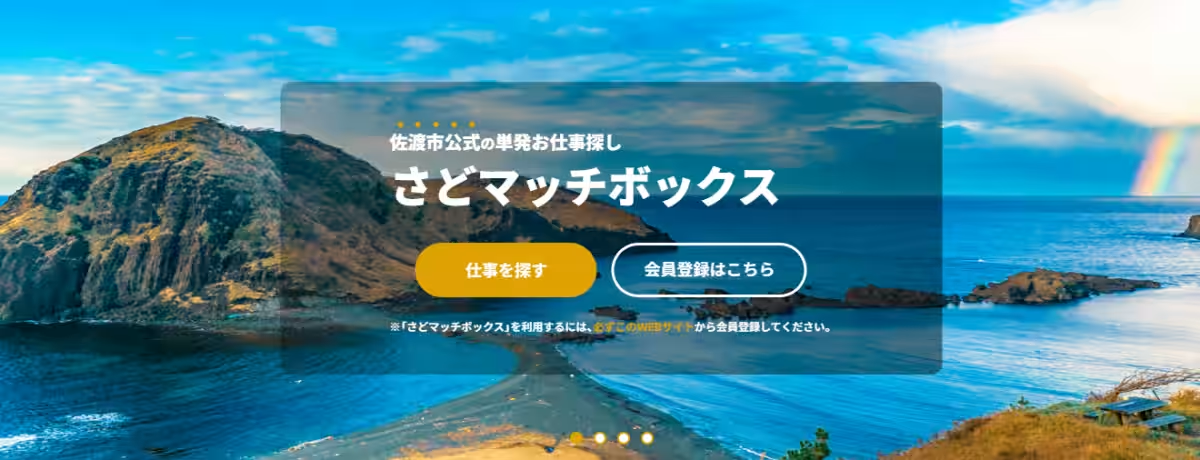
In a bid to tackle the growing healthcare staffing crisis, Sado City, located in Niigata Prefecture, has commenced a strategic partnership with Matchbox Technologies. This collaboration aims to implement a unique job matching initiative through the city’s official employment platform, Sado Matchbox. This platform has been designed to leverage flexible working opportunities, focusing particularly on addressing pressing workforce shortages in healthcare facilities.
Overview of the Initiative
Sado City has designated the Sado General Hospital, the largest hospital in the region, as one of its model companies in this pioneering project. Under this initiative, the city is providing both human resources and financial support to facilitate the effective use of spot work — short-term, flexible employment opportunities. This approach aims not only to fill immediate vacancies in healthcare but also to create a sustainable workforce for the future.
The cooperation entails continuous operational support from Matchbox Technologies, which specializes in creating databases of qualified individuals who can be hired as needed. This method, referred to as self-sourcing, enables organizations to attract and retain skilled personnel without the traditional barriers often associated with recruitment.
Challenges in Local Healthcare
Sado City faces numerous challenges, primarily stemming from demographic changes such as population decline and an aging workforce, which contribute to a critical shortage of medical staff. Reports indicate that the number of hospital beds in the area is projected to decrease from around 515 in 2021 to approximately 350 by 2025. This contraction emphasizes the need for innovative staffing solutions to maintain healthcare services and ensure community welfare.
Achievements and Future Goals
Since the inception of this program, initial results are promising. Within just a day of posting job listings on the Sado Matchbox platform, the hospital reported successfully matching candidates for over ten positions. From essential roles such as bed-making and dishwashing, to positions requiring professional qualifications, the program has attracted a diverse pool of applicants, ranging from their 20s to 70s.
As the program evolves, ongoing efforts will focus on reducing the operational burden on qualified staff while expanding the pool of diverse candidates contributing to local healthcare services.
The Sado General Hospital and the officials from Sado City are optimistic that the initiative will set a precedent for other rural healthcare facilities facing similar challenges. They aim to solidify the program as a model of best practices not only for Sado City but also for other areas struggling with healthcare staffing shortages. Furthermore, the insights gained from this project will be invaluable in shaping future strategies for sustainable healthcare employment across rural Japan.
Community Involvement
Local government officials have expressed their commitment to addressing the talent gap in the healthcare sector. By facilitating a collaborative approach between governmental bodies, businesses, and healthcare institutions, they aim to create a robust support system that ensures stable employment and encourages workforce engagement in the community.
With the continued implementation of the Sado Matchbox initiative, Sado City aspires to foster a new standard in rural healthcare employment, ultimately strengthening the fabric of its community and securing a healthier future for its residents.
Conclusion
Matchbox Technologies is dedicated to using advanced digital tools to promote flexible and sustainable work environments. This groundbreaking collaboration with Sado City not only addresses urgent healthcare staffing issues but also highlights the potential of innovative employment solutions in fostering community resilience in areas traditionally prone to workforce challenges. The success of this initiative offers a hopeful outlook for similar regions grappling with healthcare staffing and could potentially serve as a model for national replication in Japan’s rural landscapes.
Topics Health)

【About Using Articles】
You can freely use the title and article content by linking to the page where the article is posted.
※ Images cannot be used.
【About Links】
Links are free to use.