



Understanding the Risks: Cash Flow Management in SMEs
Understanding the Risks: Cash Flow Management in SMEs
In an era where economic dynamics shift rapidly, effective cash flow management has become an indispensable pillar for small and medium-sized enterprises (SMEs). Conducted by YK Planning, a company based in Yamaguchi Prefecture, this survey focuses on the current state and awareness of cash flow management among SME leaders and managerial staff.
The Importance of Cash Flow Management
Cash flow is crucial for maintaining the stability of a business. However, many SMEs rely heavily on cumbersome spreadsheet management and manual operations, which might leave them exposed to risks such as bankruptcy or losing investment opportunities. The survey aims to evaluate how well businesses understand their cash flow situations and their capability to forecast future needs.
Survey Overview
The research conducted between October 8-9, 2025, engaged 1,010 participants who identified themselves as either owners or management personnel in SMEs. Utilizing internet-based research through PRIZMA, the survey delves into the common practices and challenges surrounding cash flow management, as well as the effectiveness of tools that can improve these methods.
Key Findings: Importance of Cash Flow in Management Decisions
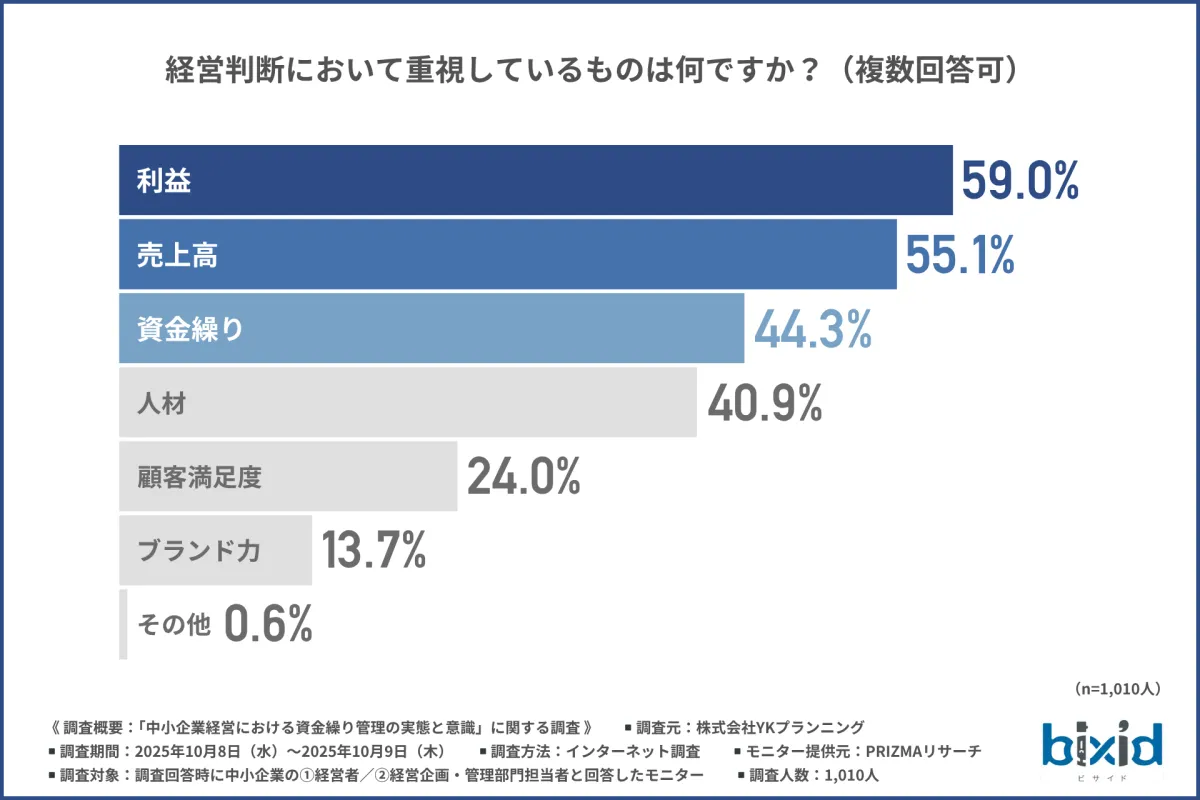
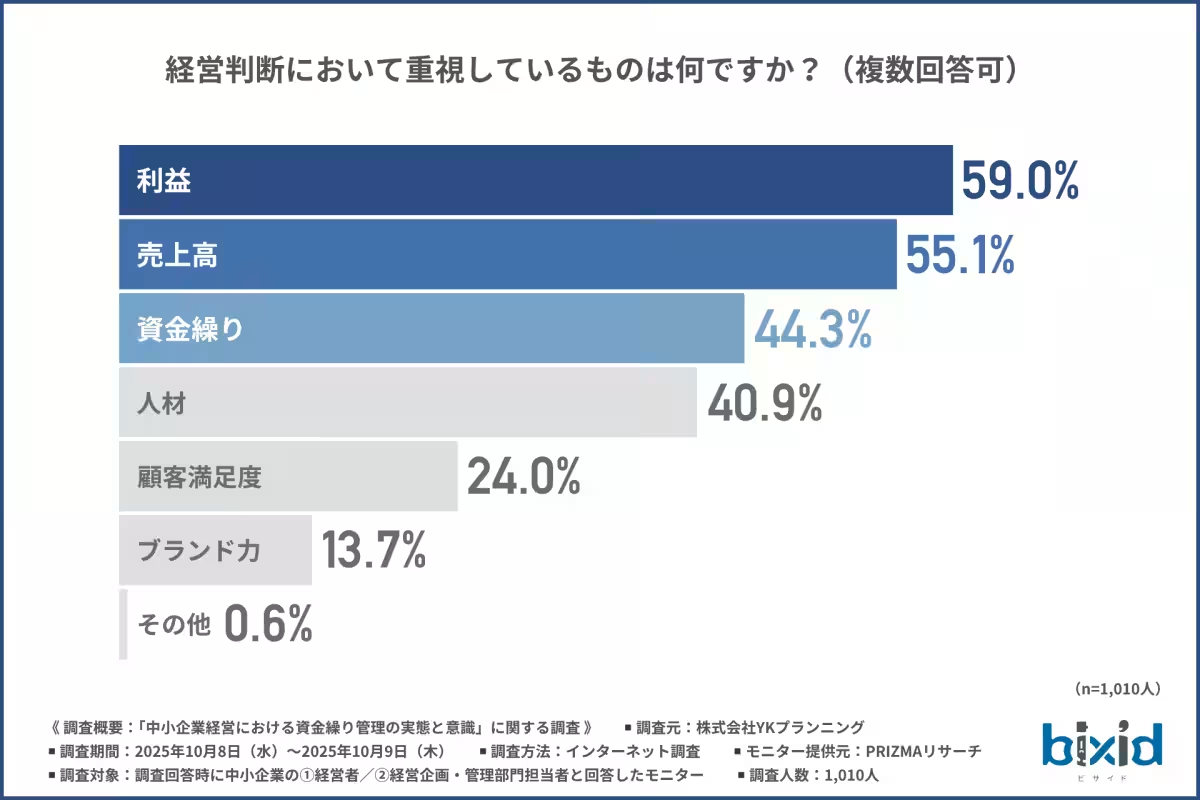
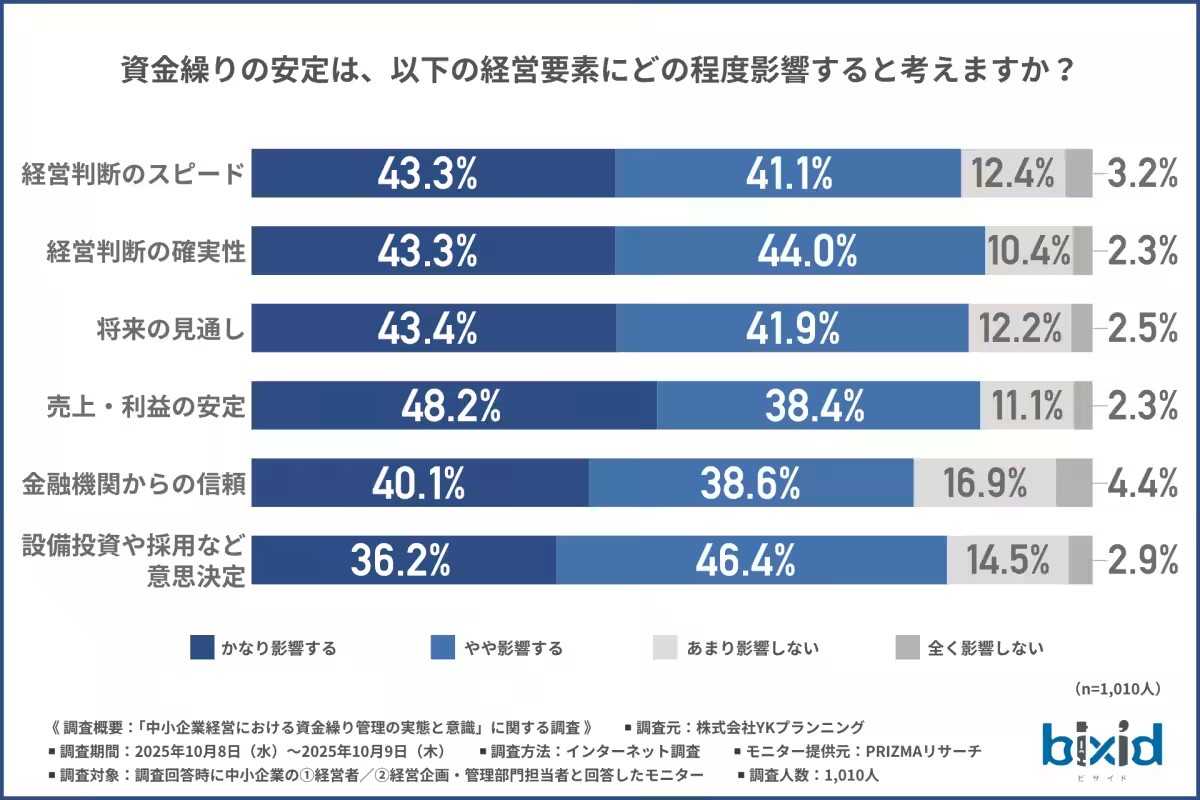
When asked about what elements weigh most in their managerial decision-making, profit (59.0%) ranked highest, followed by sales revenue (55.1%) and cash flow (44.3%). This indicates that while profit remains the focal point, there is a clear acknowledgment of the significance of cash flow in maintaining operational stability. Survey results confirmed that stable cash flow impacts not only revenue and profit but also future projections and the reliability of management decisions.
Frequency of Cash Flow Monitoring
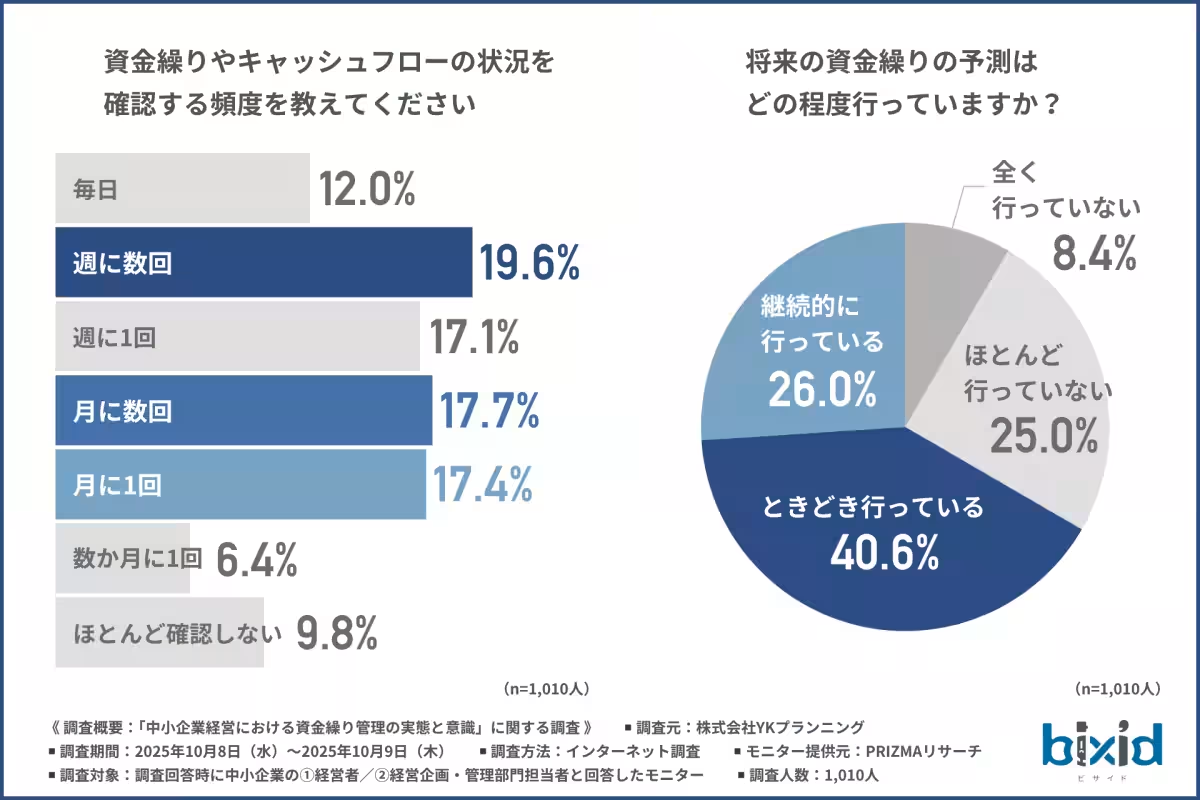
Regarding how often businesses review their cash flow and financial status, the survey found that approximately 19.6% check it several times a week, followed closely by 17.7% who do so a few times a month. Even with frequent checks, predicting future cash flow remains a challenge, as only about 7% indicated they conduct continuous forecasts. This divide suggests a disparity between tracking cash flow regularly and implementing actionable future forecasts.
Awareness of Risks Associated with Poor Cash Flow Management
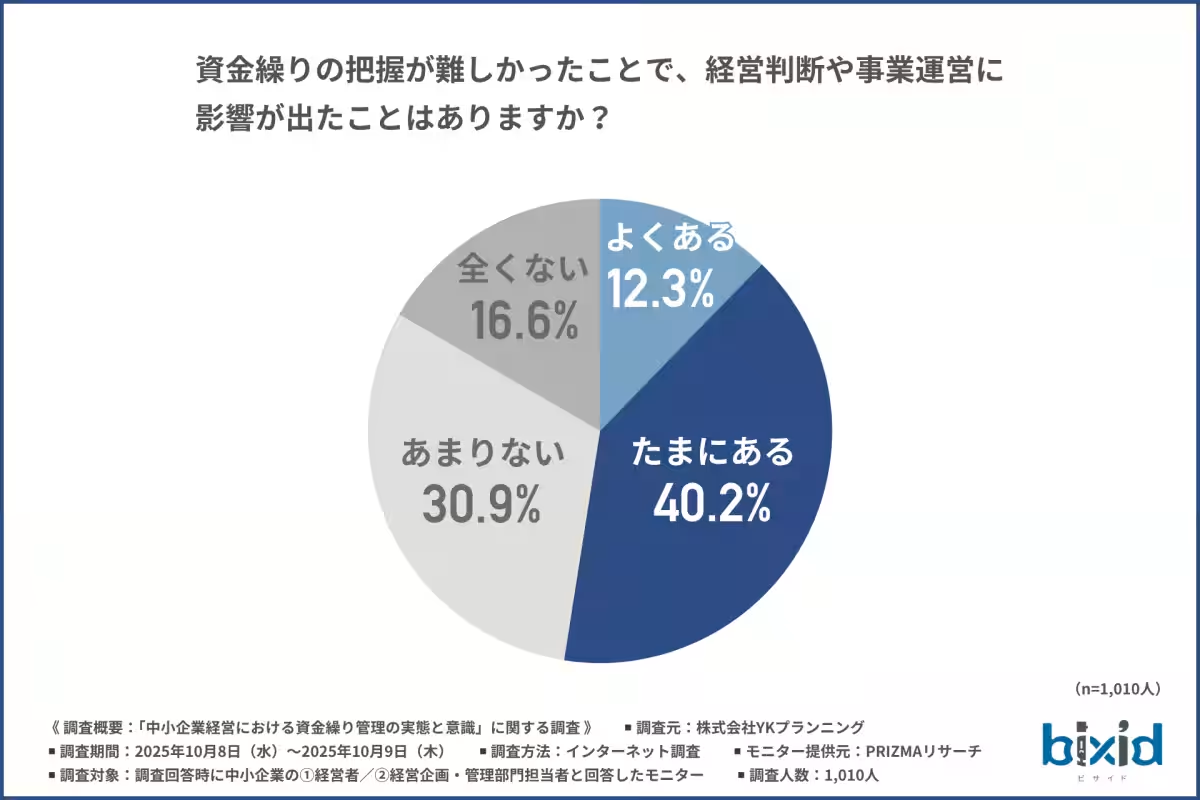
A significant finding of the survey indicated that almost half of the respondents acknowledged the negative impact of poor cash flow insight on their business decisions. Specific concerns included delays in salary payments and challenges in securing additional financing. Such cases highlight the critical nature of understanding cash flow not just for operational efficiency, but for the very survival of the business.
Challenges in Managing Cash Flow
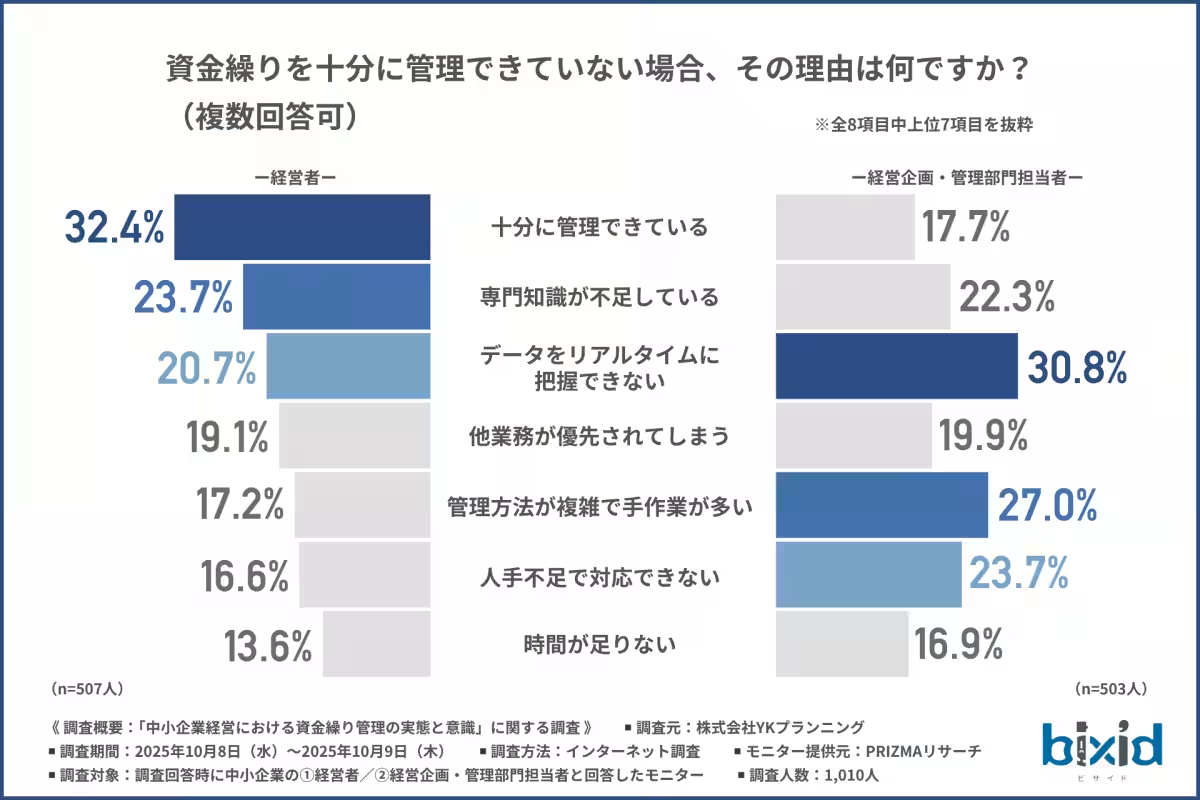
When exploring why many firms struggle with effective cash flow management, a gap in perceptions between company owners and management personnel surfaced. Owners typically felt that management was sufficient, while operational staff often viewed it as inadequate. This differing perspective creates a bottleneck that hinders improvements in cash flow management practices. Both parties acknowledged common issues like a lack of expertise and the inability to access real-time data, underscoring a shared hurdle in tool utilization and staffing.
Moving Towards Rational Cash Flow Management Solutions
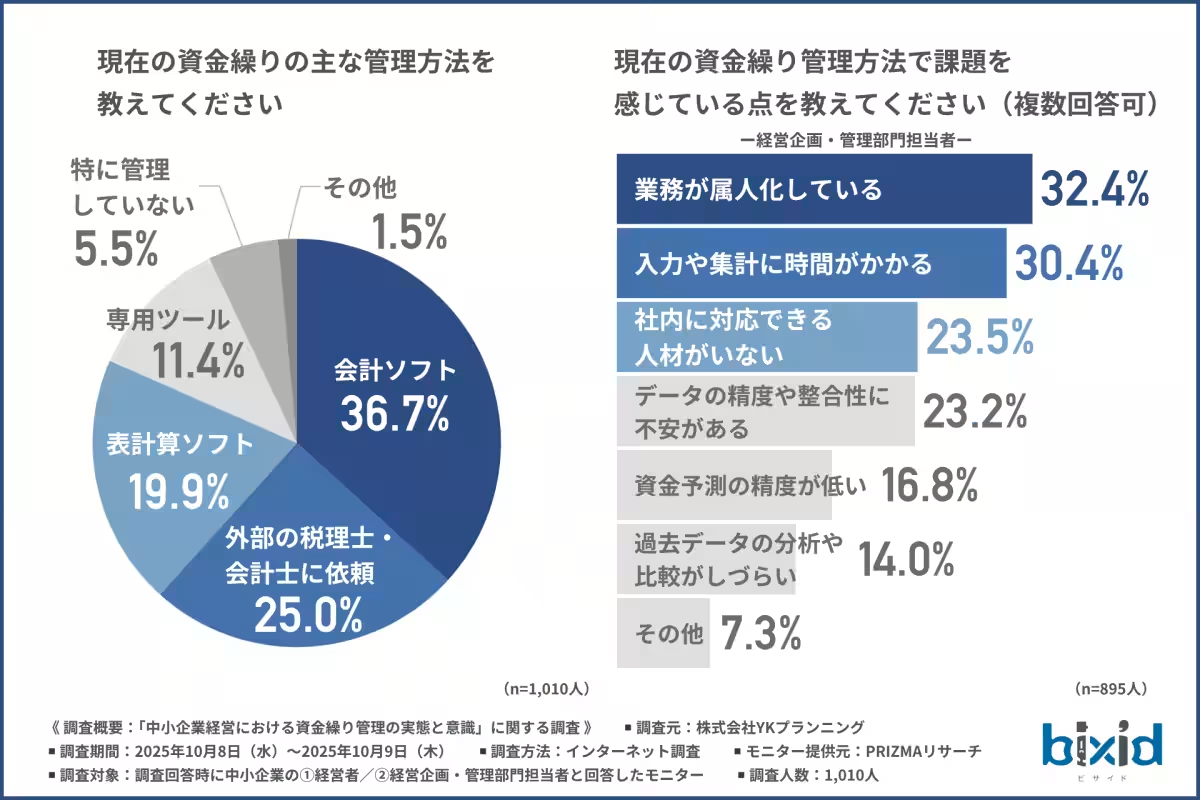
As the report indicates, 36.7% of businesses utilize accounting software for cash flow management, while others depend on external accountants or spreadsheets. The reliance on manual processes signifies a risk in timely decision-making. Moreover, only a small fraction utilize dedicated tools that could streamline the cash flow monitoring process.
The survey found that businesses that do not leverage specialized tools report challenges associated with dependence on specific individuals, time-consuming data entry, and a lack of trained personnel for cash flow management. This situation exemplifies the urgent need for effective cash flow practices that incorporate real-time data access and system integration.
Improving Cash Flow Management Practices
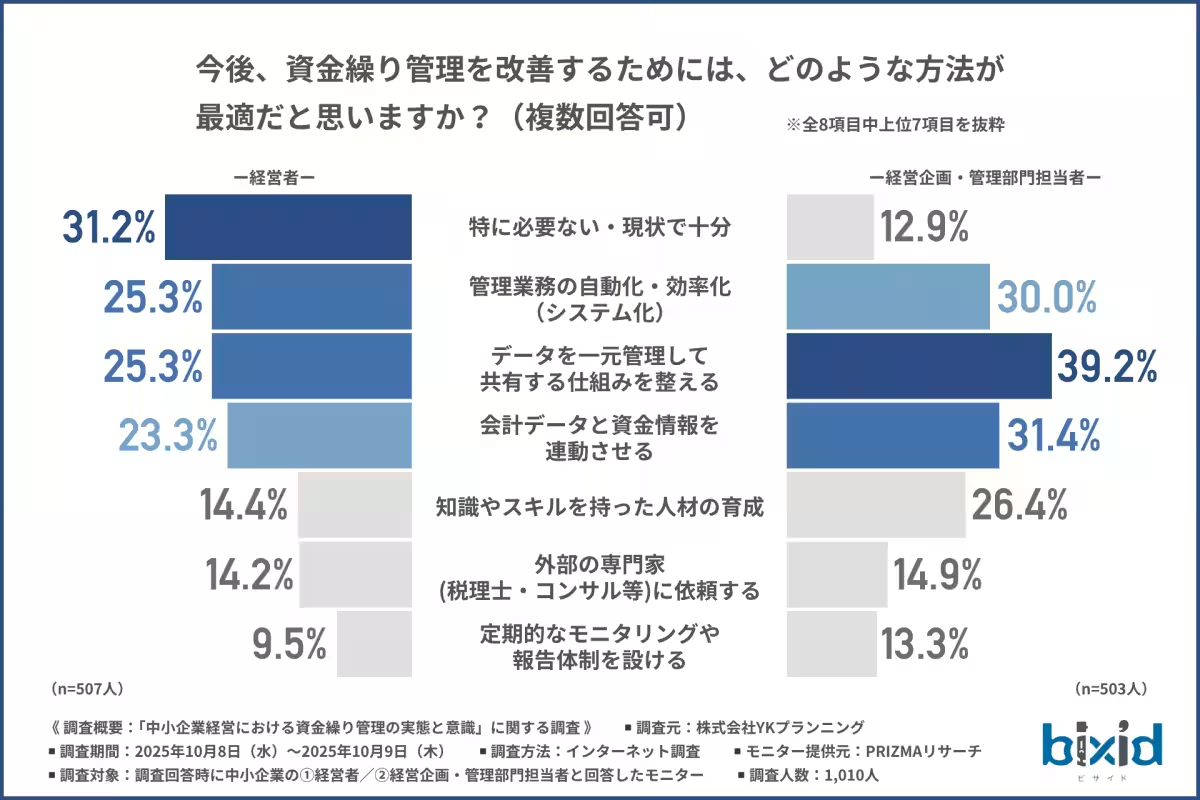
In light of the findings, it's clear that achieving a stable cash flow management system requires a proactive approach. There is a marked divergence in how business leaders perceive the need for improvement versus the administrative staff's call for enhanced data management and automation. The latter group emphasized an urgent need for consolidating data management and fostering efficiencies to streamline operations.
Conclusion: The Future of SME Cash Flow Management
This research elucidates that, while many SMEs are aware of the critical importance of cash flow management, effective implementation and continuous forecasting is lacking. Issues such as postponed salary payments and halted new projects illustrate the detrimental impacts that arise from insufficient cash flow understanding. The overarching view suggests a need for real-time data management and system efficiency to enable informed decision-making.
For small and medium enterprises looking to cultivate a responsible management system, utilizing platforms like YK Planning’s cloud service, bixid, can prove transformative. This integrated solution provides streamlined cash flow management, allowing for accurate real-time insights into financial health, thus empowering businesses to make prompt and informed financial decisions.

Topics Business Technology)
【About Using Articles】
You can freely use the title and article content by linking to the page where the article is posted.
※ Images cannot be used.
【About Links】
Links are free to use.