



Exploring the Human Fascination with Space: Insights from the 2026 Awareness Survey
The Human Fascination with Space
On April 12, recognized as "World Space Flight Day," Skynet JSAT conducted a survey to explore people's attitudes towards space and extraterrestrial life. With responses from 1,000 participants aged 15 to 69, key insights emerged about our collective interest in the cosmos.
Interest in Space
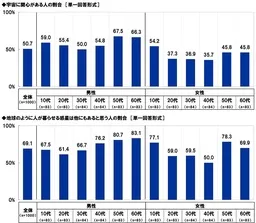
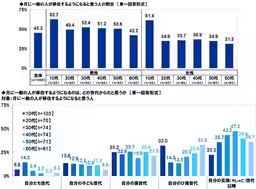
An impressive 51% of participants expressed a keen interest in space, with the number rising significantly among men in their 50s, where interest peaked at 68%. When asked whether they believed there are other habitable planets like Earth, an overwhelming 69% affixed their belief to this possibility, especially among men aged 20 and older as the age group increased.
Childhood Dreams
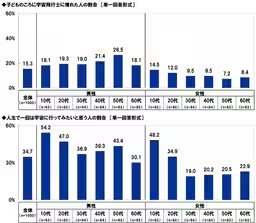
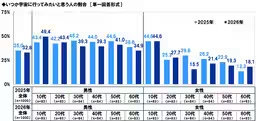
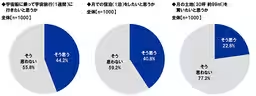
Reflecting on childhood aspirations, only 15% overall admitted to dreaming of becoming an astronaut. This dream is more prevalent among older males, with 27% of men in their 50s claiming this childhood fascination. Furthermore, one-third of respondents expressed a desire to experience space travel at least once in their lives, a sentiment echoed by more than half of teenage males surveyed. Interestingly, 49% of young males want to travel to space someday.
Living Beyond Earth
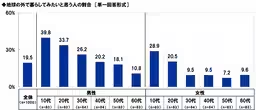
As the survey continued, 19.5% expressed a desire to live beyond Earth. Among young populations, this number surged to 39.8% for teenagers and 33.7% for those in their 20s. Such aspirations signal a growing curiosity about the future of human habitation beyond our planet.
Awareness of Space Topics
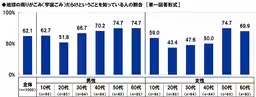
Regarding space debris, a significant 62% of individuals knew about the issue surrounding space junk orbiting Earth, a major concern for ongoing space exploration efforts. The younger respondents were less aware of this pressing issue compared to older generations, where 74.7% of men aged 50 and above demonstrated knowledge of the subject.
Beliefs About Extraterrestrial Life
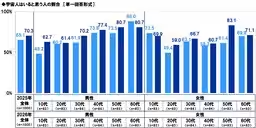
An astonishing 70% of respondents believe in the existence of aliens, an increase of 5% from the previous year. Older females showed the highest belief rate at 83.1%, indicating a robust interest in the idea of extraterrestrial life.
UFO Sightings
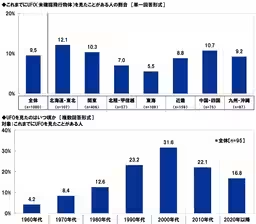
The survey also queried whether respondents had ever witnessed Unidentified Flying Objects (UFOs). About 10% said they had encountered a UFO, with the highest acknowledgment rates seen in the Hokkaido and Tohoku regions. Interestingly, many of these sightings have been reported as occurring in the 2000s.
Celebrating Space Flight
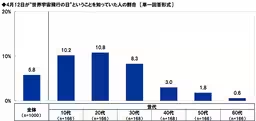
April 12 not only celebrates space exploration but also marks the day Yuri Gagarin became the first human in space. Yet, only 6% of participants were aware of this day’s significance, with awareness peaking among individuals in their 20s, who reported rates over 10%.
Optimism for Space Business
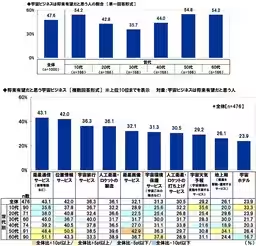
Looking ahead, 47.6% of individuals believe that space business has a promising future, with men and teenagers particularly optimistic about its prospects. The top three sectors identified by respondents as promising were satellite communication, location-based services, and space tourism.
Interest in Space Travel
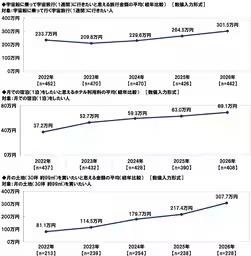
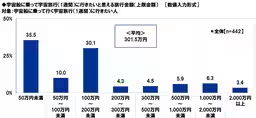
When considering future space travel, the average agreeable expenditure for a week-long trip aboard a spaceship exceeded 3 million yen (approximately $22,500). This trend reflects a notable rise in financial expectations for such pioneering ventures, signaling a robust interest in space tourism.
Questions on Lunar Living
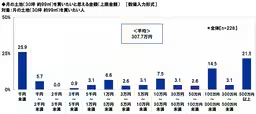
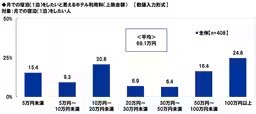
The vision for human migration to the Moon is gaining traction, with 45% of respondents believing that ordinary people may someday settle there; this belief significantly resonated with the youth, particularly those in their teenage years, exceeding 60%.
The survey also revealed that optimism for human settlement on the Moon began surfacing as early as the respondents’ generational offspring.
Popular Culture and Space
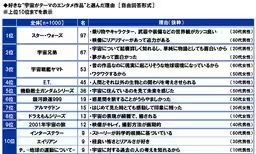
Star Wars emerged as the most favored space-themed entertainment, reinforcing its cultural significance. Following closely were titles like Space Brothers and Yamato, all illustrating the interwoven nature of cosmic themes in our storytelling.
Call for Space Leadership
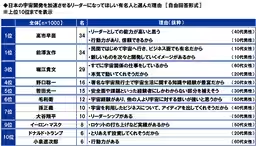
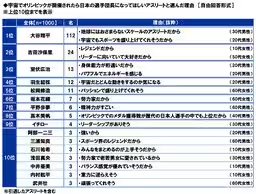
Additionally, respondents expressed preferences for which public figures should spearhead Japan’s space developments, with individuals like Sanae Takaichi and Yusaku Maezawa leading the charge.
As we venture deeper into the cosmos, the intriguing findings from Skynet JSAT's 2026 Awareness Survey reveal not only a fascination with space but also a strong commitment towards exploring and understanding our universe better. The survey’s detailed results are accessible in the attached PDF for those wishing to delve deeper into these remarkable insights.
Survey Details
- - Title: 2026 Awareness Survey on Space
- - Region: Nationwide
- - Target Group: Males and females aged 15 to 69
- - Date of Survey: March 3-5, 2026
- - Method: Online survey
- - Sample Size: 1,000 responses
- - Collaborating Company: NetAsia Inc.
Topics Entertainment & Media)




【About Using Articles】
You can freely use the title and article content by linking to the page where the article is posted.
※ Images cannot be used.
【About Links】
Links are free to use.