



AstroX Pioneers Rockoon Technology with Ambitious Suborbital Mission Planned for 2026
AstroX Aims for Private-Sector Space Access with Rockoon Technology
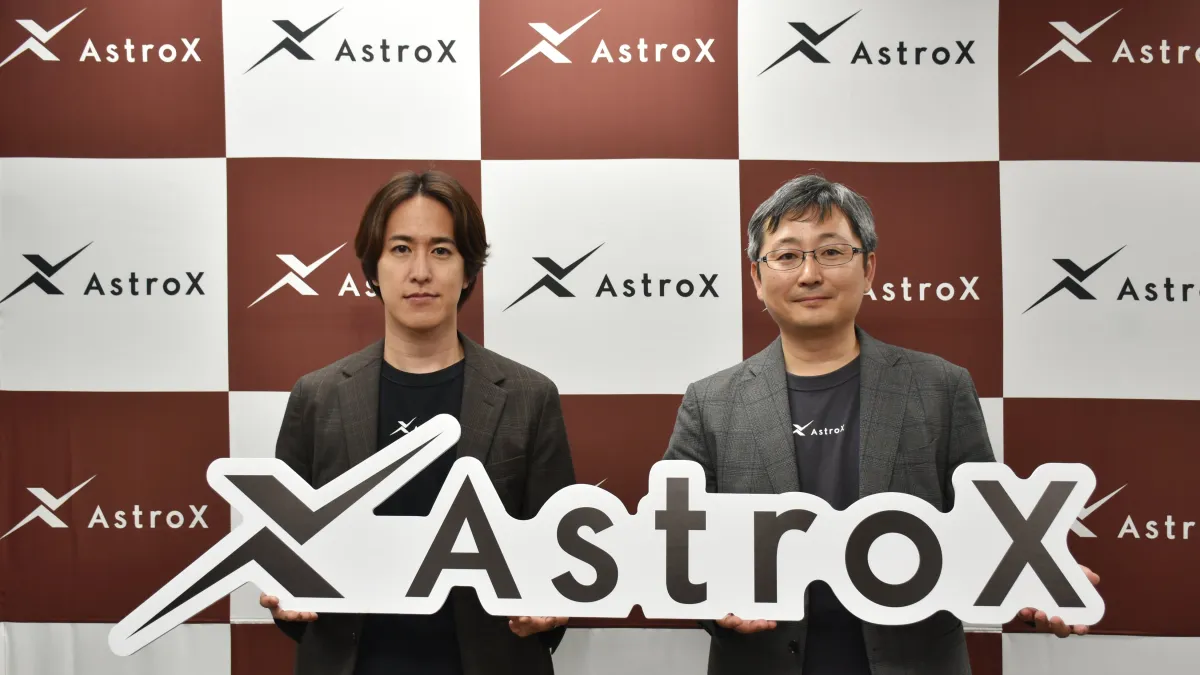
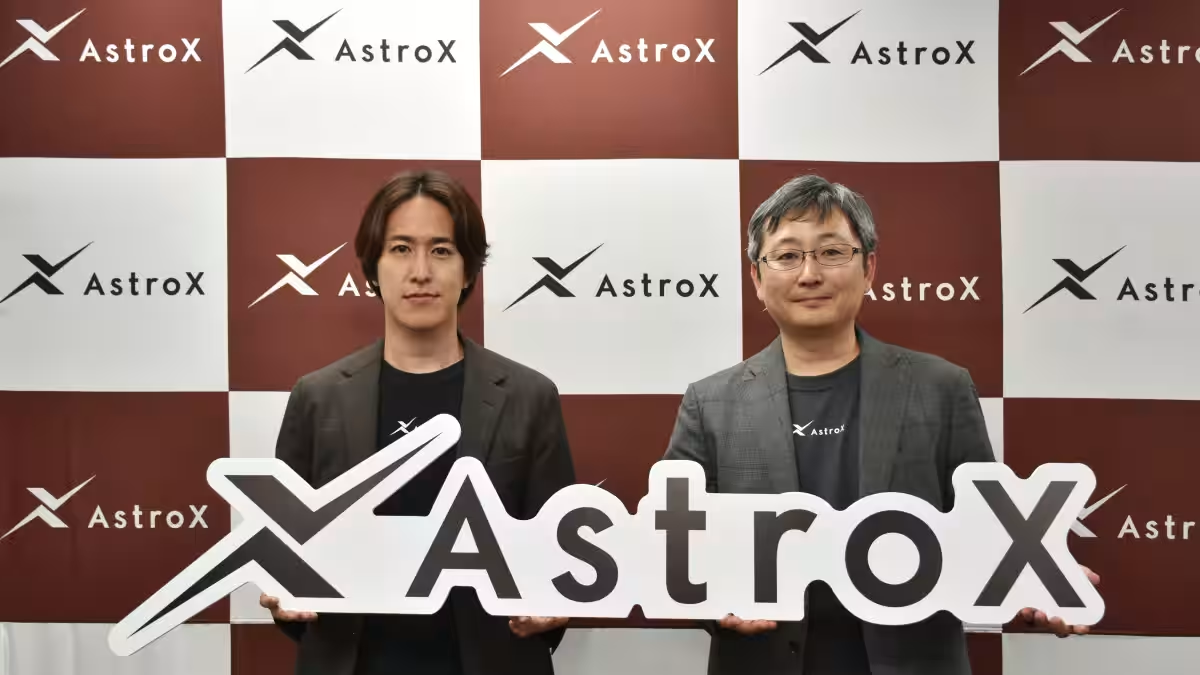
On May 26, 2026, AstroX Inc., based in Minamisoma, Fukushima, held a press conference in Tokyo's Taito Ward to unveil its groundbreaking plans to reach space using Rockoon technology. The company is set to execute a suborbital mission with its hybrid rocket, the FOX2, and launch a sponsorship initiative called the AstroX Rockoon Challenge.
Overview of the Suborbital Mission
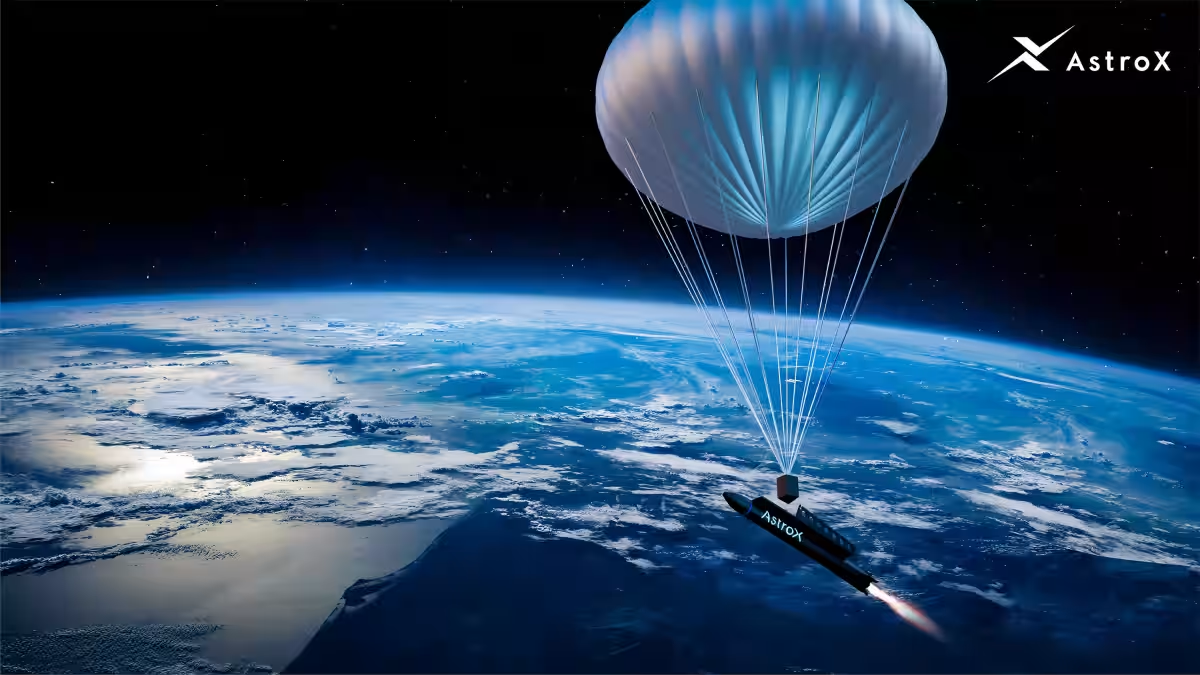
The suborbital mission plans to reach outer space, defined as an altitude of over 100 km, utilizing the innovative Rockoon method. This involves carrying the rocket into the stratosphere via a balloon before igniting it for launch. AstroX's goal is to achieve this milestone—the first private-sector access to space via Rockoon technology—by the end of the 2026 fiscal year.
In addition to reaching space, this mission will offer payload transportation services. The FOX2 rocket will serve as a crucial step towards establishing Rockoon technology by 2029 and commercially launching satellites at a high frequency in the early 2030s.
The FOX2 Rocket
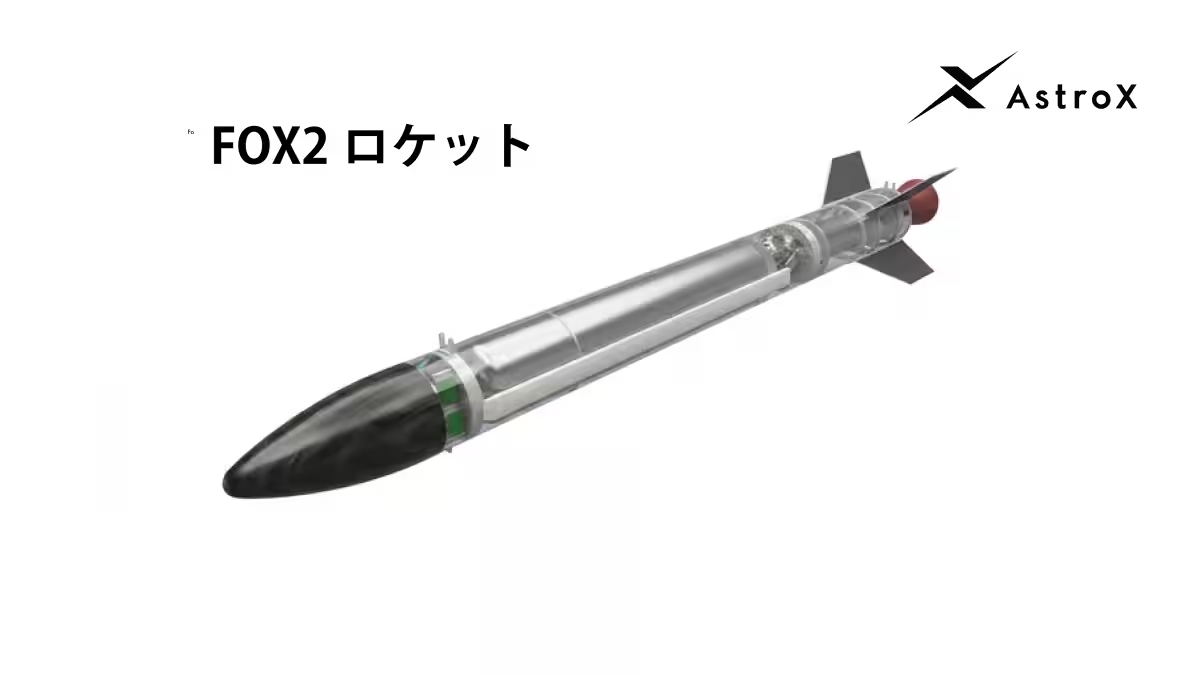
The FOX2 rocket, an upgraded successor to the FOX1, which was approximately 6.3 meters in length and weighed 176 kg, aims to enhance the launch method and propulsion systems. Unlike its predecessor, which was launched from the ground, the FOX2 will be launched from the stratosphere, significantly reducing air resistance and conserving fuel, facilitating effective access to space.
Set to feature a stratospheric ignition system, the FOX2 will implement a low-melting-point thermoplastic resin that boasts a combustion speed three to four times faster than traditional fuels. This approach not only fulfills the thrust requirements for suborbital missions but also sets the stage for scaling up the technology for orbital launches in the future.
Ensuring a successful altitude achievement, AstroX will utilize a controlled oxidizer pressure method validated via prior balloon trials and introduce spinning stabilization to guarantee flight stability in the thinner atmospheric layers of the stratosphere.
2026 Technical Development Milestones
AstroX published its sequential experimental plan aimed at realizing the suborbital mission within 2026:
- - Q1: 550 kg Tether Test – Large 550 kg balloon tethered for operational training.
- - Q1: 40 kg Release Experiment – First ascent to the stratosphere.
- - Q2: 100 kg Release Experiment – Initiate ignition tests in the stratosphere.
- - Q2: 750 kg Release Experiment – Testing balloon release close to actual mission scale.
- - Q3: Suborbital Launch (FOX2) – Aiming to achieve space access using Rockoon technology.
Launching the AstroX Rockoon Challenge Sponsorship
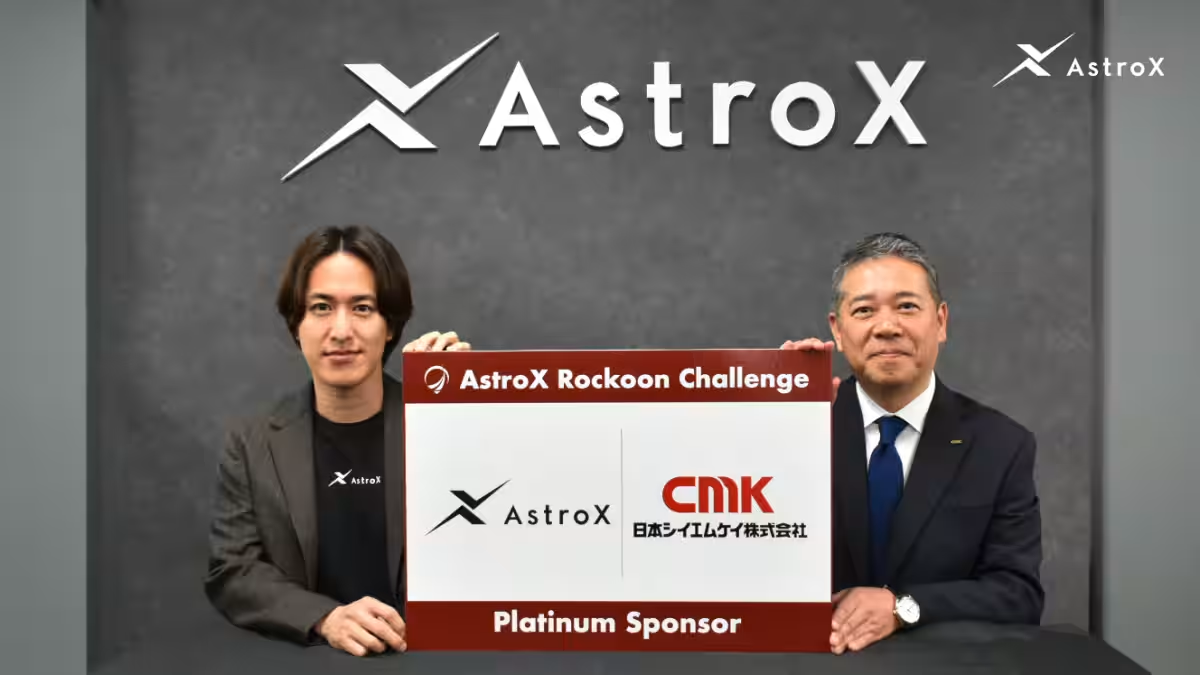
AstroX announced the AstroX Rockoon Challenge, a sponsorship program inviting partner organizations to join in its quest for innovative space exploration.
Leading the sponsorship is CMK Co., Ltd., a top manufacturer of printed wiring boards based in Tokyo. CMK expresses enthusiasm about supporting AstroX's mission with their advanced technologies developed for reliable electronic systems, positioning itself as a vital ally in the journey to space.
CMK President Yoshikazu Ishizaka remarked: “I’m excited to support AstroX’s pioneering suborbital ambitions with our circuit boards. Let’s take on this new frontier together!”
Initial Payloads and Market Expectations
AstroX has already confirmed the first payload customer, the Kochi University of Technology’s Infrastructure Sound Laboratory, led by Professor Masayuki Yamamoto, for the inaugural suborbital mission. This initial payload commitment indicates a promising future for the Rockoon method, which uniquely navigates from Earth’s surface to stratosphere and beyond within a single mission.
The Rockoon technology allows payloads to be deployed and utilized through various atmospheric layers—facilitating scientific observations, experimental validations, sensor tests, and educational applications. It bridges the gap for transporting items meant for space and testing in the stratosphere simultaneously.
Achievements Since Founding
Since its inception in May 2022, AstroX has made remarkable strides in technological advancement and establishing a robust business foundation:
- - 2022: Founded and raised 50 million yen in seed funding.
- - 2023: Successfully launched a rocket from the air with directional control, filing a patent for the Rockoon system.
- - 2024: Collaborated with major corporations and launched hybrid rockets, securing 400 million yen in series funding.
- - 2025: Partnered with JAXA for collaborative projects, heralding controlled ignition tests.
- - 2026: Launched the FOX2 and headed into the integration testing phase, with a total of 2.32 billion yen raised in Series A funding.
Company Overview
AstroX Inc. is committed to restoring “Japan as No. 1” in space development. With its vision to establish efficient space transport services through Rockoon technology, the company aspires to utilize high-altitude balloons for transporting rockets into the stratosphere for launch.
Company Details:
Name: AstroX, Inc.
Headquarters: Minamisoma, Fukushima
CEO: Sho Takezawa
Founded: May 20, 2022
Focus: Space transport services
Website: AstroX Official Site
Join the Mission
AstroX is actively seeking enthusiastic individuals to join their team in the groundbreaking attempt to reach space via Rockoon. The company is looking for dedicated professionals, from engineers to business development roles, to help make this historical endeavor a reality.
Hiring site: AstroX Careers
Topics Entertainment & Media)







【About Using Articles】
You can freely use the title and article content by linking to the page where the article is posted.
※ Images cannot be used.
【About Links】
Links are free to use.